

 HOME
HOME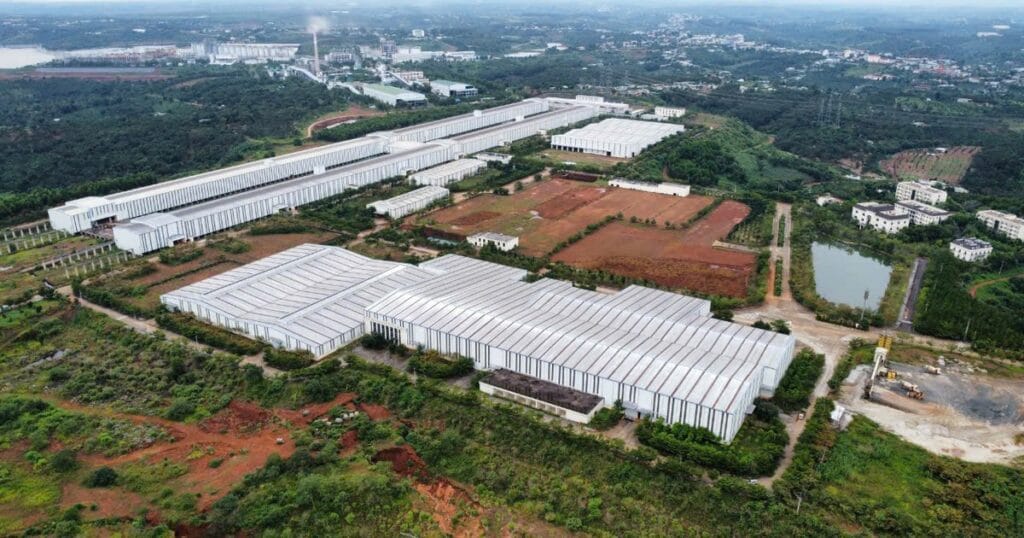
After more than a decade of preparation and development, the Dak Nong Aluminum Smelter Project, with a total investment exceeding VND 18 trillion, is entering its final completion phase ahead of commissioning its first production stage in the second quarter of 2026. As Vietnam’s first aluminum electrolysis plant, the project marks a significant milestone for the country’s non-ferrous metallurgy sector, enabling Vietnam to produce primary aluminum on an industrial scale domestically for the first time.
Beyond its industrial significance, the project is widely regarded as a strategic turning point for Vietnam’s non-ferrous metals supply chain at a time when the global aluminum market is being reshaped by geopolitical tensions, manufacturing relocations, and rapidly growing demand from the clean energy sector.
Completing the Bauxite–Alumina–Aluminum Value Chain
Located within Nhân Cơ Industrial Park in Dak Nong Province and covering approximately 129 hectares, the Trần Hồng Quân Aluminum Smelter is being developed in three phases. The first phase is expected to produce 150,000 tonnes of aluminum annually in 2026, increasing to 300,000 tonnes in early 2027 and reaching its full designed capacity of 450,000 tonnes per year by the third quarter of the same year.
Over the past decade, Vietnam has emerged as a notable alumina producer in Southeast Asia thanks to large-scale bauxite developments in the Central Highlands. However, the highest value-added segment of the aluminum industry—the electrolysis process that converts alumina into primary aluminum metal—has remained absent from the domestic industrial landscape.
The commissioning of the country’s first smelter therefore represents the completion of an integrated production chain, spanning bauxite mining, alumina refining, and primary aluminum smelting. It also creates a foundation for downstream industries that rely heavily on aluminum, including extrusion manufacturing, electrical cables, machinery and engineering, automotive production, renewable energy equipment, and electronics.
Industry experts note that primary aluminum generates substantially higher economic value than alumina exports. Retaining the smelting stage within Vietnam not only increases export value but also supports the development of a broader industrial ecosystem surrounding the aluminum sector.
Reducing Import Dependence and Strengthening Supply Chain Resilience
One of the project’s most significant impacts is that it will enable Vietnam to secure a domestic source of A7 primary aluminum, a fundamental raw material used across numerous manufacturing industries.
Until now, Vietnamese manufacturers have relied almost entirely on imported primary aluminum from the Middle East, Australia, Russia, and other Asian suppliers. This dependence has exposed production costs to fluctuations in freight rates, cargo insurance expenses, and disruptions in global logistics networks.
Recent disruptions caused by conflicts in the Red Sea and the Middle East, along with broader interruptions to international shipping routes, have highlighted the vulnerability of supply chains that depend heavily on imports.
With primary aluminum produced domestically in the Central Highlands, manufacturers will gain faster access to raw materials, shorter delivery times, and greater flexibility in production planning. This advantage is particularly important for export-oriented businesses that face increasing pressure to maintain reliable supply chains and meet strict delivery schedules.
Furthermore, a domestic source of supply is expected to reduce logistics-related surcharges, which have historically pushed aluminum prices in Vietnam above international benchmark levels.
Benefiting from the Restructuring of the Global Aluminum Industry
The launch of Vietnam’s first aluminum smelter comes at a time of profound transformation within global raw materials markets.
Guinea, home to the world’s largest bauxite reserves, is pursuing policies aimed at promoting downstream processing while tightening controls on raw material exports. At the same time, global aluminum demand continues to expand, driven by the rapid growth of electric vehicles, smart power grids, energy storage systems, and infrastructure supporting the green energy transition.
Numerous research institutions forecast sustained growth in aluminum consumption throughout the coming decade as major economies accelerate efforts to reduce carbon emissions.
Against this backdrop, Vietnam’s progress toward establishing a fully integrated domestic aluminum value chain is increasingly viewed as a strategic move to strengthen its position within the global non-ferrous metals supply network.
The project also aligns with broader investment plans for the Central Highlands’ bauxite and aluminum sectors, including proposals from several major Vietnamese corporations to develop large-scale integrated bauxite–alumina–aluminum complexes.
Domestic Supply Does Not Necessarily Mean Aluminum Prices Will Fall Sharply
The upcoming operation of the Dak Nong aluminum smelter has sparked strong expectations that domestic aluminum prices may decline as Vietnam begins producing primary aluminum locally. However, according to industry experts and commodity market analysts, the emergence of domestic supply does not automatically translate into significantly lower aluminum prices.
Experts note that aluminum is a globally traded and internationally priced commodity. Primary aluminum prices in Vietnam will still closely follow movements in the global market, particularly benchmark prices on the London Metal Exchange (LME). As a result, while Vietnam’s ability to produce primary aluminum domestically enhances supply security and industrial self-reliance, it does not fundamentally change the global pricing mechanism of the metal.
According to market observers, the biggest advantage of the aluminum smelter project lies not in creating a substantially cheaper price environment, but in reducing logistics-related costs and import premiums. For years, Vietnamese manufacturers have had to absorb additional expenses associated with ocean freight, insurance, warehousing, and supply chain disruptions linked to international trade volatility. With domestic production now available, businesses will be able to improve production planning, shorten delivery times, and optimize inventory management, thereby enhancing operational efficiency.
Analysts also point out that the global aluminum market continues to be supported by several long-term demand drivers. Consumption from electric vehicles, renewable energy projects, infrastructure development, and power transmission systems is still expanding across major economies. At the same time, resource-rich countries are increasingly tightening control over mineral exports and prioritizing downstream processing industries, creating additional pressure on future global supply.
Another important factor is that aluminum produced in Vietnam could potentially enter export markets. As international manufacturers seek to diversify supply chains and reduce dependence on traditional production hubs, Vietnamese primary aluminum may become an attractive alternative if it can meet quality standards, traceability requirements, and environmental compliance expectations. This means export demand could eventually compete directly with domestic consumption.
From a market perspective, experts caution businesses against assuming that aluminum prices will decline sharply once the smelter becomes operational. Aluminum prices in the coming years will continue to depend largely on global supply-demand dynamics, inventory levels at international exchanges, energy costs, and the growth trajectory of aluminum-consuming industries worldwide.
What domestic supply truly offers is not dramatically cheaper aluminum compared to international markets, but greater supply stability, reduced dependence on imports, and stronger resilience across Vietnam’s industrial supply chain. These advantages are viewed as strategically important for strengthening the competitiveness of Vietnam’s aluminum industry as aluminum increasingly becomes a critical material for the green economy and high-tech manufacturing sectors.
Shaping a New Position for Vietnam’s Aluminum Industry
From a long-term perspective, the Dak Nong Aluminum Smelter is more than an industrial project worth VND 18 trillion. It symbolizes Vietnam’s transition from resource extraction toward deeper processing and higher value-added manufacturing.
The completion of the bauxite–alumina–aluminum value chain will allow Vietnam to retain a larger share of economic value domestically, strengthen raw material self-sufficiency, and provide a solid foundation for the development of advanced manufacturing industries.
As energy-transition metals increasingly become strategic assets of the twenty-first century, the ability to produce primary aluminum carries significance beyond economics. It also enhances Vietnam’s standing within the global industrial landscape and the international materials supply chain.
The forthcoming commissioning of Vietnam’s first aluminum smelter therefore represents far more than the opening of a new manufacturing facility. It marks a historic milestone in the creation of a fully integrated national aluminum industry and signals the beginning of a new era of competition and opportunity for Vietnamese enterprises in regional and global non-ferrous metals markets.
Source: Tuoi Tre Newspaper and collected from the internet.
Related Posts
LME Aluminum Prices Fall: Market Shifts from Supply Shortage Concerns to Expectations of Supply Recovery
WSR Update: Vietnam has not yet been recommended by the EC for approval regarding recycled metals.
VMRF – Circulate Capital: ESG from Compliance Requirements to Management Capability
VMRF and Kitakyushu City Explore Cooperation Opportunities in Recycling and Environmental Technology
Low River Levels in Borneo Expose New Weaknesses in Asia’s Energy Supply Chain
Green and Circular Projects May Receive 2% Interest Rate Support