

 HOME
HOME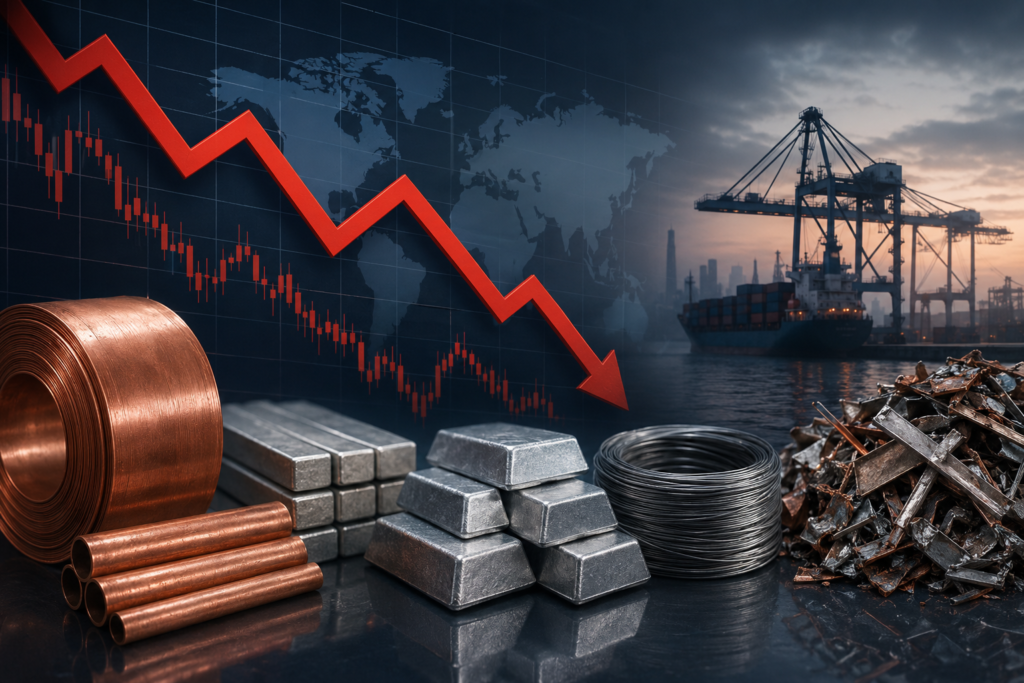
after a strong rally
A quick market update for VMRF members: price movements in copper, aluminum, zinc and lead on the London Metal Exchange (LME), together with signals from the scrap market, based on data published on 03/07/2026.
Red returns after a period of sharp volatility
In the first half of 2026, LME base metals experienced sharp volatility amid the combined effects of conflict in the Middle East, logistics risks, low inventories and expectations of demand from electrification, energy infrastructure and AI data centers.
As of 03/07/2026, official LME prices showed three-month copper at USD 13,345/tonne, three-month aluminum at USD 3,087/tonne, and three-month zinc at USD 3,532/tonne. Lead was significantly lower than at the start of the year and remained the weakest metal in the group due to oversupply pressure and high inventories.
For VMRF members, the key issue is not only the correction in LME prices, but also the transmission lag into scrap prices. When primary metal prices fall rapidly, scrap markets often respond by lowering purchasing margins, delaying price fixing and tightening delivery terms.
Copper · Aluminum · Zinc · Lead
Copper and aluminum scrap fall clearly; lead scrap stable; zinc scrap begins to weaken
Scrap Monster Price Index data for the North American market show a clear correction in non-ferrous scrap during the final two weeks of June 2026:
| Scrap grade | Week of 12–18 June | Week of 19–25 June |
|---|---|---|
| #1 Bare Bright / Wire & Tubing copper scrap | ▼ ~0,94–1,01% | ▼ ~3,95–4,08% |
| Aluminum scrap — E.C. Aluminum Wire | ▼ 4,38% | ▼ 7,19% |
| Aluminum scrap — 6063 Extrusions | ▼ $0,04/lb | ▼ 5,61% |
| Aluminum scrap — Old Cast / UBC | ▼ ~4,12% | ▼ ~5,32–5,38% |
| Brass/red brass scrap | No notable move | ▼ ~2,59–2,65% |
| Lead scrap — batteries | Flat | Flat |
| Zinc scrap — New/Old Zinc Die Cast | Flat | ▼ ~1,16–1,27% |
Notably, aluminum scrap recorded the steepest decline. E.C. Aluminum Wire fell by 4.38% and then 7.19% in consecutive weeks. This is a signal VMRF members should pay close attention to when bidding for aluminum scrap or fixing prices based on an LME-minus-discount formula.
Why is the market correcting?
- 01
Middle East risks remain fluid
Conflict and the risk of logistics disruptions in the Gulf previously drove aluminum and several other metals sharply higher. As the market began to expect risks to ease, part of the “war premium” was also unwound.
- 02
Macroeconomic uncertainty and global growth
Oil prices, interest rates, industrial demand and the trade outlook all directly influence expectations for copper, aluminum and zinc consumption.
- 03
Tariffs and regional price differentials
The possibility of U.S. tariffs on imported copper continues to distort trade flows, draw metal into the United States and create volatility between the LME, CME and physical markets.
- 04
Metal-specific factors
Aluminum is affected by Gulf supply risks; copper by low inventories and tariff risks; zinc by smelter output outside China; and lead by oversupply and high inventories.
- Do not rely solely on a single day of LME prices; also monitor premiums, discounts, freight costs, inventories and buyer payment speed.
- For aluminum scrap, purchasing margins should be reviewed because scrap prices are falling faster than primary metal prices in the short term.
- For copper scrap, U.S. tariff developments and the CME–LME spread may create opportunities but also increase pricing risk.
- For lead and zinc scrap, pay attention to the lag effect: scrap prices may not fall immediately, but pressure has already emerged in primary markets.
- The current correction appears to be driven more by short-term positioning and sentiment than by a complete reversal of the long-term trend in copper and aluminum.
Related Posts
LME Aluminum Prices Fall: Market Shifts from Supply Shortage Concerns to Expectations of Supply Recovery
WSR Update: Vietnam has not yet been recommended by the EC for approval regarding recycled metals.
VMRF – Circulate Capital: ESG from Compliance Requirements to Management Capability
VMRF and Kitakyushu City Explore Cooperation Opportunities in Recycling and Environmental Technology
Low River Levels in Borneo Expose New Weaknesses in Asia’s Energy Supply Chain
Green and Circular Projects May Receive 2% Interest Rate Support