

 HOME
HOME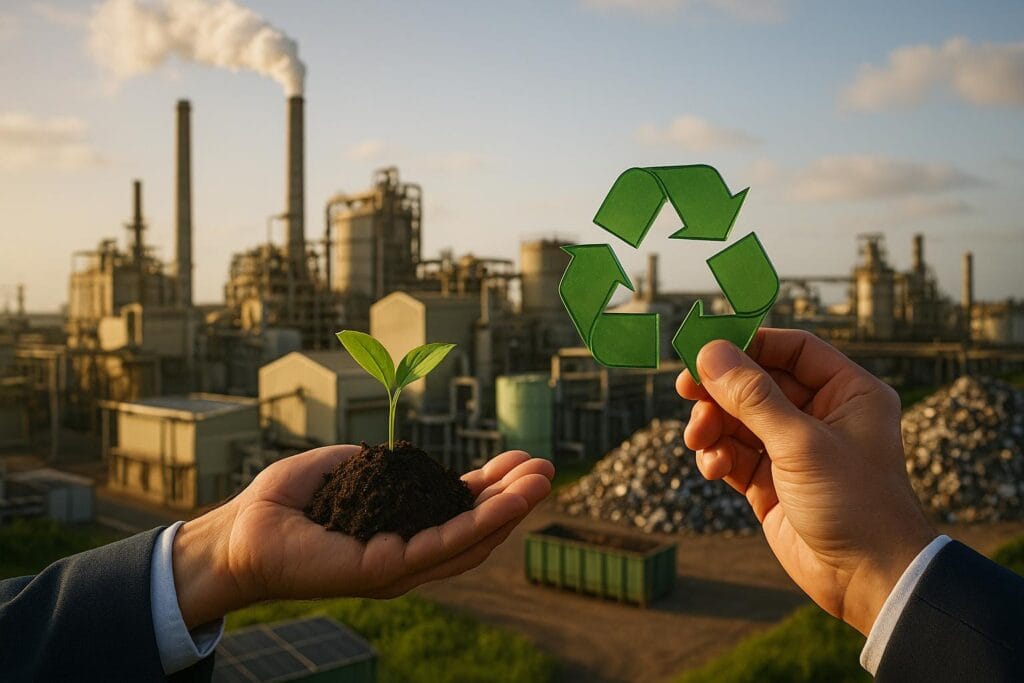
Brussels – The European Union (EU) continues to position the circular economy as a central pillar of its strategy to build a cleaner, more competitive, and resource-efficient economy. The approach is considered fundamental to achieving sustainable economic growth, climate neutrality, and long-term environmental resilience.
According to the EU, humanity has only one planet to provide the natural resources needed for production and consumption. However, if current consumption patterns continue, by 2050 the world will require the equivalent of three Earths to meet global demand.
For decades, the traditional linear economic model of “take, make, use, and dispose” has driven economic growth but has also accelerated the depletion of natural resources, increased waste generation, and contributed significantly to greenhouse gas emissions. The EU believes that this model is no longer sustainable as finite resources become increasingly scarce and the impacts of climate change continue to intensify.
To address these challenges, the EU is accelerating its transition toward a circular economy, where products, materials, and resources remain in use for as long as possible through sustainable design, reuse, repair, remanufacturing, and recycling. This approach minimizes waste, reduces the need for virgin raw materials, and improves resource efficiency throughout the entire value chain.
The EU considers the transition to a circular economy not only an environmental necessity but also a powerful driver of economic growth. More efficient resource use can help businesses reduce production costs, strengthen resilience against raw material supply disruptions, and improve competitiveness in an increasingly volatile global market.
Furthermore, the circular economy plays a vital role in reducing pressure on natural resources, helping to halt biodiversity loss, and supporting the EU’s objective of achieving climate neutrality by 2050. It has become a key component of the EU’s broader green policy agenda, influencing industrial production, sustainable consumption, waste management, and the development of recycled raw materials.
The promotion of circular economy principles is also expected to create new investment opportunities, accelerate technological innovation, and generate employment across green industries. At the same time, it will enhance Europe’s strategic autonomy by strengthening the supply of recycled and secondary raw materials, particularly as demand for critical metals and strategic materials continues to grow.
Through this transition, the EU aims to build a more resilient economy capable of withstanding future supply chain disruptions while laying the foundation for sustainable long-term growth. The shift toward a circular economy is widely regarded as one of the decisive factors that will enable Europe to achieve its environmental objectives while maintaining the competitiveness of its economy in the decades ahead.
Source: environment and compiled from the internet.
Related Posts
LME Aluminum Prices Fall: Market Shifts from Supply Shortage Concerns to Expectations of Supply Recovery
WSR Update: Vietnam has not yet been recommended by the EC for approval regarding recycled metals.
VMRF – Circulate Capital: ESG from Compliance Requirements to Management Capability
VMRF and Kitakyushu City Explore Cooperation Opportunities in Recycling and Environmental Technology
Low River Levels in Borneo Expose New Weaknesses in Asia’s Energy Supply Chain
Green and Circular Projects May Receive 2% Interest Rate Support