

 HOME
HOME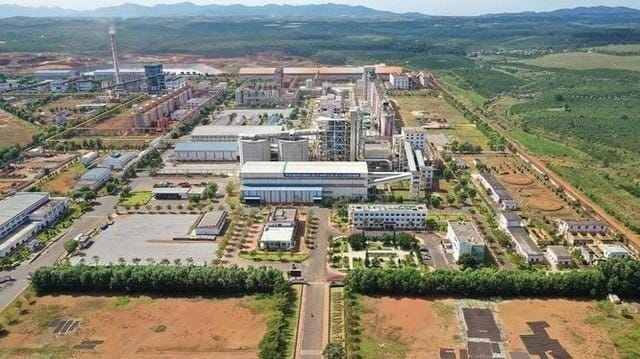
Information that THACO has proposed investing approximately US$4.4 billion in a bauxite mining and alumina production complex in Lam Dong Province has attracted significant attention from the industrial and non-ferrous metals sectors. With a scale among the largest ever proposed in Vietnam, the project not only reflects the ambition of the conglomerate founded by entrepreneur Trần Bá Dương to expand into strategic natural resources, but also signals a broader trend: industrial corporations are increasingly seeking to secure upstream raw material sources amid growing instability in global supply chains.
Behind what appears to be a mining project lies a long-term calculation concerning resource security, the global green energy transition, and the shifting competitive landscape of the regional aluminum industry. At the same time, it serves as a warning signal for downstream aluminum processors in Vietnam, particularly billet casting plants that remain heavily dependent on external raw material supplies.
Major Corporations Returning to Strategic Resources
According to proposals submitted to the authorities of Lam Dong Province, THACO is researching and preparing documentation for several large-scale mining and deep-processing projects. The most notable is the Lam Dong 2 Alumina Plant, with a total investment of approximately VND 49.661 trillion (nearly US$1.9 billion), designed to produce 2 million tonnes of alumina annually on an area of nearly 804 hectares.
If approved in 2026, the project is expected to begin its first phase of operation in 2030 with a capacity of around 1 million tonnes per year before expanding to its full capacity of 2 million tonnes annually. Running alongside this project is a bauxite mining development covering more than 15,000 hectares, with an estimated investment of VND 67.073 trillion (approximately US$2.5 billion). The mine is planned to produce 12 million tonnes of raw ore annually across the Lộc Tân, Lộc Quảng, and Bảo Lâm areas.
The combined investment of the two projects amounts to roughly US$4.4 billion, making it one of the largest bauxite–alumina development plans currently proposed in Southeast Asia.
What is particularly noteworthy is that THACO’s ambitions extend beyond ore extraction and alumina production. Preliminary studies indicate that the company is also considering the development of downstream industrial complexes, including aluminum smelting facilities, titanium processing plants, industrial chemical production, and supporting industries. This integrated model would span the entire spectrum from resource extraction to the manufacture of high-value industrial materials.
Bauxite – The “New Oil” of the Green Industrial Era
For many years, bauxite was viewed simply as a raw material for aluminum production. However, in the context of the global energy transition, the strategic importance of this mineral has changed dramatically.
Aluminum has become an indispensable material in the manufacturing of electric vehicles, energy storage systems, offshore wind farms, solar power projects, and smart grid infrastructure. Modern electric vehicles use significantly more aluminum than conventional internal combustion engine vehicles in order to reduce weight and improve energy efficiency.
International market research organizations forecast strong growth in global aluminum demand over the coming decade as countries accelerate their carbon neutrality commitments. As a result, bauxite and alumina resources are becoming increasingly critical components of national industrial development strategies.
Recent geopolitical disruptions have also highlighted the vulnerability of global raw material supply chains. Maritime transportation disruptions, conflicts along strategic shipping routes, and export restrictions imposed by various countries have encouraged major industrial groups to secure greater control over upstream supply sources.
Against this backdrop, THACO’s move into the bauxite sector should be viewed not merely as a mining investment but as a strategic effort to position itself for future demand driven by the green economy over the coming decades.
Technology and the Ambition to Build a Complete Aluminum Value Chain
One of the most significant aspects of THACO’s plan is its vision of establishing a fully integrated industrial ecosystem.
According to ongoing studies, Song Luy Industrial Park is expected to become a deep-mineral-processing hub featuring aluminum smelters, chemical production facilities supporting mineral processing, and various supporting industries. Gia Huynh 3 and Gia Huynh 4 Industrial Parks are envisioned as centers for advanced materials, industrial aluminum products, and high-tech mechanical engineering industries.
If successfully implemented, this model would move Vietnam significantly closer to establishing a complete aluminum value chain encompassing bauxite mining, alumina production, primary aluminum smelting, and the manufacturing of industrial products.
Industry experts believe that future projects will need to adopt advanced technologies to meet increasingly stringent environmental requirements. In alumina production, current trends focus on optimizing the Bayer process, improving ore recovery rates, and managing red mud through circular economy principles. In aluminum smelting, next-generation electrolysis technologies are increasingly aimed at reducing carbon emissions and lowering energy consumption.
As markets such as Europe continue to demand aluminum products with low carbon footprints, investments in “green aluminum” production are expected to become a decisive factor in long-term competitiveness.
Expert Insight: Billet Manufacturers Must Prepare for a New Competitive Cycle
According to experts in the non-ferrous metals industry, the most significant impact of THACO’s proposed investment does not lie in the future alumina output itself, but in the strategic message the project sends to Vietnam’s entire aluminum supply chain.
For many years, most domestic billet casting companies have operated based on imported aluminum ingots or spot-market supply sources. This model helped optimize working capital during periods of abundant supply, but it also made businesses more vulnerable to sharp fluctuations in raw material prices.
The emergence of multi-billion-dollar upstream projects signals that competition in the aluminum industry is shifting from production capacity toward control over raw material supply. As major corporations proactively expand into mining and primary processing, pressure on downstream manufacturers is expected to intensify.
Industry experts note that the physical market often reacts before projects officially begin operations. Expectations of long-term raw material demand may prompt trading firms to adjust inventory strategies, tighten sales policies, and increase premiums on primary aluminum products.
For billet manufacturers, this means that future competition will no longer depend solely on production capacity or labor costs. The ability to manage metal price risks, secure stable raw material supply, develop recycled aluminum sources, and establish strategic partnerships will become key competitive advantages.
In other words, Vietnam’s aluminum industry is entering a new stage of development in which control over the value chain may become just as important as manufacturing capability itself.
Significant Opportunities Accompanied by Major Challenges
At present, all of THACO’s proposed projects remain in the research and documentation stage. According to Lam Dong authorities, numerous challenges related to land-use planning, forestry planning, and overlaps with previously approved projects must still be resolved before investment approvals can be considered.
Nevertheless, regardless of the eventual approval timeline, THACO’s proposed US$4.4 billion investment has already delivered a clear message: bauxite is increasingly being viewed as a strategic asset for the future economy.
For Vietnam, this initiative could create an opportunity to establish a large-scale aluminum industrial hub, providing a foundation for electric vehicle manufacturing, renewable energy industries, advanced materials, and high-tech industrial production. For downstream enterprises, it is also a moment to reassess long-term development strategies.
In the emerging landscape of the aluminum industry, competitive advantage will no longer belong solely to companies that purchase raw materials and process finished products. Instead, it will belong to businesses capable of controlling the entire value chain—from natural resources to end markets. In that sense, THACO’s project is not merely an investment story; it is a wake-up call for the entire Vietnamese aluminum industry.
Source: Nguoiquansat newspaper and compiled from the internet.
Related Posts
LME Aluminum Prices Fall: Market Shifts from Supply Shortage Concerns to Expectations of Supply Recovery
WSR Update: Vietnam has not yet been recommended by the EC for approval regarding recycled metals.
VMRF – Circulate Capital: ESG from Compliance Requirements to Management Capability
VMRF and Kitakyushu City Explore Cooperation Opportunities in Recycling and Environmental Technology
Low River Levels in Borneo Expose New Weaknesses in Asia’s Energy Supply Chain
Green and Circular Projects May Receive 2% Interest Rate Support