

 HOME
HOME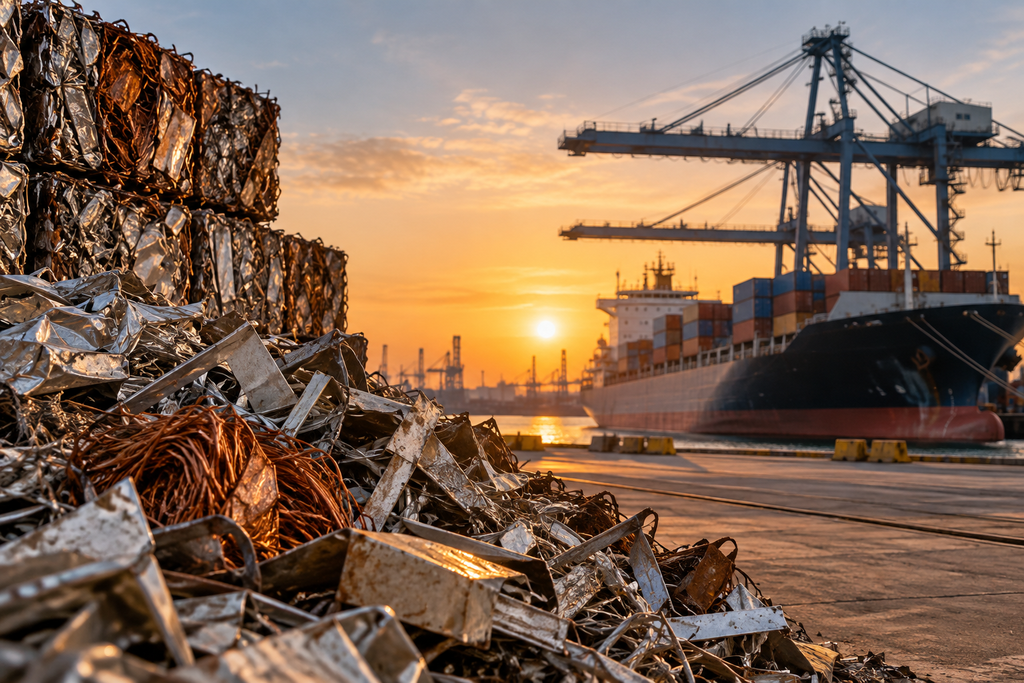
A new draft from the European Commission indicates that Vietnam is currently recommended for approval regarding paper and glass waste, but has not been recommended for inclusion on the list of countries permitted to receive ferrous and non-ferrous metal waste from the European Union after May 2027.
On September 18, 2026, the European Commission published a draft list of non-OECD countries that could continue to receive certain streams of non-hazardous waste from the EU after May 2027. The draft was prepared following the Commission’s assessment of applications submitted by 32 non-OECD countries and territories seeking to continue receiving waste streams from the EU under the new requirements of the Waste Shipment Regulation.
For Vietnam, the assessment represents an important development for the recycling sector. Vietnam’s application was reviewed across three main material categories: paper waste, glass waste and metal waste. According to the current EC assessment, Vietnam meets the requirements to continue being considered for paper and glass waste, while its submission concerning metal waste has not yet provided sufficient evidence for the Commission to conclude that these materials would be managed in an environmentally sound manner.
For this reason, the current draft does not recommend including Vietnam on the list of countries permitted to receive ferrous and non-ferrous metal waste from the EU.
The development is particularly significant for Vietnam’s metal recycling industry, especially companies involved in importing, trading or processing European-origin materials such as aluminium scrap, copper scrap, ferrous scrap and stainless steel scrap.
Where Is the EC Raising Concerns?
In its assessment of Vietnam, the EC identifies a number of issues raised by civil society organisations concerning the country’s capacity to manage and control imported waste streams.
One of the issues concerns the capacity of the recycling system to process imported waste from the EU alongside an increasingly large volume of domestically generated waste. The Commission also highlights specific challenges associated with metal recycling, as well as the need to strengthen controls against illegal imports and address potential risks related to transshipment or imports through free trade zones.
Vietnam provided additional information to the EC in January 2026 to explain its existing import control measures. The information covered restrictions on the types of waste permitted for import, requirements applicable to receiving facilities, customs controls and technical requirements related to waste processing.
However, according to the assessment reflected in the current draft, the additional information has not yet provided sufficient evidence for the EC to fully establish that Vietnam’s capacity to manage and process metal waste meets the requirements for environmentally sound management.
This is an issue that Vietnam’s recycling industry will need to monitor closely because metal waste has characteristics that distinguish it from many other waste streams. The EC considers ferrous and non-ferrous metal waste to require closer scrutiny because such materials may contain or generate substances including lead, mercury, cadmium and hexavalent chromium. In addition, processes such as shredding, smelting and refining can generate emissions and residual waste if they are not properly controlled.
Vietnam Is Not the Only Case
Vietnam’s current status is not an isolated case.
The EC has also not recommended approval for metal waste in the applications of several major Asian markets, including India, Thailand, Malaysia, Indonesia, Pakistan, Taiwan and Saudi Arabia.
The development indicates that the EC is applying a relatively rigorous assessment process to metal waste streams in non-OECD countries. Having an established recycling industry or a long history of importing scrap does not automatically mean that a country’s application will meet the new WSR criteria.
For businesses, this means that actual processing capacity increasingly needs to be demonstrated through management systems, data, control mechanisms and concrete evidence rather than relying solely on production capacity or the scale of the recycling market.
This Is Not Yet a Final Decision
VMRF emphasizes that the document currently published by the EC is a draft Delegated Regulation and does not yet represent a final decision.
Under the current timetable, the EC has opened a consultation period on the draft until October 16, 2026. The first official list is expected to be established before the end of 2026 and will apply under the new regulatory framework from May 21, 2027.
This means that Vietnam still has an opportunity to continue discussions with the EC, provide additional information and clarify areas that European authorities consider insufficiently demonstrated.
Countries that are not included in the initial list are not necessarily excluded permanently. Under the proposed mechanism, applications may be updated in subsequent assessment rounds, with the list expected to be reviewed at least once every two years.
The Challenge Goes Beyond Administrative Procedures
For Vietnam’s metal recycling industry, the latest development raises a broader question about the country’s ability to demonstrate environmentally sound management across the entire scrap processing chain.
If the draft provisions remain unchanged in the final decision, the ability to receive certain metal scrap streams from the EU after May 2027 could be affected. This could have a direct impact on the raw material sourcing strategies of recycling plants, trading companies and businesses that rely significantly on European scrap supplies.
The issue is therefore not simply whether a particular material stream will be permitted for import. It also concerns the ability of businesses to secure alternative sources and diversify their supply markets.
According to VMRF, three areas should receive particular attention between now and the publication of the EC’s final list. The first is the specific information and evidence that the EC may require Vietnam to provide or clarify regarding metal waste. The second is the ability of Vietnamese authorities to continue discussions with the EC and complete the country’s submission before the official list is issued. The third is how companies can prepare sourcing and diversification strategies if certain metal scrap streams from the EU are not included on the approved list.
For recycling companies, this is also an appropriate time to review the structure of their raw material supply, their level of dependence on individual markets and their ability to meet increasingly demanding requirements concerning traceability, environmental controls and waste management throughout the recycling process.
The EC’s draft can therefore be viewed as an important signal for Vietnam’s metal recycling industry to assess its ability to meet international standards in a changing regulatory environment. Whether Vietnam will ultimately be included on the official list for metal waste will depend on the consultation process, the submission of additional information and the EC’s final decision.
VMRF will continue to monitor updates from the European Commission, EUR-Lex and international market sources and provide the Vietnamese recycling business community with further information as new developments emerge.
Sources: European Commission, EUR-Lex, Waste Shipment Regulation draft assessment, September 2026; Recycling Today.
Related Posts
VMRF – Circulate Capital: ESG from Compliance Requirements to Management Capability
VMRF and Kitakyushu City Explore Cooperation Opportunities in Recycling and Environmental Technology
Low River Levels in Borneo Expose New Weaknesses in Asia’s Energy Supply Chain
Green and Circular Projects May Receive 2% Interest Rate Support
US Company Eyes Vietnam’s Used Batteries as an “Above-Ground Lithium Mine”
CMRA Annual Convention 2026 in Ningbo: Reshaping the Recycled Metals Value Chain in a Changing Global Landscape