

 HOME
HOME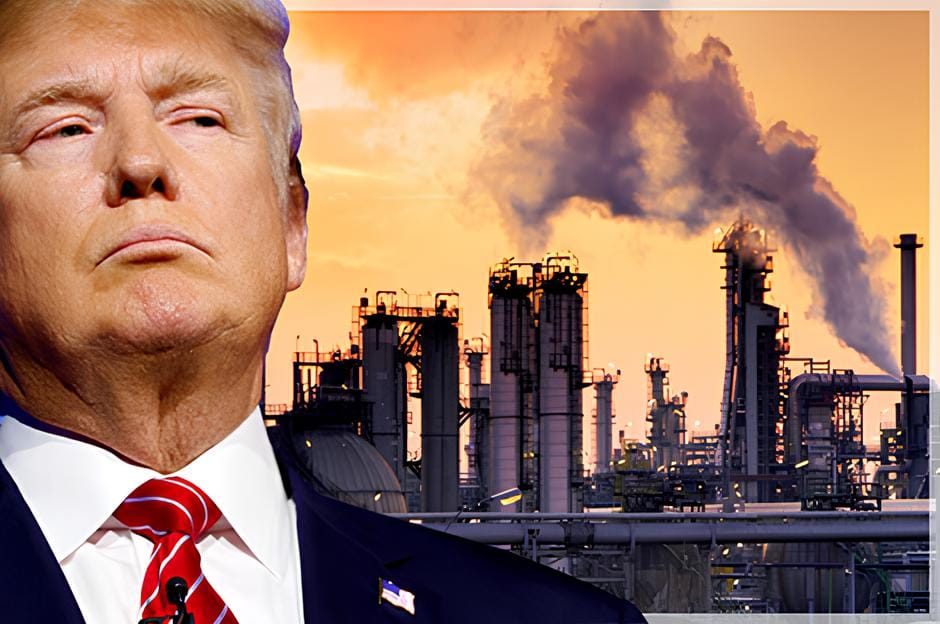
On February 12, the administration of President Donald Trump announced its decision to revoke the 2009 scientific finding that greenhouse gas emissions endanger human health. This move marks a significant shift in United States climate policy. However, when viewed in a broader context, it is not merely an environmental policy reversal, but part of a longer process of restructuring domestic industrial capacity that had already been outlined within the Make America Great Again strategy.
The 2009 Endangerment Finding by the United States Environmental Protection Agency served as a critical legal foundation allowing the federal government to implement a wide range of greenhouse gas emission controls under the Clean Air Act. This determination enabled emission standards for vehicles, power plants, and heavy industries over more than a decade. Once this foundation is removed, the legal basis for imposing federal emission regulations on manufacturing sectors is significantly weakened.
The repeal of the 2009 finding is often interpreted as evidence that the Trump administration does not believe in climate change or does not prioritize public health. This interpretation may be overly simplistic when examined through the industrial logic that MAGA has pursued since its earliest policy formulations. In practice, MAGA has functioned not only as a political slogan but also as a framework for restoring national production capacity, particularly in foundational sectors such as energy and metallurgy.
Over recent decades, the United States has witnessed a substantial decline in its domestic metallurgical industry. Steel mills, aluminum smelters, and non ferrous metal refining facilities have gradually closed or relocated overseas due to high energy costs, significant environmental compliance expenses, and intensifying competition from Asia. As a result, even where domestic resource extraction remains viable, the United States has become increasingly dependent on imported refined metals.
From the outset, the MAGA strategy aimed to reverse this trend. The first phase of this approach involved reshaping energy flows. Relaxing constraints on oil and gas extraction, expanding domestic production, and strengthening energy exports contributed to reducing input costs for energy intensive sectors such as metallurgy. Once energy costs declined, the fundamental conditions for restoring domestic metal production began to take shape.
In this context, the repeal of the 2009 finding may be understood as the next step in this process. The metallurgical sector has been among the most heavily affected by emissions regulations. Strict environmental standards have made the operational costs of furnaces and refining facilities in the United States significantly higher than those of competing producers abroad. When the legal basis for these standards is removed, compliance costs may decrease, improving the competitiveness of domestic manufacturing.
At the same time, recent policy signals indicate increased attention to strategic metals such as copper, aluminum, and steel. Efforts to expand the strategic minerals stockpile and adjust import policies for refined metal products suggest a longer term orientation toward supply chain security. The recent accumulation of copper may represent preparation for future large scale investments in infrastructure and defense manufacturing.
Copper remains indispensable to electrical systems, industrial equipment production, and defense technologies. If the United States seeks to rebuild production capacity in these areas, ensuring stable copper supply becomes a prerequisite. As such, copper stockpiling may not simply be a short term commercial decision but rather an initial step in a broader plan to reshape the metallurgical sector.
From this perspective, climate policy ceases to be a separate domain and becomes integrated into a comprehensive industrial strategy. Reducing legal barriers to emissions allows greater policy flexibility for domestic manufacturing sectors to expand. When combined with lower energy costs and trade protection measures, the investment environment for metallurgy may become more attractive to firms.
The decision has nevertheless drawn criticism from scientists and environmental organizations. Many argue that removing the scientific basis for emissions regulation may weaken climate mitigation efforts and generate long term public health consequences. These risks must be considered in the policy making process.
However, within the logic of the MAGA strategy, priority has consistently been given to restoring domestic production capacity and reducing dependence on foreign supply chains. Metallurgy underpins sectors ranging from infrastructure construction to defense and advanced manufacturing. Revitalizing this industry is therefore regarded as essential to reindustrializing the American economy.
The February 12 decision should not be understood as an isolated act but rather as part of a sequence of policies aimed at restructuring the national industrial base. Following earlier efforts to redirect petroleum energy flows in favor of domestic production, the next stage may involve rebuilding metal value chains from extraction to refining.
If this process continues through investment incentives, tax measures, and technical workforce development programs, the United States may gradually restore metallurgy to a central position within its economy. Conversely, absent a comprehensive strategy, regulatory relaxation alone may yield only short term benefits insufficient to reverse the sector’s long term decline.
Recent actions suggest the administration is pursuing a longer horizon plan rather than temporary adjustments. The repeal of the 2009 finding, together with initiatives related to strategic minerals and metal stockpiling, may signal the early stages of a broader reindustrialization program in which metallurgy occupies a central role. This aligns with the vision long articulated within the MAGA strategy to restore American productive capacity after decades of industrial contraction.
Related Posts
LME Aluminum Prices Fall: Market Shifts from Supply Shortage Concerns to Expectations of Supply Recovery
WSR Update: Vietnam has not yet been recommended by the EC for approval regarding recycled metals.
VMRF – Circulate Capital: ESG from Compliance Requirements to Management Capability
VMRF and Kitakyushu City Explore Cooperation Opportunities in Recycling and Environmental Technology
Low River Levels in Borneo Expose New Weaknesses in Asia’s Energy Supply Chain
Green and Circular Projects May Receive 2% Interest Rate Support