

 HOME
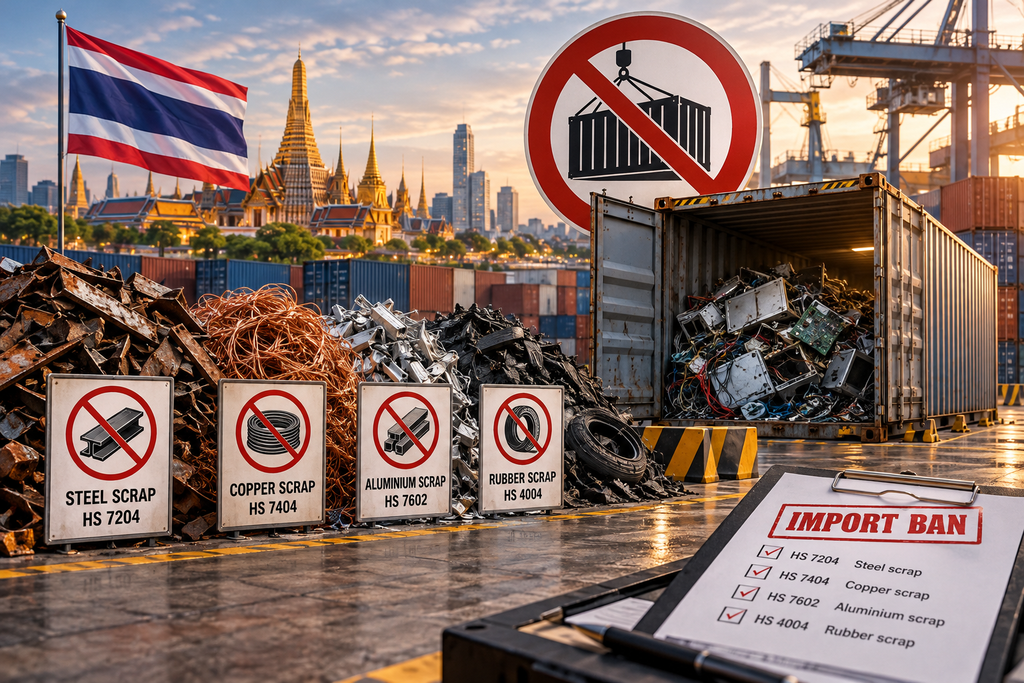
On October 21, 2026, the Thai Customs Department proposed measures to ban the import of steel, copper, aluminium and rubber scrap in an effort to prevent the illegal shipment of electronic waste and hazardous waste into Thailand. The move has raised concerns about secondary raw material supplies, logistics costs and the operations of recycling businesses across the region. However, a comprehensive import ban remains a proposal, and no official effective date has been announced.
Thailand Tightens Controls on Scrap Imports
According to information published by Shanghai Metals Market (SMM) on October 22, 2026, the Thai Customs Department proposed to the Department of Foreign Trade under the Ministry of Commerce that imports of four categories of materials be prohibited: ferrous scrap under HS code 7204, copper scrap under HS code 7404, aluminium scrap under HS code 7602, and rubber scrap under HS code 4004. The proposal aims to prevent operators from exploiting scrap imports to conceal electronic waste and hazardous waste in shipments declared as recyclable materials.
According to the Bangkok Post on October 22, Thai Customs has stepped up physical inspections of containers declared as scrap metal amid growing concerns about shipments that may contain undeclared or misclassified waste. Previous cases involving illegal electronic waste and industrial waste in eastern Thailand have raised concerns about environmental pollution, chemical leakage and the impact on local communities’ livelihoods.
Figures cited by Thai media from the Customs Department indicate that, during fiscal year 2026, which ended on September 30, authorities detected approximately 10,029 tonnes of illegally imported electronic waste and hazardous waste, of which around 5,290 tonnes had been returned to their countries of origin. These figures highlight the scale of the problem facing regulators and help explain why inspections of scrap shipments have been intensified.
Importantly, the proposal does not mean that all scrap metal imports have already been banned. As of October 24, 2026, there has been no confirmation that a comprehensive import ban has officially taken effect. The implementation date and final enforcement conditions remain subject to decisions by the competent authorities. According to published information, the proposed measures may include a transitional period of six to twelve months to limit the impact on domestic metal smelters and processing facilities.
Large Import Volumes Give the Proposal Significant Economic Implications
According to figures published by Thailand’s Matichon newspaper on October 21, imports of ferrous scrap, aluminium scrap and copper scrap totalled at least 2.76 million tonnes between January and September 2026, with a combined value of approximately THB 71.193 billion. Average import volumes were equivalent to around 14,600 containers per month. Ferrous scrap accounted for approximately 2.12 million tonnes, making it the largest category among the three metal scrap groups covered by the figures.
These volumes indicate that imported scrap is not merely an ordinary traded commodity. It also plays an important role in Thailand’s industrial production and secondary raw material supply chains. Any significant change in policy affecting these materials could therefore have simultaneous implications for importers, logistics providers, scrap sorting facilities, metal smelters and industries that use recycled metals.
The Thai Customs Department has also highlighted the need to minimise the impact on 41 domestic metal smelting and processing facilities that remain dependent on imported raw materials. Under arrangements reported by Thai media, the authorities may consider a controlled licensing mechanism during the transition period, prioritising factories that import raw materials directly for production when domestic supplies are insufficient. Pre-export inspections have also been discussed as a possible measure to improve traceability and shipment controls.
If implemented, this approach would significantly influence the extent of the policy’s impact on the recycling industry. A complete import ban could have substantially different consequences from a system that permits conditional imports subject to stricter inspections and restrictions on eligible importers.
How Are SMM and the Bangkok Post Assessing the Market Impact?
In its October 22 bulletin, Shanghai Metals Market noted that tighter inspections could lengthen customs clearance times and increase logistics costs in the short term. For Thailand’s copper and aluminium scrap markets, SMM suggested that supply constraints could provide support for domestic scrap prices. However, this is a market scenario assessment, not confirmation that prices have already increased or will necessarily rise as a result of the proposed policy.
Meanwhile, the Bangkok Post has focused on enforcement challenges and the difficulties associated with inspecting shipments. According to the newspaper, physically inspecting containers is time-consuming and costly, but Customs considers the measure necessary to address the risk of electronic waste being concealed in metal scrap shipments. The report also discussed the possibility of classifying metal scrap and rubber scrap as prohibited imports over the longer term, alongside transitional arrangements intended to reduce disruption for factories that rely on imported raw materials.
From a policy perspective, Thailand’s government information portal stated on October 22 that the country would continue tightening controls on hazardous waste and strengthening coordination among the Department of Foreign Trade, Customs, pollution control authorities and industrial regulators to detect misdeclaration, including the mixing of electronic waste with metal scrap. However, the authorities also emphasised that legal imports of metal scrap meeting the required quality standards for manufacturing would continue to be facilitated.
Overall, the coverage highlights three main issues: preventing illegal waste shipments, improving the effectiveness of cargo inspections, and limiting disruption to industries that depend on recycled raw materials. There is currently insufficient evidence to conclude that international metal markets have reacted sharply or that major analytical institutions have issued specific price forecasts based solely on Thailand’s proposal.
Economic Analysis: Transaction Costs Could Rise Before Supply Conditions Actually Change
From an economic and supply chain management perspective, the first impact may emerge even before the proposed ban is formally adopted: higher transaction costs. As physical inspection rates increase, businesses may face longer container dwell times, additional storage charges, inland transportation costs, inspection expenses and requests for supplementary documentation proving the origin of goods. These costs could reduce margins for exporters and importers, particularly those handling low-value shipments or operating with already narrow margins.
In the non-ferrous metals market, copper and aluminium scrap could face notable pressure because these materials have relatively high economic value and are widely used in industrial manufacturing. If inspections reduce the volume of compliant imported material while demand from factories remains stable, buyers may need to offer higher domestic purchase prices or seek alternative suppliers. However, the possibility of price increases will depend on existing inventories, the share of secondary materials used in production, domestic collection capacity, primary metal prices and trends in end-user demand.
For ferrous scrap, the large import volumes reflected in the first nine months of the year indicate that any significant policy change could affect raw material planning at steelmaking facilities. If imports decline and domestic supplies cannot compensate, manufacturers may need to adjust their raw material mix, seek new suppliers or reconsider production plans. Such changes could raise input costs and affect the competitiveness of finished steel products.
However, it is important to distinguish the impact on scrap prices in Thailand from the impact on international benchmark metal prices. Copper and aluminium prices on global exchanges remain influenced by global industrial demand, mining and smelting output, inventories, exchange rates, energy costs and other trade policies. It is therefore premature to conclude that Thailand’s proposal will directly drive a sharp increase in copper or aluminium prices on the London Metal Exchange (LME). The immediate effects are more likely to be concentrated in regional price differentials, procurement costs and trading conditions for scrap materials.
Over the longer term, if Thailand adopts a stricter control system while continuing to permit imports that meet regulatory standards, the market may increasingly favour scrap that is properly sorted, clearly documented and compliant with inspection requirements. This could benefit businesses that invest in quality management, traceability systems and environmentally compliant processing procedures. Conversely, companies that depend on inconsistent material quality or incomplete documentation may face greater customs clearance risks and reduced market access.
These observations represent economic scenario analysis rather than forecasts attributed to any specific expert. There is currently insufficient data to quantify the precise increase in logistics costs, the extent of scrap price fluctuations or the potential raw material shortfall if the proposal is approved.
Implications for Southeast Asia’s Scrap Supply Chain
Thailand is one of the links in Asia’s scrap collection, import-export and metal recycling network. Changes to its import policy could therefore prompt suppliers to reassess destination markets, contractual terms and documentation requirements. If inspections cause delays, exporters may need to revise delivery schedules, allow additional time for clearance and clarify with their trading partners how costs will be allocated when containers are held for further examination.
If a broad import ban is introduced, some scrap shipments could be redirected to other markets, provided those markets have sufficient demand and compatible import regulations. However, redirection does not mean that the materials will automatically be accepted elsewhere. Each market has its own rules governing waste, scrap, environmental standards and import eligibility. Businesses should therefore verify the legality of alternative trading routes before entering into new contracts.
For Vietnam, the development is an important signal for companies involved in scrap collection, exports and metal recycling. Opportunities could emerge if regional buyers seek alternative suppliers that can meet quality and regulatory requirements. Conversely, if shipments are redirected towards markets capable of receiving them, competition over prices and pressure to verify material origins could also intensify. The actual impact will depend on each company’s trade structure, the type of scrap involved and the regulations of the destination market.
As countries place greater emphasis on controlling cross-border waste movements, recycling businesses need to clearly distinguish between scrap that can legally be used as a manufacturing input and waste subject to specific controls or import prohibitions. Proof of origin, transaction documents, inspection results and consistency between customs declarations and the actual contents of shipments will become increasingly important in international trade.
What Should Businesses Do Before a Final Policy Decision?
In the short term, businesses involved in scrap imports and exports connected to Thailand should monitor official announcements from the Thai Customs Department, the Department of Foreign Trade and the Ministry of Commerce rather than treating the current proposal as an import ban already in force. Companies should also review existing contracts, delivery deadlines, provisions allocating container detention and storage costs, and the responsibilities of each party when shipments are subject to additional inspections.
Exporters should prepare documentation proving the origin, composition and quality of their shipments; consult inspection providers about potential pre-export certification requirements if new regulations are introduced; and work with customs brokers and shipping companies to assess possible additional costs. For factories that rely on imported raw materials, reviewing inventory levels, evaluating alternative sources and developing procurement plans for different policy scenarios could help reduce the risk of production disruptions.
Over the longer term, improving scrap sorting, controlling impurities, strengthening traceability and complying with environmental regulations will be important for maintaining market access. Businesses that can demonstrate the legality and consistent quality of their materials may be better positioned as regulatory scrutiny increases.
Outlook: Awaiting an Official Decision, Businesses Should Avoid Overreacting to the Market
The Thai Customs Department’s proposal of October 21, 2026, indicates that the authorities are considering stronger measures to prevent electronic waste and hazardous waste from entering the country under the guise of scrap imports. However, several important decisions remain before a comprehensive ban could be implemented, including its scope, licensing arrangements, transitional period and conditions for factories that depend on imported raw materials.
For the market, the immediate risks lie in longer customs clearance times and higher transaction costs, while the longer-term effects on scrap supply and prices will depend on the final policy. If the regulatory framework focuses on material quality and traceability rather than eliminating all legal supplies, the impact on manufacturing could be limited. Conversely, a broadly defined import ban would require manufacturers that depend on imported raw materials to make more substantial adjustments to their sourcing strategies.
VMRF will continue monitoring official announcements from Thailand and developments in the regional metal scrap market. While awaiting a final decision, businesses should proactively manage logistics, contractual and supply risks, while avoiding trading decisions based solely on the expectation that scrap prices will inevitably rise.
References: Shanghai Metals Market (SMM), bulletin dated October 22, 2026; Bangkok Post, “Customs to inspect all scrap metal containers for e-waste,” October 22, 2026; Matichon, report on the Thai Customs Department’s proposed scrap import restrictions, October 21, 2026; Thailand Government Information Portal, “Thailand Says No to Foreign Waste: Import Bans Strictly Enforced,” October 22, 2026 And collected from the internet
Related Posts
Vietnam Metal Recycling Forum (VMRF) attends ALUMINIUM 2026 in Germany
VMRF – Market & Policy Bulletin: Non-Ferrous Metals, Steel Scrap and EU Supply Risks
LME Aluminum Prices Fall: Market Shifts from Supply Shortage Concerns to Expectations of Supply Recovery
WSR Update: Vietnam has not yet been recommended by the EC for approval regarding recycled metals.
VMRF – Circulate Capital: ESG from Compliance Requirements to Management Capability
VMRF and Kitakyushu City Explore Cooperation Opportunities in Recycling and Environmental Technology