

 HOME
HOME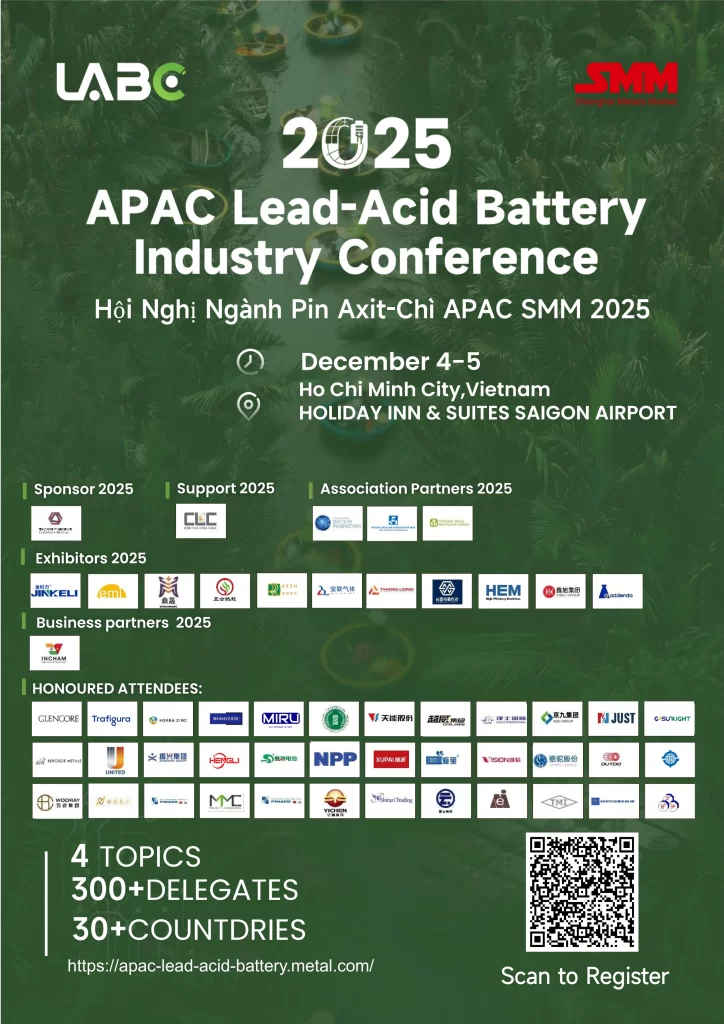
Conference Background
As geopolitical dynamics shift and the global energy transition accelerates, the lead-acid battery supply chain is undergoing significant changes. Notably, the European energy crisis and export restrictions in the US have spurred the relocation of battery manufacturing capacity to Southeast Asia.
Vietnam’s dominant motorcycle market has fueled substantial growth in its lead-acid battery industry. Chinese manufacturers have established local production bases, contributing to Vietnam’s rise as a major exporter, accounting for 23.29% of US lead-acid battery imports in 2024. However, this expansion faces a critical constraint: with domestic smelting capacity failing to keep pace, Vietnam currently relies on importing 100,000–150,000 tonnes of lead ingots annually.
LABC2025 will bring together key players in the Vietnamese industry with global ore suppliers, battery manufacturers, and end-users to jointly address challenges. These range from securing raw materials and optimizing the supply chain to developing sustainable recycling solutions.
Related Posts
LME Aluminum Prices Fall: Market Shifts from Supply Shortage Concerns to Expectations of Supply Recovery
WSR Update: Vietnam has not yet been recommended by the EC for approval regarding recycled metals.
VMRF – Circulate Capital: ESG from Compliance Requirements to Management Capability
VMRF and Kitakyushu City Explore Cooperation Opportunities in Recycling and Environmental Technology
Low River Levels in Borneo Expose New Weaknesses in Asia’s Energy Supply Chain
Green and Circular Projects May Receive 2% Interest Rate Support