

 HOME
HOME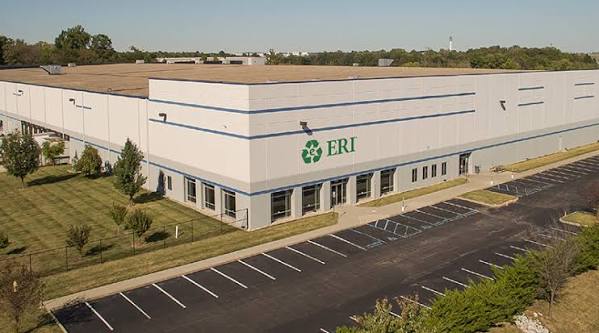
As countries increasingly tighten control over the flow of strategic minerals, electronic waste is being viewed not merely as an environmental challenge but also as a new source of resources. Old smartphones, obsolete computers, circuit boards and used batteries contain valuable materials such as copper, aluminum, nickel, lithium, cobalt, gold and other metals. The decision by U.S. electronics recycling giant Electronic Recyclers International (ERI) to establish a new joint venture in Vietnam signals that the global race to recover and recycle these secondary resources is entering a new phase.
ERI Enters Vietnam, but Its Ambition Goes Beyond Building a Recycling Facility
Electronic Recyclers International (ERI), one of the largest U.S. companies specializing in electronics recycling and IT asset disposition, has partnered with Green Marble Company, a subsidiary of VSD Holdings, to establish ERI Vietnam, with the two partners holding an equal 50-50 stake.
According to ERI, the joint venture will introduce an integrated IT Asset Disposition (ITAD) and electronics recycling system to Vietnam. Services will include secure data destruction, destruction of end-of-life IT equipment, equipment remarketing, recycling, collection, logistics and regulatory compliance management.
ERI said the venture represents its first directly owned and branded facility in Vietnam. Prior to this, the company had established an audited partner network spanning more than 140 countries.
Under the announced plan, ERI Vietnam will roll out its operations in stages. The initial phase will focus on the collection, processing and recycling of end-of-life IT assets, together with equipment shredding and battery collection at an initial scale.
By 2028, ERI is expected to expand its collection and logistics network while increasing its processing capacity for obsolete IT equipment.
In the longer term, the company plans to introduce alkaline battery recycling technology to Vietnam, expand scrap shredding operations, and deploy robotics and artificial-intelligence-powered image recognition systems to automatically sort materials after processing.
From an industry perspective, this is more than a U.S. recycling company expanding into Southeast Asia.
It is a strategic move to gain greater control over secondary raw materials at the point where those resources are generated.
From “Waste” to a Strategic Mineral Resource
The way the world views electronic waste is changing rapidly.
According to the Global E-waste Monitor 2024 published by the United Nations, the world generated approximately 62 million tonnes of electronic waste in 2022, an increase of 82% compared with 2010. That figure is projected to rise to around 82 million tonnes by 2030.
More importantly, only 22.3% of the e-waste generated in 2022 was documented as being formally collected and recycled through environmentally sound processes. The remainder still contains large quantities of recoverable resources but is instead landfilled, burned or processed outside formal recycling systems.
The economic value embedded in this waste stream is substantial.
A smartphone, computer or other electronic device can contain numerous valuable metals and materials. When collected at scale and processed with appropriate technology, this “urban mine” can return copper, aluminum, iron, nickel, cobalt, lithium, silver, gold and other elements to the economy.
The United Nations estimates that only around 1% of global rare-earth demand is currently met through e-waste recycling, highlighting the enormous untapped potential of the urban mine.
This helps explain why electronics recycling is increasingly being placed alongside traditional mining in strategies aimed at securing raw-material supplies.
Instead of opening a new mine, transporting ore thousands of kilometers and subjecting it to multiple stages of processing and metallurgy, countries can recover a portion of these materials from products that have already entered the economy.
E-waste is therefore gradually shifting from a disposal cost into a strategic asset.
The U.S. Also Wants to Keep Its “Urban Mine” at Home
ERI’s international expansion comes as U.S. policy toward strategic raw materials is changing rapidly.
On July 30, 2026, President Donald Trump signed an executive order authorizing the federal government to restrict exports of certain electronic waste streams containing critical minerals such as lithium and tungsten, with the aim of strengthening domestic recycling capacity and reducing dependence on supply chains influenced by China.
In early August, the U.S. Department of Commerce also announced one-year restrictions on exports of tungsten scrap and certain battery waste streams, including black mass — a material produced by shredding lithium-ion batteries that contains recoverable metals. The restrictions are expected to take effect on August 27, 2026.
This is a significant signal for the secondary raw-materials market.
Where scrap was previously viewed primarily as a commodity that could be shipped to locations offering lower processing costs, governments are increasingly treating certain waste streams as strategic sources of raw materials.
The objective goes beyond environmental protection. It also involves supply-chain security, industrial production capacity, defense, energy and advanced technology.
For ERI, its policy of “not importing e-waste across borders” therefore carries particular significance. Chairman and CEO John Shegerian has said that the company prioritizes materials generated within the market where it operates, rather than transporting electronic waste from one country to another.
This approach reflects a broader global trend: countries increasingly want to recover as much material value as possible from the waste generated by their own economies.
Why Is Vietnam Attracting a Major Electronics Recycler?
The answer lies first and foremost in the rapid development of Vietnam’s electronics industry.
Over nearly a decade, Vietnam has transformed itself into one of Asia’s important electronics manufacturing and export hubs.
According to Vietnam’s General Statistics Office, during the first nine months of 2025, exports of computers, electronic products and components exceeded US$77 billion, while imports reached approximately US$110 billion. In 2024, exports of this product group were around US$68 billion, while imports exceeded US$100 billion.
Growth accelerated further in 2025. According to figures cited by the Ho Chi Minh City trade and investment promotion agency from national statistics, exports of computers, electronic products and components reached approximately US$107.74 billion, up 48.4% year on year. When phones and components are included, the combined export value of the two major electronics categories exceeded US$164 billion.
Behind these figures is the increasingly deep presence of Samsung, LG, Intel, Foxconn, Luxshare, Goertek, Canon and numerous other global technology companies in Vietnam.
However, the rapid expansion of the electronics industry also creates a paradox.
The more Vietnam develops into an electronics manufacturing hub, the greater the volume of end-of-life electronic assets it will have to deal with in the future.
The issue is not limited to consumer electronics. The manufacturing ecosystem also generates industrial scrap, defective components, circuit boards, testing equipment, IT machinery and many other recyclable material streams.
These are precisely the resources that advanced recycling companies are seeking.
Vietnam’s appeal, therefore, is not simply its consumer market.
Vietnam sits at the intersection of large-scale electronics manufacturing and a rapidly developing electronics recycling market that still has significant room for growth.
Another Major Change: Vietnam Has Entered the EPR Era
Another factor that could significantly reshape Vietnam’s electronics recycling market is Extended Producer Responsibility (EPR).
Since January 1, 2025, manufacturers and importers of electrical and electronic products in Vietnam have been required to fulfill recycling responsibilities under the Law on Environmental Protection and its implementing regulations.
This represents an important structural change for the recycling market.
Previously, the disposal of an end-of-life smartphone, computer or electronic device was largely viewed as a matter of waste collection and treatment.
Under EPR, responsibility for recycling is increasingly being placed back on manufacturers and importers.
This means demand is likely to grow for companies capable of collecting, tracing, sorting and processing discarded products, while also demonstrating that recycling has been carried out in compliance with regulations.
This is also an area where ERI’s ITAD model could provide a competitive advantage.
A corporate IT asset does not only contain valuable metals and materials. It may also contain sensitive data.
As a result, the processing chain must address two requirements simultaneously: data security and material recovery.
ERI says its system uses asset-tracking software to monitor individual devices, combined with shredding technology, AI-powered image recognition and robotics to sort materials.
If effectively implemented in Vietnam, the model could represent a transition from traditional “scrap collection” toward technology-driven management of secondary resources.
The Competition Goes Beyond E-Waste
Another factor reshaping the market is the evolution of international trade policies governing scrap materials.
As of January 1, 2025, amendments concerning electrical and electronic waste under the Basel Convention came into effect, expanding and strengthening controls over the transboundary movement of such waste. The objective is to curb illegal shipments and promote environmentally sound treatment.
In Southeast Asia, these changes are making the scrap trade increasingly sensitive.
According to Fastmarkets, customs authorities in Malaysia, Thailand and the Philippines have adopted stricter approaches toward certain scrap shipments suspected of containing e-waste that was inaccurately declared. Some aluminum scrap shipments have even been held for extended periods because of concerns related to electronic waste.
Against this backdrop, ERI’s model in Vietnam could offer a relative advantage.
If materials are generated, collected and processed domestically, companies can reduce some of the risks associated with cross-border transportation of waste.
In other words, “domesticating the raw-material supply” is increasingly becoming a business strategy rather than simply an environmental principle.
Could Vietnam Become Southeast Asia’s “Urban Mine”?
This may be the most important question behind the ERI–Green Marble partnership.
Vietnam already has a large-scale electronics manufacturing ecosystem, but its domestic value chain remains relatively limited. Numerous studies show that Vietnamese electronics companies continue to rely heavily on imported components and raw materials.
According to an analysis by FiinRatings, major foreign-invested companies account for most of Vietnam’s electronics exports, while the share of inputs supplied by domestic vendors remains relatively low.
This means Vietnam may import large quantities of materials to manufacture electronic products and then export the finished goods.
Without a sufficiently strong collection and recycling system, some of the material value embedded in those products will ultimately leave the economy when they reach the end of their useful lives.
Conversely, if Vietnam can build a complete chain:
manufacturing → consumption → collection → sorting → recycling → metal recovery → return of materials to manufacturing,
a greater share of value can remain within the domestic economy for longer.
That is the fundamental logic of the circular economy.
It is also why international recycling companies are beginning to view Vietnam not merely as a waste-treatment market but as a long-term source of secondary resources.
ERI Is Building an Asian Network
The Vietnam deal should also be viewed in the broader context of ERI’s international expansion strategy.
In March 2026, the company partnered with Itochu of Japan to establish ERI Japan. In July, ERI signed another strategic agreement with Cyclic Materials, a company focused on recovering rare earth elements from waste streams.
ERI says its goal is to establish a presence in at least 7-8 Asian countries within 18 months, before expanding into additional markets and ultimately reaching at least 16 countries worldwide by the end of 2027.
Vietnam, therefore, is unlikely to be ERI’s final destination. Instead, it may become one link in the company’s broader Asian expansion strategy.
If Japan provides access to an advanced technology market and a large corporate ecosystem, Vietnam can play a different role: a rapidly growing electronics manufacturing center with a large domestic market, located in a Southeast Asian region where electronic waste volumes are increasing.
But an “Urban Mine” Does Not Automatically Become Gold
Despite its enormous potential, turning e-waste into commercially valuable mineral resources is far from simple.
The first challenge is collection.
A significant amount of electronic waste remains within the informal sector, where it may be manually dismantled or pass through multiple layers of intermediaries before reaching formal processing facilities. This reduces traceability and increases the risk that valuable materials will be lost.
The second challenge is technology.
Not all e-waste streams have the same economic value. Collection, transportation, sorting, dismantling and processing can all be expensive. At the same time, fluctuations in international metal prices directly affect the economic viability of recycling operations.
The third challenge lies in the downstream market.
A genuinely closed-loop recycling model cannot stop at shredding equipment. Companies must demonstrate that recovered materials can return to manufacturing supply chains with consistent quality, sufficient scale and competitive costs.
This will be one of the key issues to watch as ERI Vietnam begins operations.
Claims surrounding a “closed-loop” model currently represent the project’s objective. Actual performance will depend on plant capacity, collection networks, permits, processing technologies and downstream customers.
An independent analysis of the transaction has also noted that currently available information is insufficient to fully assess factors such as processing capacity, actual material volumes or the ultimate buyers of recovered materials.
From “Waste Treatment” to “Urban Mining”
Perhaps the most important aspect of the ERI Vietnam story is not the size of the new joint venture.
It is the changing way the world views waste.
In an era of energy transition, electric vehicles, data centers, AI, smartphones and increasingly sophisticated electronic devices, demand for strategic metals and minerals is expected to continue rising.
At the same time, new mining projects face growing challenges involving capital requirements, permitting timelines, environmental concerns, geopolitics and supply-chain security.
Part of the solution to the supply problem may therefore lie in materials that have already been mined, processed and consumed.
Every discarded smartphone, obsolete computer or circuit board can be viewed as a form of “ore” that has already undergone part of the refining process.
Unlike ore buried deep underground, this “ore” has already been brought to the surface, processed and distributed across households, businesses, factories and warehouses.
The remaining challenge is to build a system efficient enough to collect and recover it.
For Vietnam, therefore, the opportunity is not simply to become a destination for foreign recycling technology.
If the country can build capabilities in collection, sorting, refining and returning secondary materials to manufacturing, Vietnam could gradually develop its own urban mining value chain.
And as countries increasingly seek to retain strategic minerals within their borders, this could become an industry whose significance is comparable to that of traditional natural-resource extraction.
The ERI–Green Marble partnership may therefore be viewed as an early sign of a new form of competition: not only competition to extract what lies beneath the ground, but also competition to recover what has already been extracted and is now sitting within the waste streams of the economy.
Source: VietnamFinance and compiled from the internet.
Related Posts
VIETNAM’S CARBON MARKET: FROM POLICY TO OPPORTUNITIES FOR RECYCLING BUSINESSES
VMRF & CIRCULATE CAPITAL: PARTNERING TO BUILD CAPACITY – UNLOCK OPPORTUNITIES – CONNECT THE FUTURE
Opportunities to Access Green Finance for Recycling and Circular Economy Businesses
VMRF METAL MARKET BULLETIN: NON-FERROUS METAL MARKETS RISE SHARPLY, WITH HIGH VOLATILITY
Vietnam Pilots Greenhouse Gas Emission Quota Allocation: A Major Step Toward Delivering Net Zero Commitments and Building a Domestic Carbon Market
Congo Bans Copper and Cobalt Concentrate Exports: Global Copper Market Faces a New Supply Chain Reshuffle