

 HOME
HOME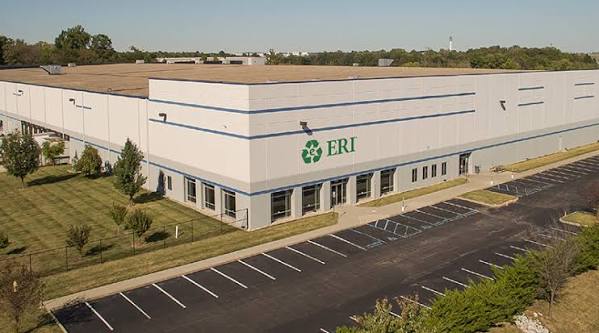
In the era of rapid technological expansion, what is commonly called “waste” is increasingly being recognized as a valuable resource. Discarded smartphones, obsolete computers, circuit boards, lithium-ion batteries and end-of-life solar panels all contain valuable metals and materials, including critical elements that are difficult to extract and refine from natural resources. As countries seek greater control over strategic mineral supplies, recovering these materials from waste streams is opening a new field of competition. The ERI–Green Marble partnership in Vietnam is therefore more than the entry of an electronics recycling company into a new market; it also signals the emergence of “urban mining” as an increasingly strategic industry.
ERI Enters Vietnam: Behind a Recycling Joint Venture Lies a Race for Raw Materials
Electronic Recyclers International (ERI), one of the leading U.S. companies specializing in electronics recycling and IT asset disposition, has partnered with Green Marble Company, a subsidiary of VSD Holdings, to establish ERI Vietnam, with the two partners holding equal 50-50 stakes. According to ERI, the joint venture will introduce an end-of-life IT asset disposition (ITAD) model combined with electronics recycling in Vietnam. The system will cover data security and destruction, IT equipment destruction, remarketing of assets that retain value, collection, logistics, recycling and regulatory compliance.
ERI said the venture represents its first directly owned and branded facility in Vietnam, while the company has previously built an audited partner network spanning more than 140 countries. ERI Vietnam will operate in phases. Initially, the company will focus on collecting, processing and recycling end-of-life IT assets, while also introducing equipment shredding and battery collection. By 2028, the collection and logistics network is expected to expand, accompanied by greater processing capacity for obsolete IT equipment. In the longer term, ERI plans to introduce alkaline battery recycling technology to Vietnam, expand scrap shredding operations and deploy robotics and AI-powered image-recognition technology to automate material sorting.
However, viewing the project simply as the construction of a recycling facility would overlook the most important part of the story. What ERI is accessing is not simply a waste stream, but a secondary source of raw materials embedded within Vietnam’s economy. This is also a trend unfolding across major economies: rather than allowing valuable materials to be lost when products reach the end of their useful lives, countries are seeking to recover, refine and return those materials to production chains.
E-Waste Is Essentially an “Ore Deposit” That Has Already Been Mined
The term “e-waste” often evokes images of discarded devices with little remaining value. From a resource perspective, however, that perception is becoming outdated. Electronic devices can contain multiple metals embedded within highly complex structures. Smartphones, computers, circuit boards and other electronic equipment can contain copper, aluminum, nickel, cobalt, lithium, silver, gold and other valuable metals or industrially important elements. Gold and silver have particularly high economic value, while copper, nickel, cobalt and lithium play important roles in electrification, batteries and modern technologies. Certain rare-earth elements are also found in electronic devices and are used in magnets, motors and a range of advanced technological applications.
The challenge is that these metals do not exist in easily recoverable forms. They may be embedded in circuit boards, bonded with other materials or present only in very small concentrations. Recovering them therefore requires sophisticated processes involving sorting, dismantling, shredding and material separation, and in many cases advanced chemical or metallurgical treatment. This complexity is precisely what makes e-waste both an environmental challenge and a valuable resource.
According to the Global E-waste Monitor 2024 published by the United Nations, the world generated approximately 62 million tonnes of e-waste in 2022, and that figure could rise to around 82 million tonnes by 2030. Only 22.3% of the e-waste generated in 2022 was documented as formally collected and recycled through environmentally sound processes. More significantly, those 62 million tonnes of e-waste contained approximately 31 million tonnes of metals, with a total estimated value of around US$91 billion. Copper alone accounted for about US$19 billion, gold for approximately US$15 billion and iron for around US$16 billion.
These figures show that the problem is not simply that the world is generating too much e-waste. The world is discarding enormous quantities of resources that have already been mined and refined. If these materials can be properly recovered, they can become secondary raw materials, reducing the need for additional primary extraction and easing pressure on mineral supply chains. The United Nations has also pointed out that e-waste recycling currently meets only around 1% of global rare-earth demand, highlighting the enormous but still largely untapped potential of the “urban mine.”
From “Waste” to Strategic Raw Materials
The e-waste story cannot be separated from the technological boom. The world is entering a period in which demand for electronic devices, data centers, artificial intelligence, electric vehicles, energy-storage systems and renewable energy is rising rapidly. Every one of these sectors requires significant quantities of metals and minerals, placing increasing pressure on raw-material supplies.
Developing a new mine often requires years of exploration, permitting, investment and construction. Mining projects also face growing challenges related to environmental impacts, land use, water, energy consumption and community opposition. Recycling cannot completely replace conventional mining, but it can become an increasingly important supplementary source of materials, particularly for metals with high economic value or strategic importance. This is why e-waste is increasingly being viewed as a form of “ore above ground.” Unlike ore buried deep underground, these resources have already been mined, transported, processed and incorporated into the economy. The remaining task is to recover them once again.
The U.S. Wants to Keep Resources at Home, and Other Countries Are Moving in the Same Direction
ERI’s move comes amid rapidly changing U.S. policies on strategic raw materials. On July 30, 2026, President Donald Trump signed an executive order authorizing the federal government to restrict exports of certain electronic waste streams containing critical minerals such as lithium and tungsten, with the aim of strengthening domestic recycling capacity and reducing dependence on external supply chains. In early August, the U.S. Department of Commerce also announced one-year restrictions on exports of tungsten scrap and certain battery waste streams, including black mass, a material produced by shredding lithium-ion batteries that contains recoverable metals.
This reflects an important shift in the way governments view scrap materials. Whereas scrap was previously treated largely as a commodity that could be transported to wherever processing costs were lowest, certain waste streams are now increasingly being regarded as strategic sources of raw materials. The objective is not simply environmental protection. It is also directly connected to supply-chain security, manufacturing capacity, energy, national defense and advanced technology.
Against this backdrop, ERI’s policy of not importing e-waste across borders becomes particularly significant. ERI Chairman and CEO John Shegerian has said that the company prioritizes materials generated within the markets where it operates. This approach reflects a broader trend that is becoming increasingly clear: countries want to retain the value of their resources within their economies for as long as possible.
Vietnam Is Standing at the Center of This Emerging Competition
Vietnam has a particular advantage: the rapid development of its electronics industry. Over the past decade, the country has become one of Asia’s important electronics manufacturing centers. Samsung, LG, Intel, Foxconn, Luxshare, Goertek, Canon and many other global technology companies have established manufacturing operations in Vietnam.
The larger the manufacturing base becomes, the larger the future flow of end-of-life materials will be. These materials are not limited to smartphones, computers and consumer electronics. They also include circuit boards, defective components, testing equipment, IT machinery, manufacturing equipment and various streams of industrial scrap. This makes Vietnam a particularly important market for the recycling industry. The more technology a country manufactures, the larger its future “urban mine” becomes.
According to figures cited in the original article, Vietnam’s exports of computers, electronic products and components reached approximately US$107.74 billion in 2025, up 48.4% from the previous year. When phones and components are included, exports from the two major electronics categories exceeded US$164 billion. Behind this enormous flow of exported products lies a large volume of materials entering the economy. If those materials are not recovered when products reach the end of their useful lives, Vietnam will lose part of their resource value. If an effective recycling system is established, however, the same waste stream could become a source of secondary raw materials.
EPR Opens a New Market for Electronics Recycling
Another important change is that Vietnam has entered the implementation phase of Extended Producer Responsibility, or EPR. Since January 1, 2025, manufacturers and importers of electrical and electronic products have begun fulfilling recycling responsibilities under Vietnam’s Law on Environmental Protection and its implementing regulations.
This fundamentally changes the way end-of-life products are viewed. Electronic equipment is no longer simply something consumers throw away. Manufacturers and importers are increasingly responsible for the lifecycle of products after they enter the market. This creates demand for companies capable of collecting, tracing, sorting and processing discarded products while demonstrating that recycling has been carried out in compliance with regulations.
This is also an area where ERI’s ITAD model could offer an advantage. A corporate computer can contain both valuable metals and sensitive data. Processing IT assets therefore requires both data security and material recovery. If implemented effectively, this could mark a transition from traditional scrap collection toward technology-driven management of assets and secondary resources.
But the Bigger Story May Be Electric Vehicle Batteries
If e-waste represents an “urban mine,” lithium-ion batteries from electric vehicles could become one of the most important secondary resource streams of the electrification era. EV batteries contain valuable materials such as lithium, nickel, cobalt, manganese, graphite, copper and aluminum. These are also materials facing growing pressure as electric vehicles and energy-storage systems expand.
According to the IEA, the amount of batteries deployed in electric vehicles globally reached approximately 1.2 TWh in 2025, up nearly 30% from 2024 and more than seven times the level recorded in 2020. The IEA expects battery recycling to become an increasingly important source of minerals over the long term, helping strengthen the resilience of battery supply chains.
Vietnam is entering this transition at a particularly rapid pace. According to the IEA, electric car sales in Vietnam more than doubled in 2025, making the country Southeast Asia’s largest electric-car market, with nearly 40% of new car sales being electric. The electric two-wheeler market has also expanded rapidly, with IEA data showing sales rising more than twofold to approximately 735,000 units in 2025, accounting for more than 20% of total two-wheeler sales.
These figures show that vehicle electrification in Vietnam is no longer a niche trend. It is becoming a mass market. And as millions of electric vehicles enter use, another question is beginning to emerge: what will happen to their batteries when they reach the end of their useful lives?
This is where recycling becomes particularly important. End-of-life batteries can become hazardous waste and create environmental pressure if they are handled improperly. But when collected and processed with appropriate technologies, they can become a source of lithium, nickel, cobalt, manganese, copper and other materials. EV batteries are therefore both a waste challenge created by electrification and a resource for the next generation of electrification. This is the fundamental logic of the circular economy.
Vietnam Is Also Facing a Future “Mountain” of End-of-Life Solar Panels
Another waste stream that could become very large in the future is photovoltaic panels. Vietnam experienced a period of extremely rapid solar development, while conventional solar panels typically have a lifespan of around 20 to 30 years. Some equipment may need to be replaced earlier because of damage, weather exposure, technical failures or system upgrades.
This means large-scale solar waste will not emerge immediately, but it will accumulate rapidly as the first generation of panels installed during the initial boom reaches the end of its useful life. A study published in the Vietnam Journal of Science and Technology in 2024 estimated that cumulative end-of-life solar-panel waste in Vietnam stood at approximately 148,000 tonnes in 2022 and could reach around 1.7 million tonnes by 2050.
That is far from a small waste stream. A typical silicon solar panel consists primarily of glass and aluminum, but also contains copper, silicon, tin, lead and small quantities of silver and other materials. Research on solar-panel composition in Vietnam indicates that glass accounts for around 61-63% of total weight and aluminum for roughly 11-13%, while the remainder includes wiring, encapsulation materials and other components. Metals such as copper, lead, tin and silver can be recovered through appropriate technologies.
Silver is particularly noteworthy in solar-panel recycling. The amount contained in an individual panel is relatively small, but when hundreds of thousands or millions of panels reach the end of their useful lives, the aggregate quantity can become significant. This is an important point about the concept of “urban mining”: value does not necessarily lie in an individual product, but in the scale of the overall material stream. A single old solar panel may have limited value when viewed simply as waste. Hundreds of thousands or millions of tonnes of end-of-life panels represent a very different proposition.
The Clean-Energy Boom Cannot Be Separated from Recycling
The growth of solar power and electric vehicles is often discussed primarily in terms of reducing carbon emissions. Yet the energy transition creates another challenge: how to deal with clean technologies when they reach the end of their useful lives.
This is a paradox that economies need to prepare for early. The more electric vehicles are deployed, the more batteries will eventually need to be replaced. The more utility-scale solar farms and rooftop systems are installed, the more panels will eventually reach the end of their useful lives. And the more data centers, smartphones, computers and other technology devices are used, the more components and circuit boards will eventually become waste.
Without corresponding collection and recycling systems, part of the achievement of the green transition could create a new “green consequence” in the form of accumulating waste. Conversely, if a strong recycling industry is established, these waste streams can become sources of materials for the next production cycle.
For Vietnam, this issue deserves early attention because electrification and renewable-energy development are accelerating. The IEA has identified Southeast Asia as a region entering a period of rapid electrification, with Vietnam among the leading markets for electric vehicles while also expanding low-emission power sources. A green economy cannot truly be considered sustainable if it fails to address the end-of-life stage of green technologies.
ERI May Be Seeing a Market Much Bigger Than E-Waste
Against this backdrop, ERI’s entry into Vietnam can be viewed as something much broader than an ITAD project. The company is entering a market in which several new streams of secondary raw materials are emerging simultaneously, from e-waste generated by digitalization to batteries from electric vehicles and energy-storage systems, as well as waste from renewable-energy equipment. These waste streams differ in composition and processing requirements, but they share one fundamental characteristic: they contain materials that the economy of the future will continue to need.
This also helps explain ERI’s international expansion. In March 2026, the company partnered with Itochu of Japan to establish ERI Japan. In July, ERI signed another strategic agreement with Cyclic Materials, a company focused on recovering rare earth elements from waste streams. ERI has set a goal of establishing a presence in at least 7-8 Asian countries within 18 months and reaching at least 16 countries worldwide by the end of 2027.
Within that strategy, Vietnam could become an important link because it combines an electronics manufacturing base, a large consumer market, rapid electrification and expanding renewable-energy development.
From Waste Treatment to Urban Mining
Vietnam’s biggest challenge in the years ahead may not be finding waste. The waste stream will continue to grow. The challenge will be building a system capable of efficiently transforming that waste into resources. This requires formal collection networks, sorting and processing technologies, traceability, environmental standards, markets for recycled materials and policies capable of encouraging long-term investment.
Importantly, the materials with the highest potential value are often among the most difficult to recover. A circuit board may contain gold and silver, but recovering those metals requires appropriate technology and processes. An EV battery may contain lithium, nickel and cobalt, but separating and refining these materials requires advanced technology, strict safety controls and significant investment. A solar panel may contain silver, silicon, copper and aluminum, but separating its multiple material layers is also far from simple.
The very difficulty of refining these materials is part of what makes them valuable. If they were easy to recover, they would not be lost on such a large scale. As recycling technologies improve and waste streams become sufficiently large, the economics can change. Materials once considered too scarce, too complex or too expensive to recover could become commercially viable sources of raw materials.
The traditional mining industry has undergone similar transformations: as technology changes, resources that were previously considered economically insignificant can become valuable assets.
Vietnam Has an Opportunity to Turn Waste into a Resource Advantage
If Vietnam can build a complete chain from production and consumption to collection, sorting, recycling, refining and the return of recovered materials to manufacturing, it could retain more value within its economy. An old circuit board can become a source of copper, gold and silver; an end-of-life EV battery can provide lithium, nickel, cobalt, manganese, copper and aluminum; while an old solar panel can supply glass, aluminum, silicon, copper and silver. Once refined, these materials can return to production chains rather than being landfilled or lost.
That is the essence of urban mining.
The concept does not mean e-waste can completely replace natural mineral deposits. Rather, it demonstrates that a new source of supply already exists within the economy, and that source will grow as technology expands. At a time when countries are seeking to reduce dependence on imported minerals and strengthen supply-chain self-sufficiency, secondary resources will become increasingly important.
For Vietnam, the opportunity lies in ensuring that the technology and clean-energy boom does not create a mountain of waste in the future, but instead turns those waste streams into raw materials for the next production cycle.
ERI’s entry into Vietnam may therefore be only the beginning of a much larger game. The competition will no longer be simply about who can process more waste, but about who can recover more resources from products that have reached the end of their useful lives.
In the age of electronics, electric vehicles, batteries and solar energy, what is called waste today could become the strategic raw material of tomorrow.
The resource competition of the future, therefore, will not take place only beneath the ground. It will also take place within the waste streams that economies generate every day.
Source: VietnamFinance and compiled from the internet.
Related Posts
LME Aluminum Prices Fall: Market Shifts from Supply Shortage Concerns to Expectations of Supply Recovery
WSR Update: Vietnam has not yet been recommended by the EC for approval regarding recycled metals.
VMRF – Circulate Capital: ESG from Compliance Requirements to Management Capability
VMRF and Kitakyushu City Explore Cooperation Opportunities in Recycling and Environmental Technology
Low River Levels in Borneo Expose New Weaknesses in Asia’s Energy Supply Chain
Green and Circular Projects May Receive 2% Interest Rate Support