

 HOME
HOME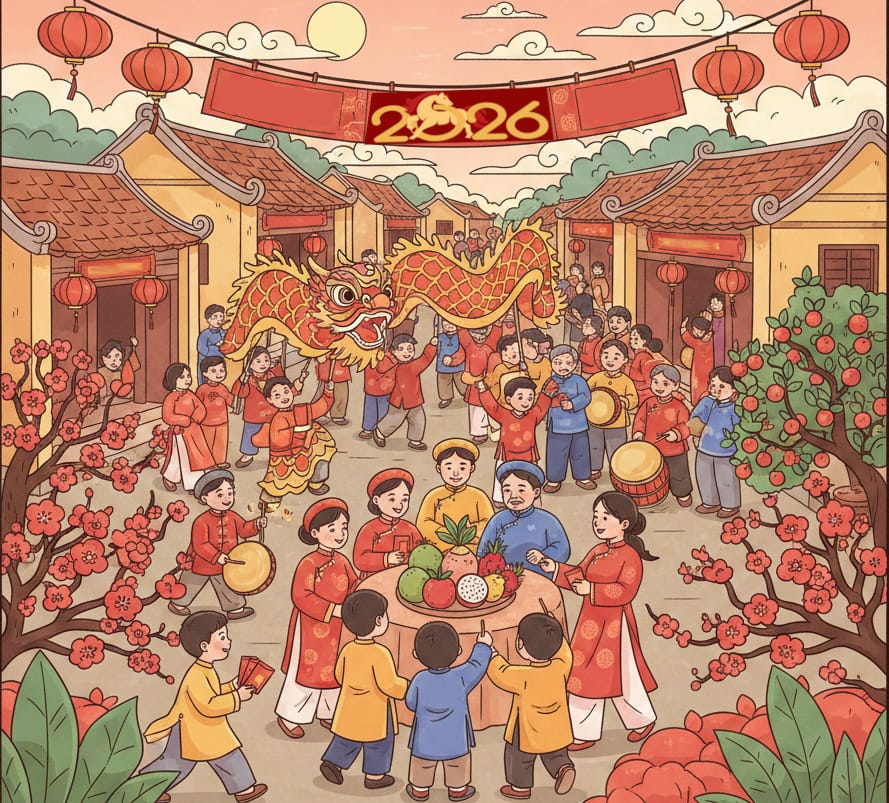
The Vietnamese Lunar New Year is one of the most profound and meaningful cultural symbols of the Vietnamese people. Rooted in agricultural beliefs and the concept of the cyclical renewal of heaven and earth, Tet is not only a moment marking the transition between the old year and the new one but also an occasion for families to reunite, remember their ancestors, express gratitude to the universe, and send good wishes for the future. From preparation customs to New Year’s Eve rituals, from traditional dishes to dances, games, and greetings, Tet carries within it a system of cultural values that has been preserved and passed down through many generations.
Preparation for Tet begins many days in advance. Homes are thoroughly cleaned, ancestral altars are carefully polished, peach blossoms or apricot flowers are thoughtfully selected, and kitchens become lively with the preparation of traditional foods. Cleaning the house is not only for aesthetic purposes. For Vietnamese people it is also an act of removing misfortune and making space for luck and prosperity to enter the home. The five fruit tray placed on the altar is an offering to heaven and earth and to ancestors. Each fruit represents a wish and a hope for health, abundance, and peace.
Among all Tet rituals, remembering ancestral roots and grandparents holds a central place. The ancestral altar with burning incense and an offering meal becomes a meeting point of the past and the present. Family members gather together, younger generations bow in respect, offer prayers, share stories, and revisit family traditions. Stories about origins, moral lessons, and memories of those who have passed away are recalled not only to honor them but also to pass on life experiences to younger generations. In modern life, when people are busy and often far from home, Tet becomes a rare occasion for everyone to return, reconnect family bonds, and reaffirm identity.
New Year’s Eve is the most sacred moment of Tet and is marked by solemn rituals. At the moment when heaven and earth transition into a new cycle, many families perform ceremonies to worship the universe and their ancestors in gratitude for the past year and to pray for a better year ahead. Vietnamese people believe that this moment has a significant influence on destiny, so the rituals are carried out with sincerity. The sound of temple bells and traditional music resonates in the quiet night, creating a sacred yet intimate atmosphere. In many places people maintain the custom of lighting incense, reciting prayers, and then welcoming the new year together in a moment that is both traditional and filled with hope.
The colors of Vietnamese Tet are a harmonious blend of tradition and local aesthetics. Red symbolizes luck, happiness, and renewed energy, which is why red envelopes, traditional long dresses, apricot flowers, and many decorative items often feature this vibrant tone. The golden yellow of apricot blossoms in the South or the pink of peach blossoms in the North bring a sense of warmth and growth. The traditional long dress appears frequently during Tet especially in public spaces, ceremonies, and family photographs. It is not only a garment but also an aesthetic symbol that honors the graceful beauty of Vietnamese culture. The sounds of Tet are also distinctive. Warm laughter during family meals, New Year greetings, the sound of rice cakes cooking on the stove, and fireworks together create a lively yet nostalgic atmosphere.
Tet cuisine is an essential part of its spirit. Traditional dishes reflect both meticulous preparation and symbolic meaning. Square sticky rice cakes and cylindrical sticky rice cakes symbolize heaven and earth. Wrapped in green leaves and filled with mung beans and pork, they serve as a reminder of agricultural roots and fertile land. Preserved meats such as pork roll and fermented vegetables, bamboo shoot soup, along with fresh fruits and sweet desserts, balance flavors and enrich the Tet meal. Preparing these rice cakes together is not only a task but also a family ritual where generations share skills, memories, and laughter.
Customs such as giving lucky money and welcoming the first visitor of the year reflect beliefs in fortune and the importance of social relationships. The lucky red envelope which began as a simple tradition has become a symbol of blessings, care, and goodwill. The first visitor tradition includes both collective and personal elements. Families hope that the first guest of the year will bring good fortune, while the invited guest is often someone with a fulfilling life to inspire a prosperous beginning. Short but meaningful greetings such as wishes for prosperity, success, and good health are exchanged continuously, creating a warm and optimistic atmosphere.
Beyond family rituals, Tet is also a time for communities to connect through cultural activities. Village festivals, traditional singing, lion dances, folk games, and chess competitions help maintain cultural identity. Children eagerly participate in traditional games and receive small gifts, while the elderly rediscover familiar melodies and proverbs. Public spaces such as flower markets, calligraphy streets, and Tet fairs become gathering places where people shop, enjoy art, and exchange cultural values. It is also an opportunity for artisans to pass on traditional crafts such as pottery making, embroidery, lantern making, and drum crafting.
In an era of globalization, Tet continues to play a vital role in strengthening cultural identity. Whether at home or abroad, Vietnamese communities strive to preserve these customs by organizing Tet celebrations, teaching how to make traditional rice cakes, performing lion dances, and holding incense offering ceremonies. These traditions help younger generations understand their roots, appreciate family values, and recognize their responsibilities to the community. Tet is not only a time for remembrance but also an opportunity to adapt traditions to modern life while preserving their essence.
The Vietnamese Lunar New Year is therefore a cultural treasure that embodies filial piety, gratitude, community spirit, and hope for a new beginning. Rituals honoring ancestors, the sacred New Year’s Eve, family meals, festive colors, and folk customs all contribute to a unique and vibrant identity. When celebrating Tet, Vietnamese people are not only welcoming a new year according to the calendar but also preserving and passing on values and memories so that their roots remain present in today’s life and guide future generations.
Related Posts
Vietnam Metal Recycling Forum (VMRF) attends ALUMINIUM 2026 in Germany
VMRF – Market & Policy Bulletin: Non-Ferrous Metals, Steel Scrap and EU Supply Risks
LME Aluminum Prices Fall: Market Shifts from Supply Shortage Concerns to Expectations of Supply Recovery
WSR Update: Vietnam has not yet been recommended by the EC for approval regarding recycled metals.
VMRF – Circulate Capital: ESG from Compliance Requirements to Management Capability
VMRF and Kitakyushu City Explore Cooperation Opportunities in Recycling and Environmental Technology