

 HOME
HOME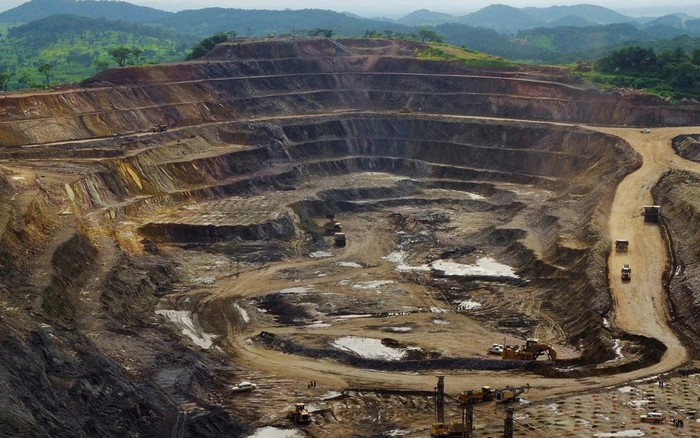
The Democratic Republic of Congo’s latest decision has sent another strong signal that resource-rich nations are increasingly tightening control over their mineral wealth while accelerating domestic value-added processing. The country’s ban on copper and cobalt concentrate exports is not only influencing the global copper market but also reflects a broader shift in the development strategies of major mineral-producing countries.
Congo Bans Copper and Cobalt Concentrate Exports as It Pushes for Greater Domestic Value Creation
On August 6, the Government of the Democratic Republic of Congo (DRC) officially announced an immediate ban on the export of copper concentrates and cobalt concentrates. Under the new regulation, one-year export waivers may still be granted under strategic circumstances, while the measure replaces the country’s 2023 export framework with a broader mineral export policy.
The announcement immediately affected commodity markets. Three-month copper futures on the London Metal Exchange (LME) climbed as much as 1.8% to US$14,369.50 per metric ton, approaching the record high reached earlier in 2026.
Congo Wants to Capture More Value from Its Mineral Resources
As the world’s largest producer of cobalt and one of the leading suppliers of copper, the DRC has historically exported a significant portion of its minerals as concentrates or semi-processed materials before they were refined elsewhere, particularly in China.
According to the Congolese government, the export ban is designed to encourage mining companies to invest more heavily in domestic smelting and refining facilities, thereby creating jobs, increasing government revenues, and retaining a larger share of the value generated by the country’s mining sector.
This is not the first time the DRC has implemented such a policy. Similar export restrictions were introduced in 2013, 2019, and 2023, although exemptions were frequently granted due to insufficient domestic smelting capacity.
Official statistics indicate that during the first quarter of 2026, the DRC exported nearly 697,000 tonnes of copper cathodes, while copper concentrate exports contained only about 18,900 tonnes of copper metal, highlighting that the majority of the country’s copper production is already refined domestically before export.
Christian-Geraud Neema, a mining analyst at the China-Global South Project, believes the latest export ban is unlikely to cause severe disruption to global copper supply because most Congolese copper is already processed domestically. However, operations such as the Kamoa-Kakula Copper Complex are expected to experience greater impacts since they have continued exporting part of their concentrate production under previous exemptions.
Copper Prices Rise on Supply Risk Concerns Rather Than Immediate Shortages
The sharp rise in copper prices following the announcement primarily reflects growing market concerns over future supply risks rather than an immediate physical shortage.
Market analysts note that copper has become increasingly sensitive to any signs of supply disruption after recent production challenges in Indonesia, Chile, and the DRC. At the same time, new mine development remains slow, ore grades continue to decline, and bringing a new copper mine into production often requires more than a decade.
The International Copper Study Group (ICSG) has also revised down its global mine supply growth forecast for 2026 following operational disruptions at several major mines, including Kamoa-Kakula in the DRC. Tight copper concentrate availability continues to pressure smelters worldwide.
Goldman Sachs recently raised its year-end copper price forecast, arguing that weaker-than-expected mine supply growth is likely to leave the global copper market outside the United States in a significant supply deficit through 2026 and into 2027.
Deep Processing Is Becoming a Global Trend
The DRC’s decision is far from an isolated case. Instead, it reflects a structural trend that is gaining momentum worldwide.
As copper becomes one of the most strategic metals for electrification, electric vehicles, renewable energy, artificial intelligence data centers, and power grid expansion, resource-rich countries are increasingly unwilling to remain exporters of raw materials alone.
Indonesia has already demonstrated the effectiveness of this strategy by banning nickel ore exports, successfully attracting billions of dollars in downstream processing investments and becoming the world’s largest nickel processing hub.
Today, the DRC is following a similar path with copper and cobalt. Several countries across Africa and South America are also evaluating policies designed to increase domestic mineral processing instead of exporting raw or semi-processed resources.
According to Wood Mackenzie, the copper industry’s biggest bottleneck is no longer demand but rather concentrate availability and processing capacity. Consequently, ownership of modern smelting and refining infrastructure is becoming a major strategic advantage for producing countries.
For Vietnam, the DRC’s policy offers several important lessons.
First, as copper increasingly becomes the “metal of the energy transition,” excessive dependence on imports from a limited number of producing countries could expose manufacturers of electrical cables, electrical equipment, electronics, and renewable energy components to significant supply risks.
Second, Vietnam should accelerate the development of its copper and non-ferrous metal recycling industry as a strategic source of raw materials. Recycled copper can reduce reliance on imported concentrates and refined copper while supporting the country’s circular economy objectives.
Third, attracting investment into smelting, refining, and higher-value copper manufacturing will strengthen Vietnam’s industrial competitiveness rather than relying primarily on trading or downstream fabrication.
In addition, Vietnam should diversify its copper import sources, establish strategic stockpiles of critical minerals, and deepen international cooperation with resource-producing countries to mitigate the impact of sudden policy changes in global mineral markets.
What Do Experts Recommend to Prevent Future Supply Shocks?
Industry experts generally agree that supply disruptions are likely to become more frequent as copper evolves into one of the world’s most strategic industrial metals.
The International Copper Study Group emphasizes that investment in new mining projects must accelerate because project development cycles are exceptionally long while ore grades at existing mines continue to decline.
Wood Mackenzie recommends that major consuming countries strengthen three key pillars simultaneously: expanding mining investment, increasing smelting and refining capacity, and significantly boosting copper recycling rates to ensure long-term supply security.
Many analysts also recommend that manufacturers diversify their procurement strategies, secure long-term supply agreements, and increase the use of recycled copper to reduce dependence on any single producing region.
As more resource-rich countries prioritize domestic downstream processing, the resilience of global supply chains will increasingly depend on diversified sourcing, advanced processing capabilities, and circular economy initiatives.
The DRC’s latest move demonstrates that competition in the copper industry is no longer centered solely on mining output. Instead, it has evolved into a competition to control the entire value chain—from mining and refining to advanced manufacturing.
With global copper demand expected to continue rising alongside electrification and the clean energy transition, countries capable of building resilient supply chains and competitive downstream industries will be better positioned to benefit from the next phase of the global metals economy.
Source: Reuters and compiled from publicly available information on the Internet.
Related Posts
CMRA Annual Convention 2026 in Ningbo: Reshaping the Recycled Metals Value Chain in a Changing Global Landscape
IBAAS–VFMSTA 2026: International Forum on Bauxite, Alumina, Aluminium and Critical Minerals in Vietnam
Smart Factories Open a New Competitive Race in the Metals Industry: Companies That Control Energy and Data Will Gain the Edge
EU Tightens Aluminium Scrap Exports: Global Recycled Aluminium Market Faces a Major Reshaping
Vietnam’s Tungsten Enters a New Cycle: Nui Phao and Vietnam’s Ambition to Elevate Its Strategic Metal Position
Copper Hits Record Highs Amid a “Supply Crunch”: AI Is Only Part of the Story