

 HOME
HOME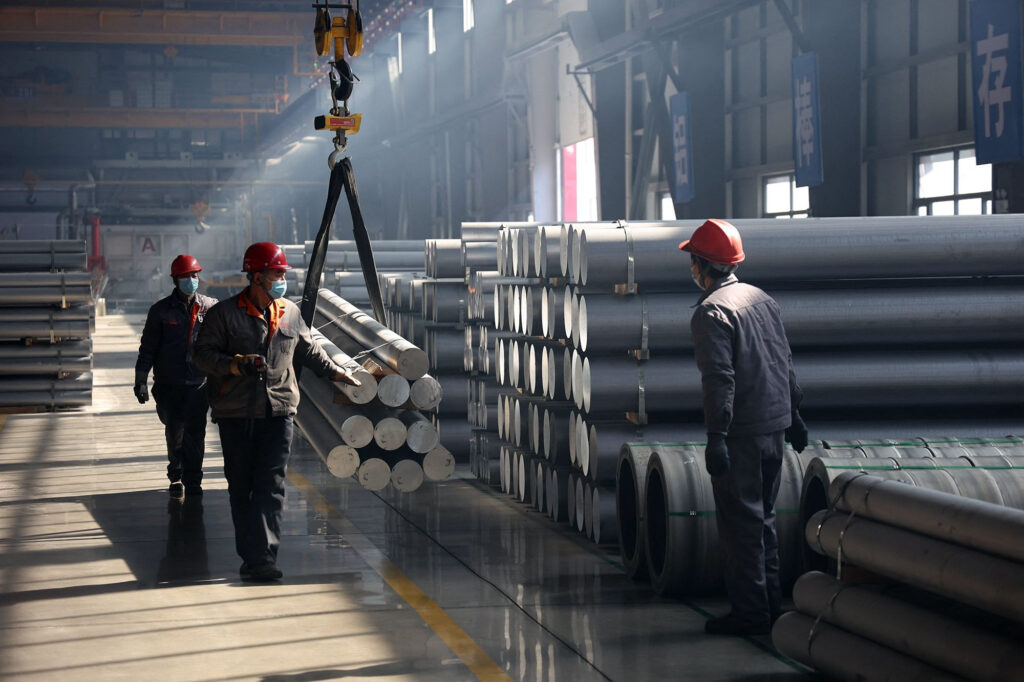
U.S. President Donald Trump has signed a new executive order establishing a preferential import tariff program for companies investing in the construction, expansion, or modernization of aluminum smelters in the United States. The policy is widely viewed as an important step toward rebuilding the country’s domestic aluminum production capacity, reducing reliance on imported metal, and strengthening supply chains for strategic industries.
For Vietnam, the new policy is particularly noteworthy as several major aluminum smelting projects are approaching completion and preparing to produce the country’s first domestically smelted primary aluminum.
The U.S. Introduces Tariff Incentives to Encourage Aluminum Smelting Investment
Under the executive order, the U.S. Department of Commerce will establish an approval program for companies planning to build new aluminum smelters or expand existing facilities. Approved projects will be allowed to import the primary aluminum required during project development at only half of the current tariff rate.
While most imported aluminum currently faces a 50% tariff under Section 232 measures, qualifying investment projects will pay only 25%.
This is not a broad relaxation of U.S. trade policy. Instead, it is a targeted investment incentive designed to encourage companies to establish aluminum production capacity within the United States. Washington is maintaining high import tariffs to protect domestic producers while lowering investment costs for companies committed to expanding U.S. manufacturing.
The White House considers aluminum a critical material for national defense and advanced manufacturing industries. Rebuilding domestic smelting capacity is therefore aimed not only at increasing industrial output but also at strengthening long-term supply chain security.
At the same time, President Trump signed another executive order tightening restrictions on the use of critical minerals and sensitive materials originating from countries such as China, Russia, Iran, and North Korea in U.S. defense supply chains. Beginning in January 2027, defense contractors seeking exemptions to use such materials must demonstrate that they have exhausted all reasonable efforts to identify alternative sources. The Department of Defense will also require contractors to map their entire supply chains to improve traceability of materials used in defense programs.
What Does This Mean for the Global Aluminum Market?
In the short term, the new policy is unlikely to significantly alter global aluminum supply and demand, as developing a new aluminum smelter typically requires several years of construction and billions of dollars in investment.
Over the longer term, however, the executive order sends a clear message that aluminum smelting is once again being recognized as a strategic industry deserving strong government support.
The policy also reflects a broader shift in global competition. Rather than competing solely on production costs, countries are increasingly focusing on supply chain resilience, advanced smelting technology, stable electricity supplies, and lower carbon emissions as the key drivers of competitiveness.
Implications for Vietnam’s Aluminum Smelting Projects
Although the new U.S. policy will have little direct impact on Vietnam’s aluminum exports, it carries important strategic implications for the country’s aluminum industry.
Vietnam is steadily completing its integrated bauxite–alumina–aluminum value chain. Among the most significant projects is the Dak Nong Aluminum Electrolysis Plant, which is expected to become Vietnam’s first industrial-scale producer of primary aluminum using domestically produced alumina. Once operational, the project will significantly increase the value added of Vietnam’s bauxite industry while reducing reliance on imported primary aluminum.
The U.S. initiative demonstrates that major economies continue to regard aluminum smelting as a strategic industrial sector worthy of long-term investment. This provides encouraging signals for Vietnam’s own smelting projects, reinforcing confidence that demand for domestic aluminum production capacity will remain strong despite the industry’s high capital requirements.
At the same time, the policy highlights a new competitive reality. Future success in the aluminum industry will depend on far more than production volume. Smelters seeking to integrate into global supply chains will increasingly be expected to meet strict requirements on carbon emissions, raw material traceability, and supply chain transparency.
For Vietnam’s upcoming aluminum smelters, this presents both opportunities and challenges. Facilities equipped with modern technology, reliable power supplies, and lower-carbon production processes will be well positioned to participate in regional and global supply chains as international manufacturers continue diversifying sourcing beyond traditional suppliers.
VMRF Perspective
The latest U.S. executive order signals that global competition in the aluminum industry is entering a new phase, where domestic smelting capacity is increasingly viewed as a matter of economic resilience and national security.
For Vietnam, this is an opportune moment to accelerate the development of its flagship aluminum smelting projects, complete the integrated bauxite–alumina–aluminum value chain, and expand downstream processing capabilities. However, increasing production capacity alone will not be sufficient. The industry’s long-term competitiveness will depend on its ability to meet increasingly stringent international standards for clean energy, carbon emissions, material traceability, and environmental compliance.
As Vietnam prepares to bring its first large-scale aluminum smelting projects into operation, aligning with these global trends will be essential for establishing the country as a competitive and reliable supplier in the international aluminum market.
Related Posts
CMRA Annual Convention 2026 in Ningbo: Reshaping the Recycled Metals Value Chain in a Changing Global Landscape
IBAAS–VFMSTA 2026: International Forum on Bauxite, Alumina, Aluminium and Critical Minerals in Vietnam
Smart Factories Open a New Competitive Race in the Metals Industry: Companies That Control Energy and Data Will Gain the Edge
EU Tightens Aluminium Scrap Exports: Global Recycled Aluminium Market Faces a Major Reshaping
Vietnam’s Tungsten Enters a New Cycle: Nui Phao and Vietnam’s Ambition to Elevate Its Strategic Metal Position
Copper Hits Record Highs Amid a “Supply Crunch”: AI Is Only Part of the Story