

 HOME
HOME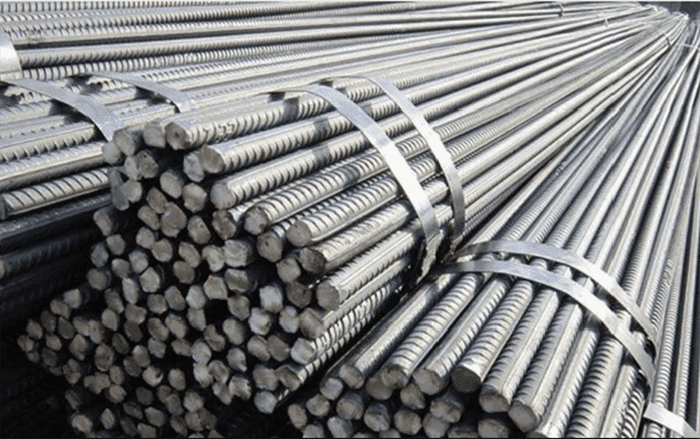
Amid an increasingly complex global trade environment, trade defense measures are becoming a common tool used by many countries to protect domestic industries. A recent development has drawn significant attention after the U.S. Department of Commerce (DOC) announced its preliminary determination in an anti-dumping investigation concerning steel reinforcing bar imports from Vietnam. According to the decision, the temporary tariff imposed on a major Vietnamese steel producer may reach nearly 122%, while other Vietnamese exporters face tariffs of more than 130%.
This decision not only directly affects several Vietnamese steel manufacturers but also reflects the growing trend of trade protectionism worldwide, particularly in the steel sector, which is widely regarded as a strategically sensitive industry in many economies.
U.S. Imposes Preliminary Tariffs of More Than 130% on Vietnamese Rebar
According to information from the Trade Remedies Authority of Vietnam under the Ministry of Industry and Trade, on March 10 the agency received official notice that the DOC had issued a preliminary determination in the anti-dumping investigation into steel reinforcing bars imported from Vietnam.
During the investigation process, the DOC selected one Vietnamese company as a mandatory respondent. In total, about ten affiliated companies are linked to this respondent, including subsidiaries of Hoa Phat Group such as Hoa Phat Hai Duong Steel, Hoa Phat Dung Quat Steel, and Hoa Phat Hung Yen Steel.
According to the preliminary findings, the temporary anti-dumping duty rates have been determined at a notably high level. The mandatory respondent and its affiliated companies face a rate of 121.97%, while other Vietnamese exporters are subject to a tariff of up to 130.77%.
This is considered one of the highest anti-dumping tariff levels ever applied to Vietnamese steel products in the U.S. market.
Rapid Growth of Vietnamese Steel Exports to the U.S.
Trade data indicate that exports of Vietnamese steel reinforcing bars to the United States have increased significantly in recent years.
In 2022, export volume remained extremely modest at around 43 tons, valued at approximately 43,000 USD. However, by 2023, shipments had surged to about 27,700 tons, equivalent to roughly 16.8 million USD. In 2024, exports continued to rise, reaching approximately 56,400 tons with a value close to 30 million USD.
Such rapid growth is widely considered one of the key factors behind concerns from U.S. steel producers about competition from imported Vietnamese steel. In anti-dumping investigations, a sharp increase in import volumes is often a critical element examined by investigating authorities when determining potential injury to domestic industries.
Comparison with Tariffs Imposed on Other Countries
One notable aspect of the DOC’s preliminary determination is that the tariff levels imposed on Vietnam are significantly higher than those applied to some other countries under investigation.
For instance, steel reinforcing bars exported from Bulgaria are subject to a preliminary duty of approximately 52.8%, while tariffs on products from Egypt range between 34.2% and 52.7%.
This disparity suggests that Vietnamese exporters may face considerably greater competitive pressure in the U.S. market if the preliminary tariff levels are maintained in the final ruling.
Earlier Countervailing Duty Investigation
Before issuing the anti-dumping preliminary decision, the DOC had already conducted a separate countervailing duty investigation concerning steel reinforcing bars imported from Vietnam, Algeria, and Egypt.
According to the preliminary findings, the temporary countervailing duty imposed on companies affiliated with Hoa Phat is only 1.08%, with other Vietnamese exporters facing a similar rate.
In contrast, the preliminary subsidy margin for steel imports from Algeria reached as high as 72.94%, while the rate for Egypt was around 29.51%. These figures are significantly higher than the subsidy levels attributed to Vietnamese producers.
This indicates that the dispute in this case is largely centered on allegations of dumping rather than government subsidies.
Global Context: Growing Protectionism in the Steel Industry
The case involving Vietnamese steel comes at a time when the global steel industry is experiencing an increasing number of trade defense measures.
According to statistics from the World Trade Organization, steel products are among the most frequently targeted goods in anti-dumping investigations worldwide. Over the past decade, major economies such as the United States, the European Union, and India have repeatedly imposed anti-dumping and countervailing duties to protect domestic steel industries.
Notably, since 2018 the United States has implemented global steel tariffs under Section 232 of the Trade Expansion Act, a policy introduced by former President Donald Trump that imposed a 25% tariff on many imported steel products.
Since then, protectionist trends in the steel sector have continued to intensify, partly due to persistent concerns about global overcapacity in steel production.
Potential Impacts on Vietnam’s Steel Industry
Vietnam is currently among the largest steel producers and exporters in Southeast Asia. In recent years, major Vietnamese companies such as Hoa Phat have made significant investments in large-scale integrated steel complexes aimed at expanding export markets.
However, facing high anti-dumping tariffs could significantly weaken the competitiveness of Vietnamese steel in the U.S. market. In the short term, exports to the United States may decline sharply if the current tariff levels remain unchanged in the final determination.
Moreover, trade remedy cases also increase legal costs and compliance burdens for businesses involved in international trade.
International Policy Recommendations for Vietnam
In light of this situation, many international trade experts believe that Vietnam should adopt a strategic approach to reduce risks arising from trade defense measures.
One important step is strengthening cooperation between businesses and government authorities during investigation processes. Providing transparent, complete, and timely information can help reduce dumping margins in the final determination.
Vietnam may also draw lessons from countries such as South Korea and Japan, which have developed early warning systems for trade remedy cases. These systems allow exporters to identify potential investigation risks early and prepare necessary documentation before cases are formally initiated.
Another important approach is promoting bilateral trade dialogue with the United States to ease tensions in sensitive sectors such as steel. Consultation mechanisms within the broader framework of bilateral economic relations could play an important role in addressing disputes before they escalate into large trade cases.
Additionally, Vietnam should continue diversifying export markets to reduce dependence on a few major destinations. Expanding exports to emerging markets in the Middle East, South Asia, and Africa could help mitigate risks associated with trade protectionism.
Outlook and Next Steps
Under the DOC’s investigation procedures, after issuing a preliminary determination the agency may send additional questionnaires and conduct on-site verification at Vietnamese companies to validate the data submitted during the investigation.
The final determination will be announced after the completion of these verification processes and after reviewing responses from both businesses and the Vietnamese government.
During this period, the Trade Remedies Authority of Vietnam recommends that affected companies carefully review the preliminary findings and work with international legal experts to prepare comprehensive defense materials. Close cooperation with DOC investigators during verification may help reduce the final tariff rates.
In the long run, this case highlights how Vietnam’s steel industry is entering a phase of increasingly intense global competition, where trade policy, geopolitics, and industrial strategy are closely intertwined. For Vietnam, building a sustainable export strategy and strengthening its capacity to respond to trade remedy investigations will be essential for maintaining growth in the steel sector in the years ahead.
Related Posts
LME Aluminum Prices Fall: Market Shifts from Supply Shortage Concerns to Expectations of Supply Recovery
WSR Update: Vietnam has not yet been recommended by the EC for approval regarding recycled metals.
VMRF – Circulate Capital: ESG from Compliance Requirements to Management Capability
VMRF and Kitakyushu City Explore Cooperation Opportunities in Recycling and Environmental Technology
Low River Levels in Borneo Expose New Weaknesses in Asia’s Energy Supply Chain
Green and Circular Projects May Receive 2% Interest Rate Support