

 HOME
HOME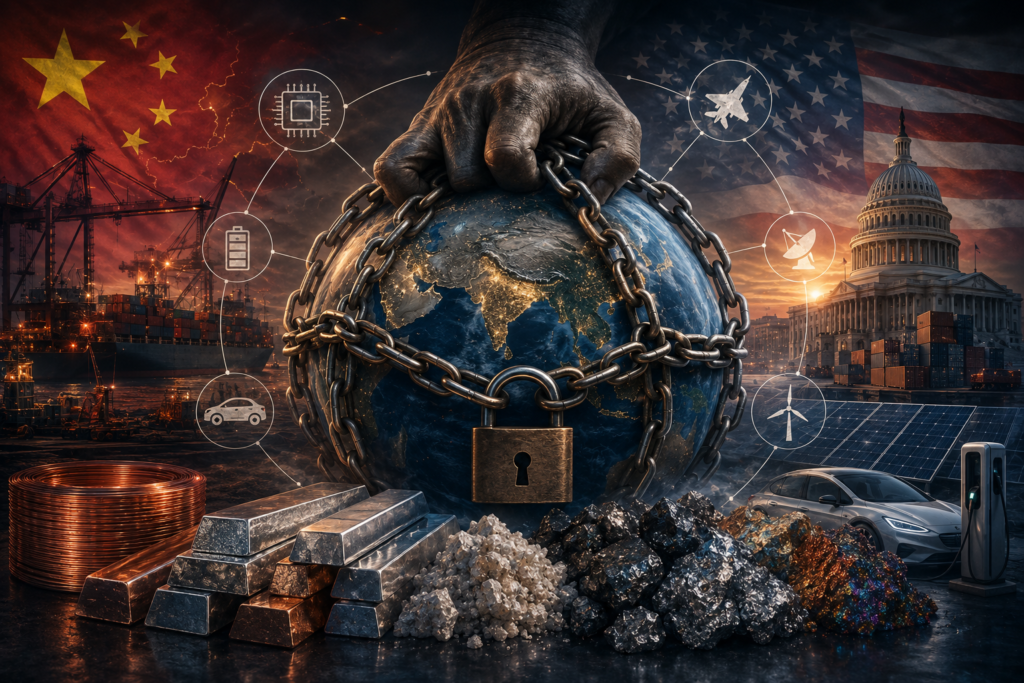
From Energy Security to Metal Security
For decades, oil has been regarded as the cornerstone of energy security and economic power. Today, however, the global transition toward clean energy is fundamentally reshaping that landscape. Instead of competing for oil, nations are increasingly competing for strategic metals and critical minerals such as copper, aluminum, lithium, nickel, cobalt, rare earth elements, and graphite.
These metals form the backbone of electric vehicles, battery storage systems, wind turbines, solar panels, artificial intelligence data centers, semiconductors, defense technologies, and modern power grids. In other words, countries that control the supply chain of strategic metals will hold a decisive advantage in the next era of industrial development.
Against this backdrop, a recent study by the U.S. National Bureau of Economic Research (NBER), together with the latest report from the International Energy Agency (IEA), delivers a sobering conclusion: the green transition is not eliminating strategic dependence—it is simply shifting it from Middle Eastern oil fields to global mineral processing and refining capacity.
China Holds the World’s Critical Supply Chain Bottleneck
According to the IEA, China remains the world’s dominant refiner of nearly every major electrification metal. On average, approximately 72% of the refining capacity for critical materials—including copper, lithium, cobalt, and graphite—is concentrated in China, and this dominance is expected to remain largely unchanged over the coming decades.
Remarkably, China does not possess the world’s largest reserves of these minerals. Instead, it has secured its leadership through decades of strategic investment, technological advancement in metallurgy, and proactive overseas financing.
Through the Belt and Road Initiative (BRI), China has invested heavily in resource-rich countries across Southeast Asia, Africa, and Latin America, establishing what researchers describe as a “hub-and-spoke” system. Resource-producing nations extract the ore, while China performs the high-value refining, materials processing, and advanced manufacturing.
Indonesia illustrates this model perfectly. Supported by substantial Chinese investment, the country has rapidly become the world’s largest producer of ferronickel. Yet the overwhelming majority of its output ultimately flows into China’s industrial ecosystem, reinforcing Beijing’s position at the center of the global nickel supply chain.
Supply Disruptions Could Trigger Inflation Worse Than an Oil Shock
Perhaps the most significant finding of the NBER study concerns macroeconomic stability.
According to the researchers’ economic models, a standard supply shock affecting electrification metals could increase cumulative consumer inflation in the United States and Europe by roughly one percentage point within two years—nearly twice the impact of an equivalent oil supply disruption.
The reason is straightforward. Unlike oil, which benefits from diversified suppliers, strategic petroleum reserves, and deep financial markets, the supply chain for critical metals is highly concentrated, refining capacity is limited, and expanding production requires years of investment.
A disruption in battery-grade graphite or other key materials could jeopardize hundreds of billions of dollars in downstream manufacturing across electric vehicles, battery production, renewable energy, consumer electronics, and advanced manufacturing. Consequently, many governments now regard critical minerals not merely as commodities but as matters of national security.
Major Economies Are Responding
Recognizing the risks of excessive dependence on a single supplier, leading economies have begun implementing comprehensive strategies to secure their own mineral supply chains.
The United States has launched Project Vault, a strategic critical mineral stockpiling initiative supported by a US$10 billion financing program from the U.S. Export-Import Bank, complemented by billions of dollars in private investment to strengthen domestic industrial resilience.
The European Union has introduced the Critical Raw Materials Act, encouraging investment in mining, refining, recycling, and domestic processing capacity across member states.
Japan, South Korea, Australia, and other industrial economies are likewise accelerating investments in mining, advanced metallurgy, recycling technologies, and strategic reserves to reduce their exposure to concentrated supply chains.
The competition is therefore no longer centered solely on mineral extraction. Instead, it has evolved into a race to control the entire value chain—from mining and refining to advanced materials manufacturing and recycling.
Where Does Vietnam Fit Into This New Global Landscape?
Vietnam finds itself at a strategically important crossroads.
The country possesses significant reserves of bauxite, rare earth elements, titanium, copper, nickel, and other valuable mineral resources, while simultaneously serving as one of Asia’s fastest-growing manufacturing hubs for electronics, machinery, and industrial production.
This unique position means Vietnam enjoys both considerable opportunities and substantial exposure. Any disruption in global metal supply chains directly affects the country’s manufacturing competitiveness and export industries.
In recent years, Vietnam has begun shifting its industrial strategy away from exporting raw minerals toward developing higher-value processing industries, advanced metallurgy, and integrated domestic supply chains.
This transformation aligns closely with the strategic direction adopted by major industrial economies around the world.
Vietnam Is Taking Concrete Steps Toward Advanced Metallurgy
Several large-scale industrial projects demonstrate that Vietnam’s metallurgical sector is entering a new phase of development.
In the aluminum industry, new aluminum smelting projects are being promoted to establish a domestic primary aluminum production chain rather than relying solely on alumina exports. Once operational, these facilities will significantly increase value-added production while supplying essential raw materials for the automotive, aerospace, construction, renewable energy, and manufacturing sectors.
Meanwhile, VinMetal is investing in downstream metal processing and advanced metallurgy projects aimed at producing higher-value alloys and industrial materials. These initiatives are expected to strengthen Vietnam’s domestic supply chain and reduce dependence on imported semi-finished metal products.
In the steel industry, Hoa Phat Group continues expanding its integrated steel complexes and investing heavily in modern metallurgical facilities capable of producing high-quality steel for machinery, infrastructure, precision engineering, shipbuilding, and energy projects. These investments not only increase production capacity but also enhance Vietnam’s ability to manufacture steel grades that previously relied heavily on imports.
At the same time, companies operating in copper, aluminum, steel, and metal recycling are upgrading refining technologies, recycling capabilities, and metallurgical processes to meet increasingly stringent international standards, particularly as mechanisms such as the European Union’s Carbon Border Adjustment Mechanism (CBAM) and carbon traceability requirements reshape global trade.
Collectively, these developments indicate that Vietnam is no longer seeking merely to remain a manufacturing base. Instead, it is positioning itself higher within the global value chain for strategic metals.
Why Metal Self-Sufficiency Matters for Vietnam
If Vietnam succeeds in building an integrated value chain spanning mining, refining, advanced materials production, and recycling, the benefits will extend far beyond the mining industry itself.
First, domestic manufacturers will become less vulnerable to fluctuations in global commodity prices and international supply disruptions.
Second, reliable access to strategic metals will strengthen the competitiveness of industries including automotive manufacturing, electronics, electrical equipment, renewable energy, shipbuilding, defense, and infrastructure development.
Perhaps most importantly, advanced metallurgy generates substantially greater economic value than exporting raw minerals. Processing ore into refined metals, specialty alloys, and advanced materials creates higher-value industrial output, skilled employment opportunities, and stronger supporting industries.
As artificial intelligence, electric vehicles, renewable energy systems, and data centers continue driving global demand for copper, aluminum, specialty steel, and other strategic metals, securing domestic access to these materials will become a major competitive advantage.
Furthermore, continued investment in metal recycling will help Vietnam build a circular economy, reduce dependence on virgin resource extraction, improve energy efficiency, and meet increasingly demanding environmental and sustainability standards in international markets.
Strategic Metals Could Become the “New Oil” of the 21st Century
If the twentieth century was defined by competition for oil, the twenty-first century is increasingly becoming an era of competition for strategic metals.
China’s dominance in mineral refining, combined with aggressive efforts by the United States, Europe, and other industrial powers to diversify supply chains, demonstrates that critical metals have become fundamental to economic security, industrial competitiveness, and national resilience.
For Vietnam, this represents both a significant challenge and a historic opportunity. Supported by abundant mineral resources, an expanding industrial base, and recent investments in aluminum smelting, downstream metal processing by VinMetal, and advanced steel production by Hoa Phat and other enterprises, the country is laying the foundation for a stronger role in the global strategic metals value chain.
Over the long term, sustained investment in responsible mining, modern metallurgical technologies, advanced recycling, and new materials development could enable Vietnam not only to achieve greater resource security but also to emerge as one of Southeast Asia’s leading centers for metallurgy and strategic metal processing, supporting national industrialization while strengthening the resilience of the country’s economy for decades to come.
Related Posts
CMRA Annual Convention 2026 in Ningbo: Reshaping the Recycled Metals Value Chain in a Changing Global Landscape
IBAAS–VFMSTA 2026: International Forum on Bauxite, Alumina, Aluminium and Critical Minerals in Vietnam
Smart Factories Open a New Competitive Race in the Metals Industry: Companies That Control Energy and Data Will Gain the Edge
EU Tightens Aluminium Scrap Exports: Global Recycled Aluminium Market Faces a Major Reshaping
Vietnam’s Tungsten Enters a New Cycle: Nui Phao and Vietnam’s Ambition to Elevate Its Strategic Metal Position
Copper Hits Record Highs Amid a “Supply Crunch”: AI Is Only Part of the Story