

 HOME
HOME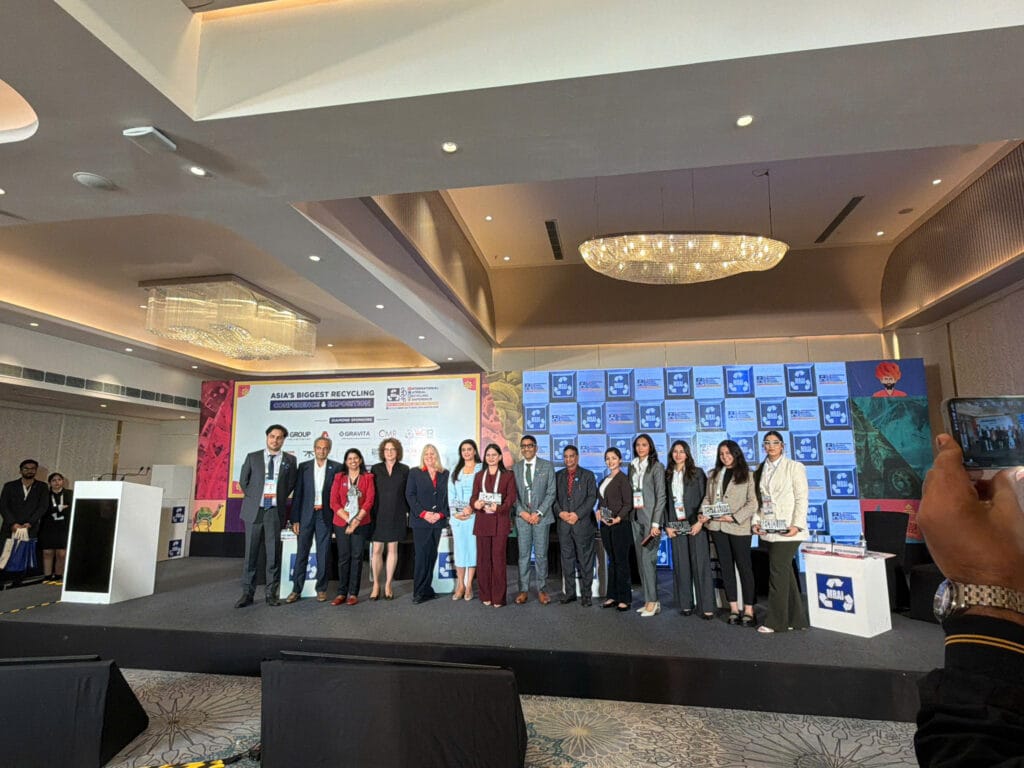
Within the framework of IMRC2026, organized by the Materials Recycling Association of India, the special session titled “Women in Recycling – Catalyst of Change” left a strong impression by highlighting the increasingly critical role of women in the ongoing transformation of the global recycling industry. More than a platform for sharing experiences, the session reflected a fundamental shift in thinking around governance, human capital, and sustainable development strategies, as the circular economy continues to gain prominence worldwide.
Traditionally, the recycling sector has been perceived as a highly technical and labor intensive industry, long dominated by a male workforce. However, recent years have seen a clear transition, with women becoming more deeply involved across operational roles, supply chain management, policy formulation, and corporate leadership. The session “Women in Recycling – Catalyst of Change” vividly illustrated this evolution through real world stories and successful models from various countries.
Speakers emphasized that the participation of women is not merely a matter of gender equality, but a source of tangible economic value. Numerous studies in corporate governance have shown that organizations with gender diverse leadership teams tend to adapt more effectively to market volatility and achieve stronger long term operational performance. In the recycling industry, which is directly affected by fluctuations in raw material prices, environmental regulations, and the need for continuous technological innovation, diversity has become an even more decisive factor.

One of the key themes discussed was the importance of inclusive organizational structures. Rather than focusing solely on increasing the number of women in the workforce, experts stressed the need to create working environments that are flexible, transparent, and fair, enabling women to build sustainable careers. This includes clearly defined career progression pathways, greater access to professional training, and ensuring that women’s perspectives are actively incorporated into strategic decision making processes.
Alongside gender diversity, generational diversity was also identified as a significant driver of change. The combination of experience from senior professionals and the innovative mindset of younger talent, including a growing number of emerging female leaders, is reshaping how the recycling industry addresses long standing challenges. From optimizing collection systems to developing circular business models, these fresh perspectives are helping companies reduce costs, improve efficiency, and better meet increasingly stringent environmental standards.
Technology and digital transformation formed another central pillar of the discussion. Artificial intelligence, automation, and big data analytics are profoundly changing how recycling operations are managed, from material sorting to value chain optimization. According to the speakers, these developments present a major opportunity for women to step into leadership roles, as many of the skills required in technology driven management and digital strategy are no longer tied to physical labor. The adoption of AI not only enhances productivity but also creates new spaces for creativity and innovation, where women can play a pivotal role.
As the global community accelerates efforts toward sustainable development goals and carbon reduction, the recycling industry is increasingly viewed as a cornerstone of the green economy. The session “Women in Recycling – Catalyst of Change” reaffirmed that for the sector to be truly future ready, human capital must be considered as important as technology and investment. Women, with their strong capacity for collaboration, long term thinking, and sensitivity to social values, are emerging as a vital catalyst for this transformation.
Held at the Jaipur Exhibition & Convention Centre, a venue synonymous with large scale international events, the session further reinforced the message that IMRC2026 seeks to convey. It underscored a clear commitment to building a recycling industry that is not only economically efficient, but also inclusive, equitable, and resilient in the face of long term global challenges. By highlighting the role of women, IMRC2026 sent a strong signal that the future of recycling will be shaped by diversity, innovation, and global collaboration.
Related Posts
LME Aluminum Prices Fall: Market Shifts from Supply Shortage Concerns to Expectations of Supply Recovery
WSR Update: Vietnam has not yet been recommended by the EC for approval regarding recycled metals.
VMRF – Circulate Capital: ESG from Compliance Requirements to Management Capability
VMRF and Kitakyushu City Explore Cooperation Opportunities in Recycling and Environmental Technology
Low River Levels in Borneo Expose New Weaknesses in Asia’s Energy Supply Chain
Green and Circular Projects May Receive 2% Interest Rate Support