

 HOME
HOME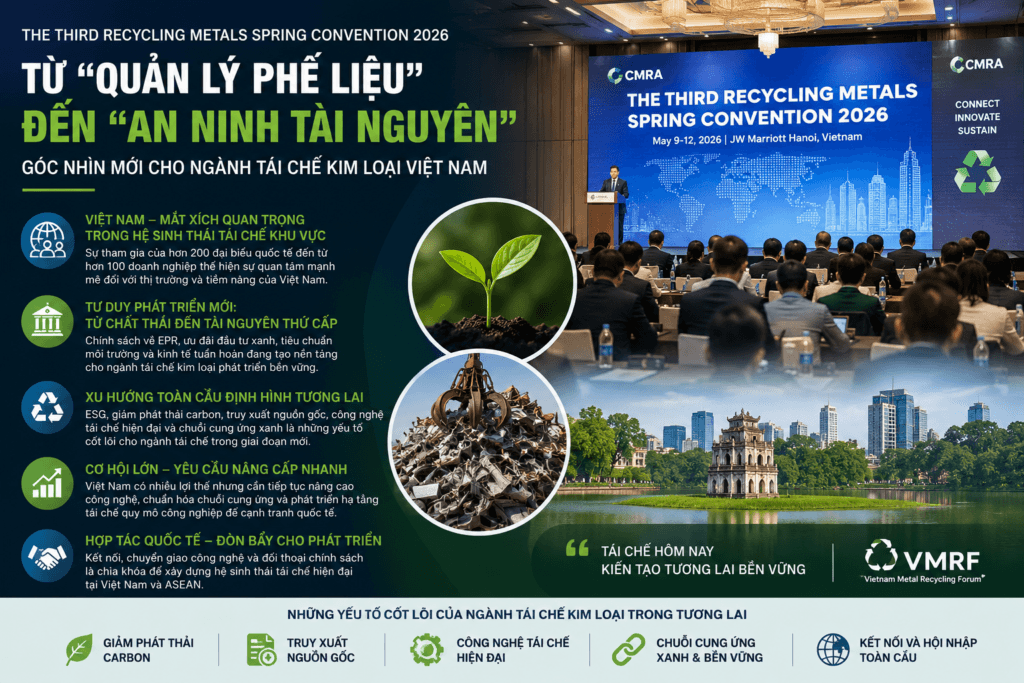
The Third Recycling Metals Spring Convention 2026, held at JW Marriott Hanoi, was not merely an international conference for the metal recycling industry. It also reflected a major transformation within the global recycling sector, where recycling is no longer viewed simply as waste treatment, but is increasingly recognized as a strategic industry closely tied to raw material security, carbon emission reduction, and sustainable development.
One of the clearest signals from the conference was that Vietnam is gradually being recognized as an important link in the regional recycling ecosystem. The participation of more than 200 delegates from over 100 international companies demonstrated the growing interest in Vietnam’s industrial development potential, manufacturing capacity, and circular economy ambitions.
Presentations delivered by Vietnamese speakers highlighted an important shift in development thinking: from “waste management” to the “development of secondary resources.” Discussions surrounding Extended Producer Responsibility (EPR), green investment incentives, environmental standards, and the circular economy showed that Vietnam is steadily building a clearer policy framework for the metal recycling industry.
At the same time, international discussion sessions reflected emerging trends in the global recycling sector, where the future will increasingly be shaped by:
- ESG implementation and carbon emission reduction;
- Raw material traceability;
- Advanced recycling technologies;
- Green and sustainable supply chains;
- Integration into the global circular manufacturing network.
The conference also highlighted an important reality: although Vietnam possesses enormous development potential, the domestic recycling industry still needs to continue upgrading technology, standardizing supply chains, and developing industrial-scale recycling infrastructure in order to compete effectively in the international market.
Another notable lesson from the event was the increasingly important role of international cooperation. Technology transfer, policy dialogue, and business connectivity are becoming essential factors in building a modern recycling ecosystem in Vietnam and across the ASEAN region.
For the Vietnam Metal Recycling Forum (VMRF), this conference once again reaffirmed the importance of connecting Vietnam’s recycling business community with international organizations and enterprises, thereby contributing to the development of a professional, sustainable recycling industry that is more deeply integrated into the global circular economy.
Related Posts
LME Aluminum Prices Fall: Market Shifts from Supply Shortage Concerns to Expectations of Supply Recovery
WSR Update: Vietnam has not yet been recommended by the EC for approval regarding recycled metals.
VMRF – Circulate Capital: ESG from Compliance Requirements to Management Capability
VMRF and Kitakyushu City Explore Cooperation Opportunities in Recycling and Environmental Technology
Low River Levels in Borneo Expose New Weaknesses in Asia’s Energy Supply Chain
Green and Circular Projects May Receive 2% Interest Rate Support