

 HOME
HOME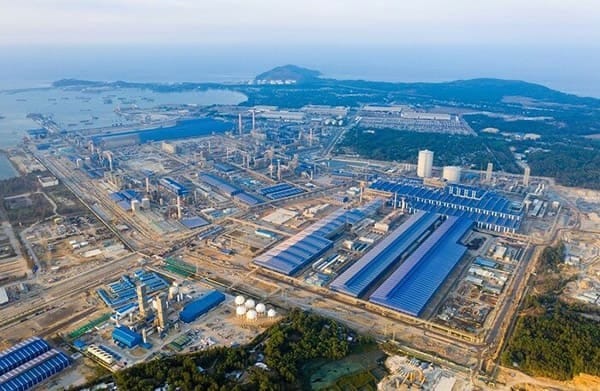
Vietnam’s steel industry is entering a pivotal period as national climate policies begin to move from planning to implementation. The pilot allocation of greenhouse gas emission quotas within the framework of a domestic carbon market is expected to reshape the operating environment of heavy industries, particularly steel production. While the policy introduces immediate challenges for producers, it also opens the door to a structural transformation that could redefine the competitiveness of Vietnam’s steel sector in the coming decades.
Across the world, environmental regulations and carbon pricing mechanisms are steadily tightening. Industries with high energy consumption and large carbon footprints, such as steel, are increasingly required to adapt to new production models. For Vietnam, the transition toward lower-carbon steel production is not merely an environmental issue; it is becoming a strategic requirement for maintaining export competitiveness and aligning with the global shift toward sustainable industrial development.
The Steel Industry – One of the Economy’s Largest Sources of Emissions
Steel production is among the most energy-intensive industrial activities in Vietnam. Traditional steelmaking processes rely heavily on coal-based blast furnace technology, which generates significant amounts of carbon dioxide during the reduction of iron ore and subsequent refining stages.
In recent years, Vietnam’s steel sector has expanded rapidly alongside the country’s industrialization and infrastructure development. Large integrated steel complexes and increased domestic demand have driven production capacity upward, but they have also increased the sector’s environmental footprint.
Estimates from industrial transition studies indicate that Vietnam’s steel industry emitted roughly 32 million tonnes of CO₂ in 2023, representing approximately 8–9 percent of the country’s total greenhouse gas emissions. If production continues to grow at the current pace without technological change, emissions from the sector could approach 40 million tonnes annually in the coming years.
A key structural feature of Vietnam’s steel industry is its reliance on the blast furnace–basic oxygen furnace (BF–BOF) route, which uses iron ore and coking coal as primary inputs. This method remains the dominant production pathway in large steel complexes because of its efficiency at scale, but it is also significantly more carbon-intensive than alternative technologies.
As Vietnam begins implementing emission quotas and prepares to launch a domestic carbon market, steel production has been identified as one of the priority sectors for regulatory oversight. Along with thermal power and cement, the steel industry forms part of the initial group of heavy industries that will operate under the country’s emerging carbon management framework.
Short-Term Pressure: Carbon Costs and Export Market Challenges
In the early stages of implementing emission quotas, Vietnamese steel producers are likely to face a number of short-term challenges. One of the most immediate is the requirement to conduct detailed greenhouse gas inventories and establish monitoring systems capable of accurately measuring emissions.
For many companies, particularly those that have not previously implemented comprehensive environmental reporting systems, this will require new investments in data management, emissions monitoring technology, and compliance infrastructure. These operational adjustments could increase administrative and technical costs in the near term.
Another challenge stems from the introduction of carbon pricing. Under a quota system, companies that emit more greenhouse gases than their allocated allowances must purchase additional carbon credits in the market. This effectively adds a new cost component to steel production, particularly for plants relying on traditional blast furnace technologies with higher emission intensity.
At the same time, Vietnamese steel exporters are encountering rising environmental requirements in international markets. One of the most notable examples is the European Union’s Carbon Border Adjustment Mechanism (CBAM), which will impose carbon-related costs on imported industrial goods including steel. Exporters will increasingly need to report the embedded emissions of their products, and high-carbon steel may face additional tariffs.
For Vietnamese producers, these developments mean that carbon performance is becoming a critical factor in global trade competitiveness. Companies that fail to reduce emissions could face higher costs, reduced market access, or pressure from international buyers seeking lower-carbon supply chains.
In addition, the transition toward low-carbon production technologies requires substantial capital investment. Upgrading production systems, integrating renewable electricity, or adopting alternative steelmaking technologies may involve billions of dollars in long-term investment. Smaller producers in particular may struggle to access financing for such transitions.
Long-Term Benefits: The Emergence of a Green Steel Industry
Despite these short-term pressures, the introduction of emission quotas and carbon markets could ultimately accelerate a technological transformation within Vietnam’s steel industry. Over time, these mechanisms are expected to create incentives for companies to improve energy efficiency, adopt cleaner production processes, and reduce carbon intensity.
Industrial transition studies suggest that the steel sector could potentially reduce its emissions by nearly 90 percent by 2060 through a combination of technological upgrades, renewable energy integration, and alternative steelmaking pathways. Achieving such reductions would require a gradual shift away from coal-dependent blast furnace systems toward lower-carbon technologies.
One of the most important drivers of this transformation will be the increasing demand for green steel. In global markets, manufacturers in sectors such as automotive, construction, and electronics are seeking materials with lower carbon footprints as part of their own sustainability commitments. This trend is creating a growing premium for steel produced using cleaner processes.
For Vietnamese companies, early investment in low-carbon steel production could open new export opportunities and strengthen long-term competitiveness. Producers that are able to demonstrate reduced carbon intensity may gain preferential access to markets with strict environmental standards.
In addition, financial institutions and international investment funds are increasingly prioritizing projects that meet environmental, social, and governance (ESG) criteria. Steel companies that adopt credible decarbonization strategies may therefore gain better access to green financing and international capital.
Recycled Steel – A Promising Pathway for Vietnam’s Steel Transition
Among the various strategies for reducing emissions in steel production, expanding the use of recycled steel scrap is widely considered one of the most practical and effective options.
Globally, a growing share of steel production is shifting toward the electric arc furnace (EAF) method, which melts recycled scrap instead of producing steel from iron ore. Compared with traditional blast furnace technology, this process can significantly reduce carbon emissions, particularly when powered by renewable electricity.
The environmental advantages of recycled steel are substantial. Using scrap metal reduces the need for mining and processing iron ore, lowers energy consumption, and cuts overall carbon emissions from steel production. It also supports the development of circular economy systems by keeping valuable materials in productive use for longer periods.
In many developed economies, recycled steel already accounts for a large share of total steel production. For Vietnam, expanding this segment could play a critical role in the country’s long-term decarbonization strategy.
However, the growth of recycled steel production depends on the availability of high-quality scrap and efficient recycling systems. Vietnam currently generates large volumes of steel scrap from construction waste, industrial equipment, vehicles, and infrastructure dismantling. Yet the collection and processing of this material remain fragmented and underdeveloped.
Strengthening the domestic recycling ecosystem would therefore be an essential step toward scaling up recycled steel production.
A Structural Turning Point for Vietnam’s Steel Industry
The introduction of emission quotas and the gradual development of a domestic carbon market represent a significant turning point for Vietnam’s heavy industries. For the steel sector, the transition may bring initial challenges in the form of compliance costs, technology upgrades, and evolving market expectations.
Yet these same pressures could also catalyze innovation and modernization within the industry. By embracing cleaner technologies, investing in energy efficiency, and expanding the use of recycled materials, Vietnam’s steel sector has the opportunity to evolve into a competitive producer of low-carbon steel.
In the long run, the shift toward green steel and circular material flows may not only reduce emissions but also strengthen the resilience of Vietnam’s industrial economy. If supported by coherent policies and forward-looking investment strategies, the steel industry could become a central pillar in the country’s broader transition toward sustainable growth and climate-aligned development.
Related Posts
LME Aluminum Prices Fall: Market Shifts from Supply Shortage Concerns to Expectations of Supply Recovery
WSR Update: Vietnam has not yet been recommended by the EC for approval regarding recycled metals.
VMRF – Circulate Capital: ESG from Compliance Requirements to Management Capability
VMRF and Kitakyushu City Explore Cooperation Opportunities in Recycling and Environmental Technology
Low River Levels in Borneo Expose New Weaknesses in Asia’s Energy Supply Chain
Green and Circular Projects May Receive 2% Interest Rate Support