

 HOME
HOME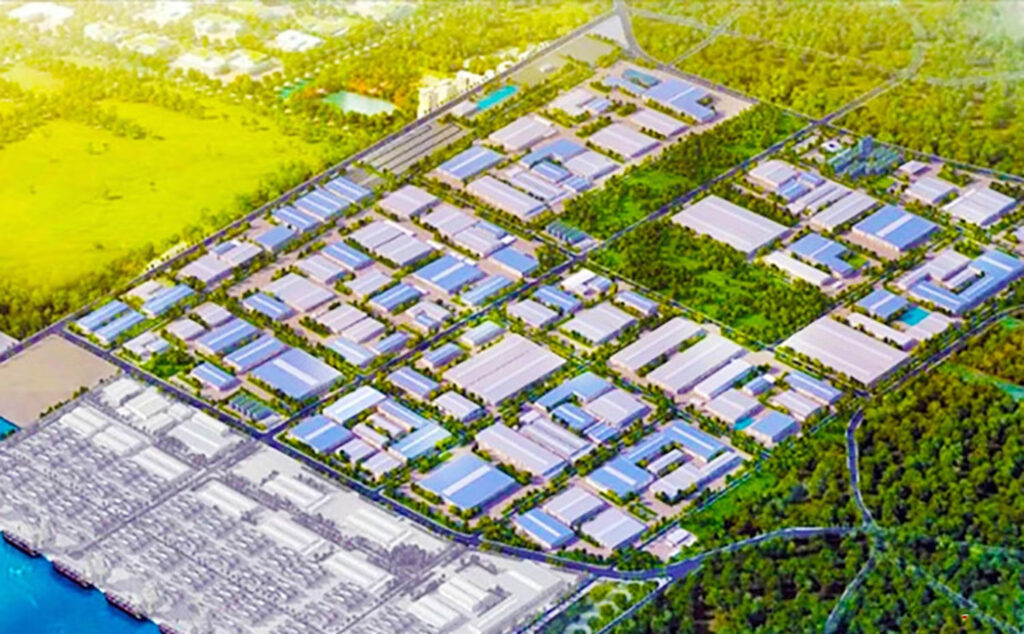
The official approval of the 1/500 detailed zoning plan for the VinMetal Ha Tinh Steel Manufacturing Complex by the Ha Tinh Economic Zone Authority marks a significant milestone in the development of one of Vingroup’s largest industrial investments. Beyond paving the way for the construction of a nearly VND 80 trillion integrated steel complex, the approval reflects Vietnam’s entry into a new investment cycle for the steel industry, as a series of large-scale projects are being launched to meet growing domestic demand while strengthening the country’s position in global steel supply chains.
A Large-Scale Integrated Steel Complex at Vung Ang Economic Zone
According to the approved master plan, the VinMetal Ha Tinh Steel Manufacturing Complex will occupy nearly 460 hectares within Lots CN5-1, CN5-4 to CN5-9, CC5-1, and CC5-2 of the CN4-CN5 Central Industrial Zone in the Vung Ang Economic Zone, part of the Vinhomes Vung Ang Industrial Park.
The project enjoys a strategic location with direct access to major transport infrastructure. It borders Nguyen Chi Thanh Road to the east, a planned 60-meter-wide road to the west, and planned internal roads to the north and south. This location provides seamless connectivity to Vung Ang Deep-Sea Port, facilitating both the import of raw materials and the export of finished steel products.
Under the approved plan, VinMetal Ha Tinh will be developed as a fully integrated steel manufacturing complex covering the entire production chain, from raw material handling, coke production, ironmaking, steelmaking, and rolling mills to hot rolling facilities. The project will also include captive power generation, lime and cement production plants, finished goods warehouses, slag treatment facilities, modern technical infrastructure, and an integrated operations center. Once operational, the complex is expected to create approximately 5,320 jobs, contributing significantly to the industrial and economic development of Ha Tinh Province.
The investment registration certificate for the project was granted on February 27, 2026, with VinMetal Manufacturing and Trading Joint Stock Company, a subsidiary of Vingroup, serving as the project developer.
The project carries a total investment of nearly VND 80 trillion, of which approximately VND 12 trillion represents equity capital, accounting for 15% of the total investment, while the remaining capital will be financed through loans from financial institutions according to the implementation schedule. The investment project has an operational term of 70 years.
Ha Tinh Further Strengthens Its Position as Vietnam’s Metallurgical Hub
VinMetal’s decision to invest in the Vung Ang Economic Zone is consistent with the long-term development trajectory of Vietnam’s metallurgical industry. Benefiting from the deep-water ports of Son Duong and Vung Ang, capable of accommodating large-capacity vessels, together with well-developed logistics infrastructure, reliable power supply, abundant industrial land, and modern supporting facilities, Ha Tinh has emerged as one of Vietnam’s most attractive destinations for heavy industrial investment.
The addition of the VinMetal project will further reinforce Ha Tinh’s role as one of Vietnam’s leading metallurgical centers while creating strong momentum for the development of supporting industries, mechanical engineering, logistics, and industrial services. It also lays the foundation for establishing a more complete industrial value chain in the North Central region, enhancing Vietnam’s competitiveness in heavy industry.
Vietnam Enters a New Investment Cycle for the Steel Industry
The launch of the VinMetal Ha Tinh project comes at a time when Vietnam’s steel sector is entering one of its most significant investment phases in recent years. After expanding production capacity to meet domestic demand over the past decade, steel producers are now focusing on building modern, integrated steel complexes equipped with advanced technologies to enhance their competitiveness in international markets.
Alongside VinMetal, several major steel projects are also progressing across the country. Hoa Phat continues expanding the next phases of its Dung Quat Integrated Steel Complex, increasing production capacity for hot-rolled coil (HRC) and other high-value steel products. Formosa Ha Tinh remains one of Southeast Asia’s largest integrated steel producers, while downstream manufacturers such as Hoa Sen, Nam Kim, and other processing companies continue investing in new production lines to support both domestic consumption and exports.
The emergence of these large-scale investments demonstrates that Vietnam’s steel industry is evolving beyond simply increasing production volumes. The sector is increasingly focused on improving product quality, strengthening raw material security, adopting advanced technologies, and integrating more deeply into global steel value chains.
Competition Will Intensify Across the Industry
As several integrated steel complexes come online over the next few years, Vietnam’s steel industry is expected to undergo substantial structural changes. The market, once dominated by only a handful of major producers, will become increasingly competitive as total production capacity continues to expand.
Future competition will no longer be determined solely by production volume. Instead, it will increasingly depend on technological capability, operational efficiency, cost management, raw material integration, and the ability to meet increasingly stringent environmental and sustainability standards required by international markets. With mechanisms such as the European Union’s Carbon Border Adjustment Mechanism (CBAM) and other technical trade barriers becoming more widespread, steelmakers equipped with advanced technologies and low-carbon production capabilities will hold significant competitive advantages.
For the domestic market, the additional production capacity will also reduce Vietnam’s dependence on imported steel, particularly for hot-rolled coil and high-grade steel products used in mechanical engineering, shipbuilding, automotive manufacturing, energy infrastructure, and industrial construction.
New Opportunities for Recycling and Domestic Raw Material Supply
Beyond its impact on steel production, the expansion of integrated steelmaking capacity also creates significant opportunities for Vietnam’s metal recycling industry and domestic raw material supply chain. As the global steel industry accelerates its transition toward lower-carbon manufacturing, steel scrap is becoming an increasingly important feedstock for reducing energy consumption and greenhouse gas emissions.
This trend is expected to stimulate further development of Vietnam’s steel scrap collection and recycling sector while promoting the growth of a circular economy for metals. It also aligns closely with Vietnam’s broader industrial sustainability strategy and the country’s commitment to achieving net-zero greenhouse gas emissions by 2050.
Implications for Vietnam’s Steel Industry
Vingroup’s decision to officially launch the VinMetal Ha Tinh project represents more than the addition of another large-scale steel investment. It reflects the growing confidence of Vietnam’s private sector in the long-term prospects of the country’s heavy industrial and manufacturing sectors.
As the government continues to accelerate investment in infrastructure, industrial development, energy projects, and manufacturing, domestic steel demand is expected to remain strong over the coming decades. At the same time, Vietnam’s extensive network of free trade agreements presents valuable opportunities for exporting higher-value steel products to international markets.
However, these opportunities will be accompanied by increasing challenges related to competition, environmental compliance, and the global transition toward green steel production. With major projects such as VinMetal Ha Tinh, Hoa Phat Dung Quat, Formosa Ha Tinh, and other large-scale steel complexes expanding simultaneously, Vietnam’s steel industry is entering a new era characterized by greater production capacity, more advanced technology, and intensified competition. If supported by continued infrastructure development, strategic geographic advantages, favorable trade agreements, and successful adoption of low-carbon manufacturing technologies, Vietnam has the potential not only to strengthen its position as one of Southeast Asia’s leading steel producers but also to emerge as a major metallurgical and steel supply hub for the broader Asia-Pacific region.
Source: Ha Tinh newspaper and collected from the internet.
Related Posts
CMRA Annual Convention 2026 in Ningbo: Reshaping the Recycled Metals Value Chain in a Changing Global Landscape
IBAAS–VFMSTA 2026: International Forum on Bauxite, Alumina, Aluminium and Critical Minerals in Vietnam
Smart Factories Open a New Competitive Race in the Metals Industry: Companies That Control Energy and Data Will Gain the Edge
EU Tightens Aluminium Scrap Exports: Global Recycled Aluminium Market Faces a Major Reshaping
Vietnam’s Tungsten Enters a New Cycle: Nui Phao and Vietnam’s Ambition to Elevate Its Strategic Metal Position
Copper Hits Record Highs Amid a “Supply Crunch”: AI Is Only Part of the Story