

 HOME
HOME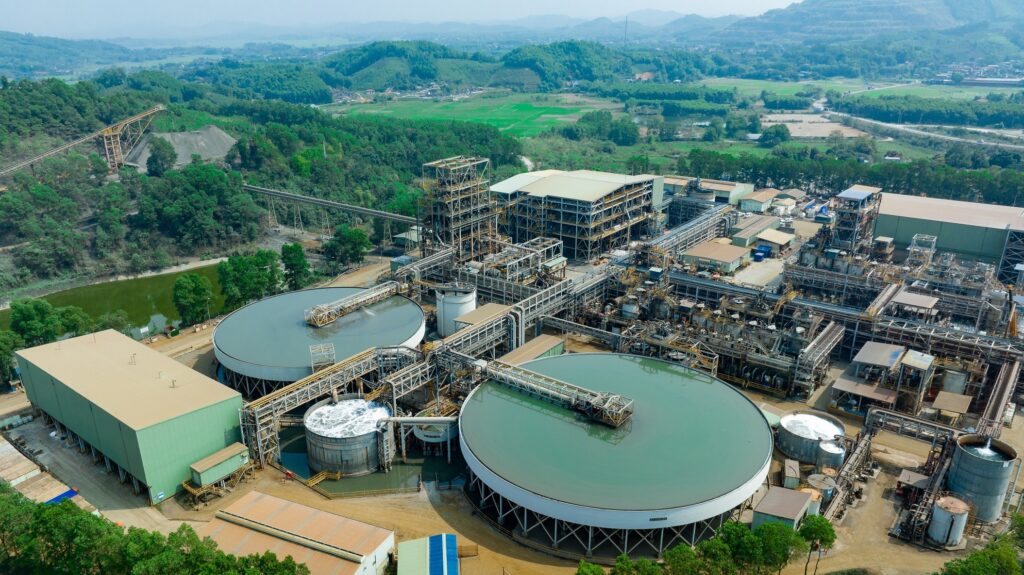
After more than 16 years of investing in the Nui Phao mine and building a tungsten value chain, Masan Hightech Materials is entering a new growth cycle as tungsten prices surge, production recovers and profits rise sharply.
Tungsten prices create a turning point
In the first half of 2026, Masan Hightech Materials generated revenue of VND11.13 trillion, up 270% year on year. Net profit exceeded VND2.2 trillion, compared with a loss of VND216 billion in the same period a year earlier.
In the second quarter alone, refined tungsten production increased 91% year on year, allowing the company to take greater advantage of the higher price environment.
Notably, in August 2026, the company proposed an interim cash dividend for 2026 at a rate of 10%, equivalent to VND1,000 per share. If approved, the total payout would be approximately VND1.1 trillion, marking the company’s first-ever dividend payment.
The strong results are also supporting the company’s deleveraging efforts. By the end of the second quarter of 2026, its net debt/EBITDA ratio stood at around 2.1 times, while the company aims to improve the ratio further during the year.
Nui Phao and 16 years of building a value chain
Masan began developing Nui Phao in 2010 and invested more than US$1 billion to bring the mine into commercial mining and processing operations in 2014.
Rather than focusing solely on ore extraction, the company continued investing in refining and downstream processing technologies through partnerships and acquisitions involving H.C. Starck. These investments provided the foundation for Masan Hightech Materials to move further up the tungsten value chain instead of relying primarily on raw-material exports.
However, a prolonged period of low tungsten prices, combined with high mining costs and interest expenses, pushed the company into losses of around VND1.6 trillion per year in 2023 and 2024.
At the end of 2024, Masan Hightech Materials sold its entire stake in H.C. Starck to Mitsubishi. The transaction reduced total debt from approximately US$670 million to US$490 million and allowed the company to refocus on its core operations.
Tungsten emerges as a strategic metal
The tungsten market changed significantly from the second half of 2025 as China tightened supply. At the same time, demand from semiconductors, defense and other high-tech industries continued to increase.
China accounts for around 80% of global tungsten supply, making the metal an increasingly important component of strategic supply-chain security.
APT, a key intermediate product in the tungsten value chain, has risen to around US$3,000/MTU, more than ten times the historical low level cited in the source material.
According to Vietcap, tungsten prices could remain elevated. This provides favorable conditions for Masan Hightech Materials, which already has both resource assets and processing capabilities.
Growth potential from new resources
Masan Hightech Materials is pursuing an expansion of the Nui Phao area covering nearly 43 hectares adjacent to the existing mine. The company is also targeting exploration activities at Nui Chiem, an area of approximately 1,000 hectares estimated to contain 115 million tonnes of polymetallic tungsten ore.
If these projects move forward successfully, the company could expand its resource base and production capacity while leveraging existing infrastructure.
This will be critical to turning the current tungsten price upcycle into longer-term growth rather than simply benefiting from commodity-price fluctuations.
Opportunities for Vietnam’s metals industry
The Nui Phao story demonstrates that Vietnam’s advantage lies not only in its mineral resources but also in its ability to upgrade the value chain.
As major economies seek to diversify supplies of strategic minerals, Vietnam has an opportunity to strengthen its position in the global tungsten supply chain by developing an integrated ecosystem spanning mining, refining, downstream processing and high-tech materials manufacturing.
After 16 years of investment, Masan Hightech Materials now has an opportunity to turn the Nui Phao resource base into a long-term competitive advantage.
However, the major challenge remains the company’s ability to maintain efficiency when the tungsten price cycle changes. Debt reduction, resource expansion, capacity growth and the development of downstream products will determine whether Nui Phao can become a competitive long-term tungsten hub for Vietnam.
Source: TheLeader and compiled from the internet.
Related Posts
Smart Factories Open a New Competitive Race in the Metals Industry: Companies That Control Energy and Data Will Gain the Edge
EU Tightens Aluminium Scrap Exports: Global Recycled Aluminium Market Faces a Major Reshaping
Copper Hits Record Highs Amid a “Supply Crunch”: AI Is Only Part of the Story
From E-Waste to an “Urban Mine”: Vietnam Faces an Opportunity to Turn Waste into Resources
VIETNAM’S CARBON MARKET: FROM POLICY TO OPPORTUNITIES FOR RECYCLING BUSINESSES
VMRF & CIRCULATE CAPITAL: PARTNERING TO BUILD CAPACITY – UNLOCK OPPORTUNITIES – CONNECT THE FUTURE