

 HOME
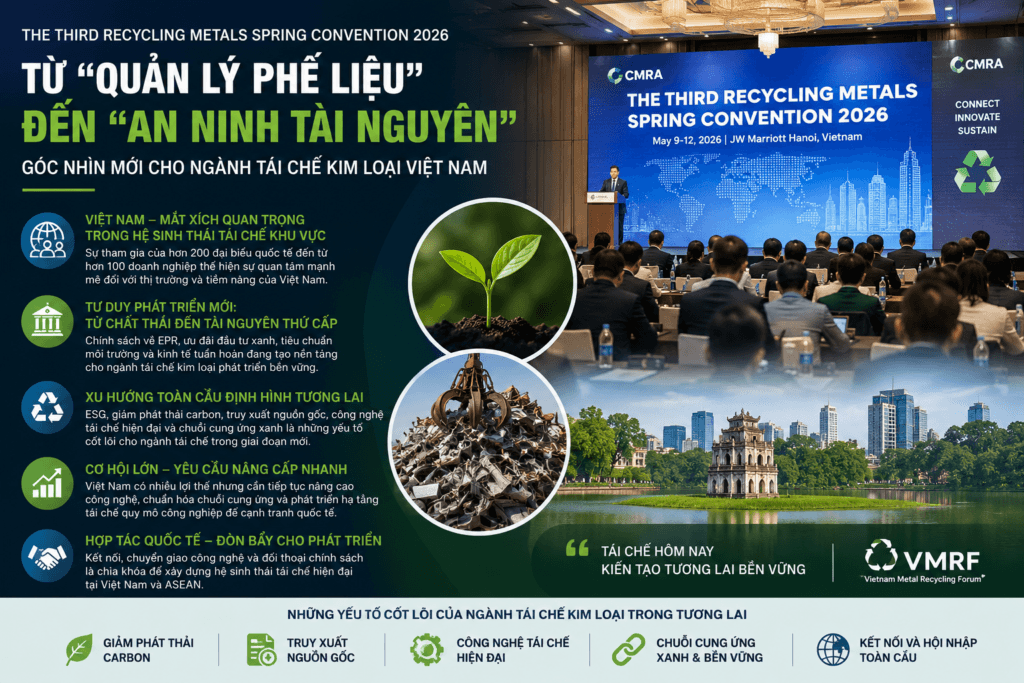
The Third Recycling Metals Spring Convention 2026, held at JW Marriott Hanoi, was not merely an international conference for the metal recycling industry. It also reflected a major transformation within the global recycling sector, where recycling is no longer viewed simply as waste treatment, but is increasingly recognized as a strategic industry closely tied to raw material security, carbon emission reduction, and sustainable development.
One of the clearest signals from the conference was that Vietnam is gradually being recognized as an important link in the regional recycling ecosystem. The participation of more than 200 delegates from over 100 international companies demonstrated the growing interest in Vietnam’s industrial development potential, manufacturing capacity, and circular economy ambitions.
Presentations delivered by Vietnamese speakers highlighted an important shift in development thinking: from “waste management” to the “development of secondary resources.” Discussions surrounding Extended Producer Responsibility (EPR), green investment incentives, environmental standards, and the circular economy showed that Vietnam is steadily building a clearer policy framework for the metal recycling industry.
At the same time, international discussion sessions reflected emerging trends in the global recycling sector, where the future will increasingly be shaped by:
- ESG implementation and carbon emission reduction;
- Raw material traceability;
- Advanced recycling technologies;
- Green and sustainable supply chains;
- Integration into the global circular manufacturing network.
The conference also highlighted an important reality: although Vietnam possesses enormous development potential, the domestic recycling industry still needs to continue upgrading technology, standardizing supply chains, and developing industrial-scale recycling infrastructure in order to compete effectively in the international market.
Another notable lesson from the event was the increasingly important role of international cooperation. Technology transfer, policy dialogue, and business connectivity are becoming essential factors in building a modern recycling ecosystem in Vietnam and across the ASEAN region.
For the Vietnam Metal Recycling Forum (VMRF), this conference once again reaffirmed the importance of connecting Vietnam’s recycling business community with international organizations and enterprises, thereby contributing to the development of a professional, sustainable recycling industry that is more deeply integrated into the global circular economy.
Related Posts
Looking Back at CMA Summit 2026 in Berlin: Two Days of Networking and Sharing a Vision for the Future of Metal Recycling
VMRF Representative Presents on Vietnam’s Aluminum Packaging Recycling Policy
VMRF Partners with SMM at Asia Aluminum Conference 2026 to Connect the Aluminum and Metal Recycling Industries
VMRF Attends the First CMA Summit in Berlin
India Launches Anti-Dumping Investigation into Aluminium Extrusions from Vietnam
EU Imposes 16% Anti-Dumping Duty on Vietnamese Cold-Rolled Steel: Competitive Pressure Intensifies in the European Market