

 HOME
HOME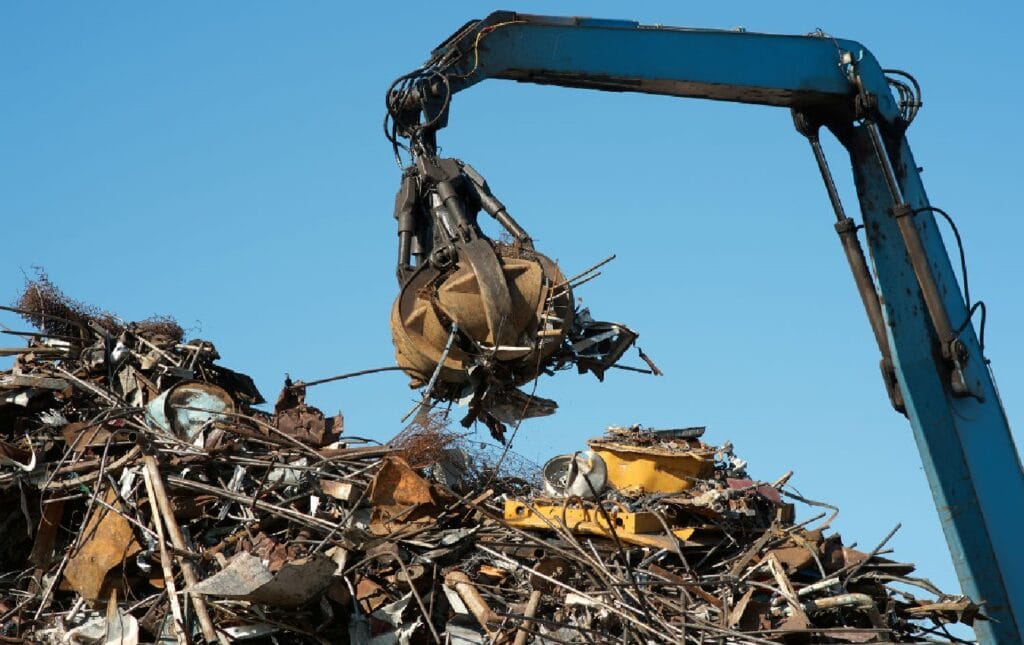
The US recycled steel market is witnessing an unusual period where its value has been nearly “frozen” over the past two months, despite a strong increase in domestic steel production and signs of renewed activity in foreign demand. This surprising price stability is creating a complex picture where traders must weigh domestic production dynamics against pressure from the global market.
According to data from the Raw Material Data Aggregation Service (RMDAS) of MSA Inc., the value of recycled steel fluctuated modestly within a $5-per-ton range from mid-April through mid-June. Specifically, the national average price for the benchmark grade No. 1 heavy melting steel (HMS) rose by just $1 per ton during the May-June period compared to the previous 30 days. Similarly, No. 2 shredded scrap only increased by $2 per ton, while the prompt industrial composite grade (consisting of factory-generated scrap) rose by $3 per ton.
Strong Domestic Production, Recovering Export Demand
This price stability becomes even more perplexing when considering the positive steel production landscape. Data from the American Iron and Steel Institute (AISI) shows that in the third week of June, US steel mills operated at an impressive capacity, reaching nearly 80% and producing almost 1.79 million tons of steel. This figure is 4.9% higher than the same period in 2024 and a slight increase of 0.2% from the previous week, indicating that demand for raw materials is on the rise.
Simultaneously, the export market—a crucial factor influencing domestic prices—is showing notable signals. After a quiet period, Davis Index has noted a return of interest from Turkish importers. While transactions largely remain “flat” and “unchanged,” this renewed interest is creating “bullish sentiments” among some scrap sellers in the US and Europe. However, in another major market, India, demand remains restricted, and prices are trending sideways.
Surprising Price “Calmness”: Minimal Regional Differences
Another striking point is the record-low price difference between regions. From May 21 to June 20, scrap steel prices in the North Midwest region were only $13 per ton higher than in the South, which was the widest gap for the month. For the two primary steel grades, No. 1 HMS and No. 2 shredded scrap, the regional difference was only $6 per ton, indicating a high degree of price consistency across the market.
Traders are now preparing for the next domestic mill buying period. In this context, closely monitoring domestic steel production and fluctuations in export demand will be key to predicting whether the US recycled steel market will finally break free from its current “stagnant” state.
According to: recyclingtoday.com
Related Posts
LME Aluminum Prices Fall: Market Shifts from Supply Shortage Concerns to Expectations of Supply Recovery
WSR Update: Vietnam has not yet been recommended by the EC for approval regarding recycled metals.
VMRF – Circulate Capital: ESG from Compliance Requirements to Management Capability
VMRF and Kitakyushu City Explore Cooperation Opportunities in Recycling and Environmental Technology
Low River Levels in Borneo Expose New Weaknesses in Asia’s Energy Supply Chain
Green and Circular Projects May Receive 2% Interest Rate Support