

 HOME
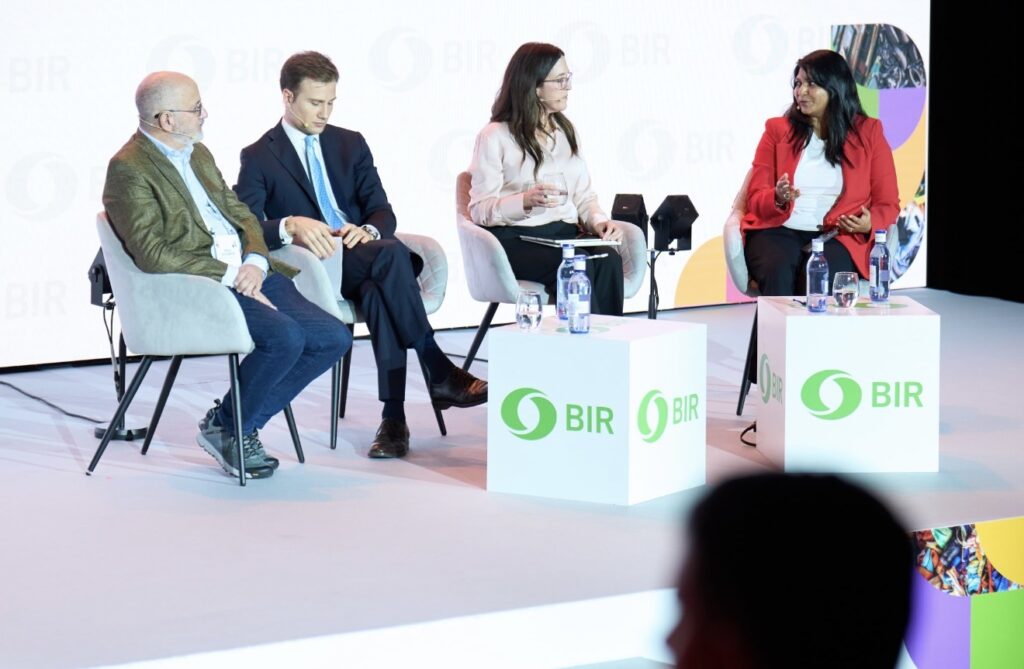
Growing global demand for materials recovered from electronic equipment is creating opportunities for recycling businesses. However, differences between countries in how materials and waste are classified continue to hinder cross-border trade. The issue was among those discussed at the plenary session of the Electronics Committee during the Bureau of International Recycling (BIR) World Recycling Convention in Málaga, Spain.
Held on October 26, 2026, the session was chaired by Josephita Harry of Pan American Zinc LLC (United States). Speakers discussed the economic drivers behind demand for recovered materials, the complexities of waste classification across jurisdictions, and the role of clear regulations in supporting recycling and market access.
Aaron Goldberg, an attorney at Beveridge & Diamond PC (United States), focused on legal issues surrounding black mass, a material recovered from the recycling of lithium-ion batteries. He said the Basel Convention provides a common framework for the transboundary movement of waste, but its interpretation and application vary considerably from one country to another.
Goldberg said black mass is generally considered waste under the Basel Convention. However, there is no consistent determination of whether the material should be classified as hazardous waste; the answer may depend on the provisions and annexes applied. Whether black mass could fall outside the scope of waste subject to the Convention also remains a matter of debate, including among non-governmental organizations.
Current classifications vary across markets. India considers black mass hazardous waste. In the United States and Mexico, the tests used may result in the material being classified as non-hazardous waste, while different tests in the United Kingdom and Brazil may lead to a hazardous-waste classification. China and South Korea may classify black mass as something other than waste if it meets certain technical specifications.
According to Goldberg, a country’s assessment of the hazardous nature of black mass may be influenced by its economic and strategic interests. He noted that countries with surplus refining capacity, such as China and South Korea, tend to classify the material as outside the waste category or as non-hazardous waste, making it easier to receive shipments.
Vietnam’s Rules on the Collection and Recycling of Electrical and Electronic Equipment
In Vietnam, people can hand over discarded electrical and electronic equipment at collection points operated by manufacturers or importers, or through local collection programs, depending on the types of equipment accepted. Article 75 of the Law on Environmental Protection governs the classification, storage and transfer of household solid waste. It also provides for provincial authorities to determine local classification requirements and develop policies encouraging the separate sorting of hazardous waste generated by households and individuals.
Businesses should check the current waste catalogue to determine the appropriate waste code and management method for discarded electronic equipment or components. Materials classified as hazardous waste must be sorted and stored separately. When transferring them for treatment, businesses must prepare the required documentation and select a facility whose environmental permit covers the relevant treatment activities.
Extended Producer Responsibility (EPR) for electrical and electronic products on the applicable list took effect on January 1, 2025. For 2026 obligations, Decree No. 110/2026/ND-CP, effective May 25, 2026, sets mandatory recycling rates and specifications for product groups including refrigerators, air conditioners, laptops and mobile phones. Manufacturers and importers subject to the requirements may arrange recycling or make financial contributions to the Vietnam Environmental Protection Fund, as prescribed. Businesses directly carrying out recycling under the EPR mechanism must hold an environmental permit, or a component environmental permit, covering the relevant activities.
For EPR-related collection, organizations and individuals collecting products on the mandatory recycling list that are classified as hazardous waste from households, individuals, government offices, schools or public places are exempt from the requirement to hold an environmental permit covering hazardous-waste treatment for that collection activity. Collectors must still fulfill the obligations of hazardous-waste generators under the regulations.
Discussions at BIR Málaga underscored how the classification of black mass can directly affect its transport and access to markets. As demand for recovered materials grows, clear and consistent regulations remain an important concern for businesses involved in electronic-equipment and battery recycling.
Sources: BIR, nbca.gov.vn, chinhphu.vn and other online sources.
Related Posts
CMRA 2026 in Ningbo: Lowering Emissions to Boost the Competitiveness of Recycled Metals
BUILDING NATIONAL LOGISTICS CAPACITY: A DRIVING FORCE FOR SUPPLY CHAINS AND THE CIRCULAR ECONOMY
BIR MÁLAGA 2026: VMRF ADVOCATES FREE TRADE AND A STRONGER RECYCLING INDUSTRY
Vietnam’s Message at the Autumn Economic Forum 2026: New Directions for the Metal Recycling Industry
VMRF SUPPORTS IBAAS–VFMSTA 2026 AS AN ASSOCIATE PARTNER
Thailand Proposes Import Ban on Steel, Copper, Aluminium and Rubber Scrap: Recycling Industry Faces Potential Supply Chain Disruptions