

 HOME
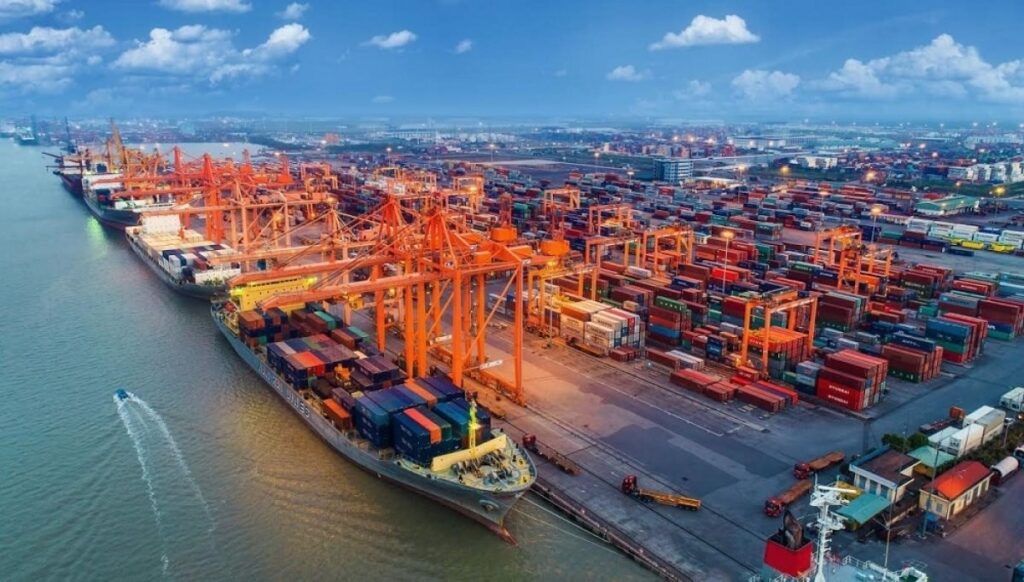
Vietnam’s strategic direction to strengthen its logistics capabilities highlights a practical requirement for the recycling industry: efficiently managing material flows, connecting different links in the supply chain, and returning recovered materials to production at competitive costs.
On the morning of November 2, 2026, at a working session on orientations for national logistics development and logistics infrastructure, General Secretary and President To Lam emphasized the need for a decisive shift from developing logistics services towards building national logistics capacity. This goes beyond the provision of transportation and warehousing services. It encompasses the ability to organize and manage the flow of goods across the entire economy, directly affecting competitiveness, economic autonomy, and resilience in the face of market fluctuations.
The proposed direction includes strengthening coordination at the Government level; developing a multimodal logistics network connecting trade gateways with production regions and markets; and selecting logistics hubs based on cargo volumes and investment efficiency. In addition, Vietnam needs to develop businesses capable of providing integrated logistics services, accelerate data sharing and technology adoption, and promote energy-efficient transportation and low-emission warehousing systems.
Implications for the Metal Recycling Industry
From the perspective of the recycling industry, this strategic direction has implications across the entire value chain, from collection, sorting, consolidation, and transportation to supplying raw materials to manufacturing plants and distributing recycled products.
The value of recovered materials depends not only on their type and quality but also on the ability to deliver the right materials, meeting the required specifications, to facilities equipped with appropriate processing technologies. An efficiently organized logistics network can help businesses eliminate unnecessary transportation routes, reduce prolonged storage periods, maintain stable supplies, and improve capital efficiency.
For recycled metals, connections between collection points, sorting facilities, consolidation warehouses, manufacturing plants, and seaports need to be viewed as part of an integrated supply chain. This also provides a foundation for developing value-added services such as quality inspection, inventory management, traceability, and material supply aligned with actual production requirements.
Data and Business Cooperation as the Foundation for Implementation
To capitalize on opportunities arising from the national logistics development strategy, recycling businesses need to gradually standardize information on material types, quality, volumes, origins, and delivery schedules. When cargo data is better integrated with warehousing and transportation information, businesses will be better positioned to consolidate shipments, reduce empty vehicle trips, and take a more proactive approach to supply planning.
Alongside data standardization, stronger cooperation among recycling companies, logistics providers, and manufacturers will help establish stable collection, consolidation, and distribution routes. For material streams subject to specific environmental management requirements, appropriate storage and transportation arrangements must also be incorporated from the outset to ensure that material movements comply with relevant requirements.
Making Logistics a Key Enabler of the Circular Economy
For the business community of the Vietnam Metal Recycling Forum (VMRF), this is an opportune time to identify practical bottlenecks in transportation, warehousing, port connectivity, and documentation. Based on these findings, businesses can propose appropriate solutions grounded in actual material flows and the specific production needs of each link in the supply chain.
When material flows are organized and managed efficiently, the recycling industry will be better positioned to recover resources, reduce operating costs, and provide stable raw material supplies to industrial manufacturers. Therefore, developing logistics capacity is not only essential for improving supply chain efficiency but also represents an important foundation for advancing Vietnam’s circular economy.
Source of current affairs information: Government News, November 2, 2026. The analysis and discussion of implications for the recycling industry are based on the national logistics development orientations presented in the source material.
Related Posts
BIR MÁLAGA 2026: VMRF ADVOCATES FREE TRADE AND A STRONGER RECYCLING INDUSTRY
Vietnam’s Message at the Autumn Economic Forum 2026: New Directions for the Metal Recycling Industry
VMRF SUPPORTS IBAAS–VFMSTA 2026 AS AN ASSOCIATE PARTNER
Thailand Proposes Import Ban on Steel, Copper, Aluminium and Rubber Scrap: Recycling Industry Faces Potential Supply Chain Disruptions
Vietnam Metal Recycling Forum (VMRF) attends ALUMINIUM 2026 in Germany
VMRF – Market & Policy Bulletin: Non-Ferrous Metals, Steel Scrap and EU Supply Risks