

 HOME
HOME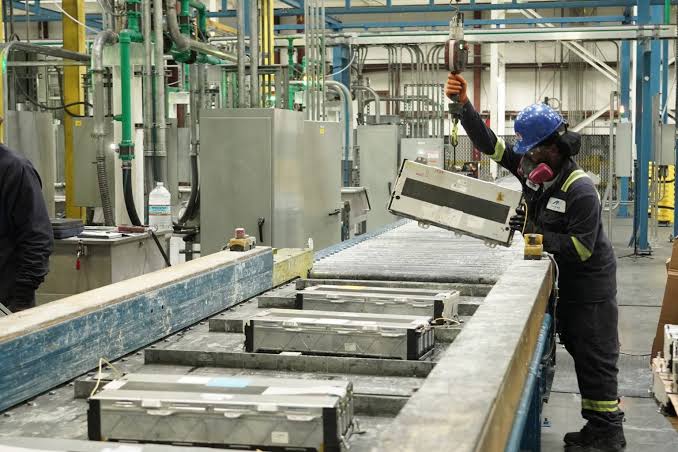
The rapid growth of electric vehicles is opening up a new market beyond vehicle manufacturing and sales: battery recycling and the recovery of critical minerals from end-of-life batteries. The interest of R3 Lithium, a US-based lithium recycling company, in exploring investment and cooperation opportunities in Vietnam highlights the growing importance of secondary resources from used batteries in the global critical minerals supply chain.
On September 21, 2026, Deputy Prime Minister Nguyen Van Thang received Linh Austin, Chairman and CEO of R3 Lithium. During the meeting, the US company expressed its interest in making long-term investments and expanding strategic cooperation with Vietnam, with a focus on participating in the energy transition, developing critical mineral supply chains, and promoting innovation linked to Vietnam’s carbon reduction and sustainable development goals.
R3 Lithium has not yet announced specific investment plans for Vietnam. However, the company’s interest comes at a time when Vietnam’s electric vehicle market is expanding rapidly, creating a growing need for systems to collect, process and recycle batteries at the end of their useful life.
According to information released by R3 Lithium, the company is developing lithium recycling and recovery operations in the United States. It says its facility in Covington, Georgia, has an annual input capacity of approximately 30,000 tonnes of battery materials and an annual production capacity of around 2,500 tonnes of lithium carbonate. R3 Lithium has also announced a $15 million Series A financing round and said it has approximately $1 billion in signed offtake agreements for recycled lithium materials, including an agreement involving Trafigura.
A key feature of R3 Lithium’s business model is its treatment of end-of-life batteries not simply as waste requiring disposal, but as a source of recoverable materials that can be returned to the production cycle. After processing, battery materials can be converted into black mass and further processed to recover lithium and other valuable metals.
This approach is commonly described as “urban mining.” Rather than relying exclusively on the discovery and development of new mineral deposits, companies can recover materials from products that are already circulating within the economy.
Recycling Is Becoming Part of Critical Mineral Supply Security
Lithium is one of the key materials supporting transport electrification and the development of energy storage systems. According to the International Energy Agency (IEA), demand for lithium is expected to continue rising strongly over the coming decades, driven by electric vehicles, energy storage and clean energy technologies.
Against this backdrop, recycling is increasingly being viewed not only as an environmental solution but also as a source of secondary raw materials. The IEA expects recycling to make an increasingly significant contribution to the supply of critical minerals in the future, although the industry is still developing and will require time to build sufficient feedstock from end-of-life products.
Timing is an important factor. At present, feedstock for battery recycling facilities still comes largely from manufacturing scrap and batteries that are rejected before reaching the market. As the growing number of electric vehicles sold in recent years reaches the end of its useful life, the volume of batteries requiring recycling is expected to increase significantly.
The IEA expects end-of-life electric vehicle and energy storage batteries to become increasingly important sources of recycling feedstock after 2035. This means countries that are developing electric vehicle markets today are also creating potential feedstock for future recycling industries.
From a supply chain perspective, this is significant. The supply of many critical minerals is currently concentrated in a limited number of countries and regions. The Monash Critical Minerals Initiative has highlighted how this concentration can increase supply chain risks when trade disruptions or policy changes occur. Recycling, together with supply diversification and the development of processing capacity, is therefore increasingly being considered as one of the ways to strengthen the resilience of critical mineral supply chains.
In the United States, studies by the Government Accountability Office have also pointed to battery recycling as a potential way to reduce demand for some imported minerals, particularly when collection systems and recycling infrastructure are developed together.
Vietnam Is Entering a New Market
Vietnam has a notable advantage in that its electric vehicle market is expanding rapidly. The development of electric vehicle manufacturers, battery systems and related infrastructure will eventually generate a growing volume of materials that need to be managed at the end of their useful life.
During the early stages, battery recycling feedstock in Vietnam may not come primarily from electric vehicle batteries that have reached the end of a long service life. Manufacturing scrap, defective batteries, industrial batteries and other battery streams may play a more significant role. However, as the number of electric vehicles on the road increases, end-of-life batteries are expected to become an increasingly important source of feedstock.
This is why R3 Lithium’s interest in Vietnam has significance beyond a potential individual investment project. If international companies begin looking for feedstock and technology opportunities in Vietnam, a new value chain could gradually emerge, covering collection, transportation, sorting, dismantling and battery pre-processing, followed by the recovery of lithium, nickel, cobalt, manganese, copper and other materials.
Within this value chain, metal recycling could play an important role. A battery does not contain lithium alone. Depending on its chemistry, it may contain a range of materials that can be recovered and returned to different industrial supply chains. The economic value of battery recycling will therefore depend not only on lithium prices but also on the ability to recover multiple materials efficiently and at a quality suitable for further use.
This is also why the concept of an “above-ground mine” is becoming increasingly relevant when discussing battery recycling. A large electric vehicle market in the future could generate a significant secondary resource base, but turning that resource into economic value requires collection systems, technical standards, processing technologies and reliable markets for recycled materials.
Not All Batteries Present the Same Recycling Economics
One issue that needs to be considered is that the economics of battery recycling vary significantly depending on battery chemistry. The rapid growth of lithium iron phosphate, or LFP, batteries is one example.
LFP batteries do not use nickel or cobalt and have a different material structure from nickel- and cobalt-rich battery chemistries. The IEA has noted that the lower material value of some LFP batteries can create challenges for the economics of recycling. This means that an increase in the number of end-of-life batteries does not automatically mean that every recycling facility will be economically viable.
Technology will therefore be a decisive factor. Companies need the ability to process different battery chemistries, optimize material recovery and control logistics costs. Safety is equally important because damaged or improperly dismantled lithium-ion batteries can create fire risks and other hazards during transportation, storage and processing.
The US National Institute of Standards and Technology (NIST) has also been working on a reference model for lithium-based traction battery recovery, with the aim of supporting greater consistency in data and processes among participants involved in battery recovery and recycling. This reflects the industry’s broader transition from isolated recycling operations toward an ecosystem that requires stronger standards, data management and traceability.
The Opportunity Extends Beyond Lithium
If Vietnam develops a battery recycling industry, focusing exclusively on lithium could overlook a significant portion of the value contained in battery materials.
Depending on the battery chemistry, recycling processes can recover materials such as nickel, cobalt, manganese, copper and graphite. An effective recycling system therefore needs to focus on recovering valuable materials as a whole rather than concentrating on a single metal.
R3 Lithium’s business model illustrates this approach. Lithium can be recovered as lithium carbonate, while materials containing nickel, cobalt, manganese and graphite can undergo further processing or commercialization.
For Vietnam, this could be particularly relevant because the country already has a relatively large base of businesses involved in the collection, sorting and recycling of scrap metals. Combining this existing capability with battery processing, metallurgy, chemical processing and hazardous waste management could allow domestic recyclers to participate more deeply in an emerging value chain.
Policy Will Help Determine Whether the Market Can Develop
The development of a battery recycling market cannot depend on technology alone. Effective collection systems, producer and importer responsibilities, safety standards, traceability mechanisms and stable markets for recycled materials all need to develop together.
Vietnam is gradually strengthening its regulatory framework for producer and importer recycling responsibilities as well as waste management. These policies could provide an important foundation for the development of the recycling market in the coming years.
At the same time, Vietnam’s efforts to promote the circular economy and develop criteria related to green projects and ESG could create additional opportunities for recycling and material recovery projects to access suitable financing and support programs.
However, the effectiveness of these policies will ultimately depend on how the market operates in practice. If battery collection remains fragmented, lacks standards and has limited traceability, recycling facilities may struggle to secure a stable supply of feedstock. Conversely, if formal collection systems are developed involving manufacturers, distributors, logistics providers and recyclers, secondary raw materials could become an increasingly important component of the supply chain.
Used Batteries and the Challenge of Retaining Value in Vietnam
R3 Lithium’s interest in Vietnam illustrates how competition for critical minerals is expanding into a new area. Alongside the search for natural mineral deposits, countries and companies are increasingly focusing on the ability to recover materials from products that have already entered the economy.
For Vietnam, the opportunity is not simply about attracting a battery recycling company to build a factory. The broader question is how much value Vietnam can retain within this emerging value chain.
If end-of-life batteries are collected in Vietnam but exported only as partially processed materials, a significant portion of the higher-value stages of the supply chain will remain elsewhere. If Vietnam can gradually develop capabilities in battery pre-processing, material recovery and refining, while connecting these capabilities with battery manufacturers and industries using secondary raw materials, a larger share of the economic value could potentially remain in the country.
This is also a key issue being considered by major economies as they develop critical mineral strategies. Recycling cannot completely replace primary mineral extraction, but it can become an additional source of supply and help reduce pressure on natural resources.
As Vietnam’s electric vehicle market continues to expand, the battery story therefore does not end when a vehicle leaves the production line or when its battery reaches the end of its useful life. A new cycle can begin with those same batteries, as lithium and other materials are recovered and returned to the economy.
In the long term, Vietnam’s “lithium mine” may not be found only beneath the ground. Part of the country’s future resource base could lie within the electric vehicles, electronic devices and industrial products already being used today.
Source: VietnamFinance and compiled from the internet.
Related Posts
CMRA Annual Convention 2026 in Ningbo: Reshaping the Recycled Metals Value Chain in a Changing Global Landscape
IBAAS–VFMSTA 2026: International Forum on Bauxite, Alumina, Aluminium and Critical Minerals in Vietnam
Smart Factories Open a New Competitive Race in the Metals Industry: Companies That Control Energy and Data Will Gain the Edge
EU Tightens Aluminium Scrap Exports: Global Recycled Aluminium Market Faces a Major Reshaping
Vietnam’s Tungsten Enters a New Cycle: Nui Phao and Vietnam’s Ambition to Elevate Its Strategic Metal Position
Copper Hits Record Highs Amid a “Supply Crunch”: AI Is Only Part of the Story