

 HOME
HOME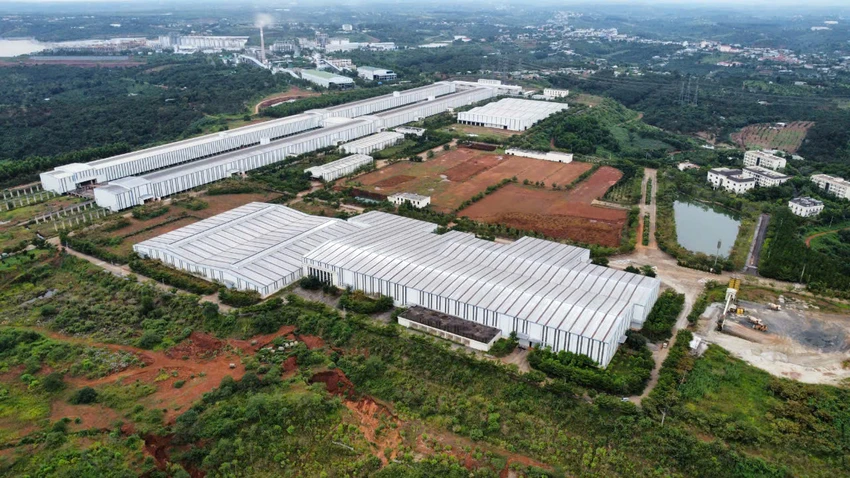
Vietnam’s metallurgical industry is preparing to mark a historic milestone with the Dak Nong Aluminum Electrolysis Plant Project. For the first time, aluminum ingots within the bauxite–alumina–aluminum value chain will be produced domestically. More than the culmination of over a decade of investment, this achievement marks the first time Vietnam has mastered industrial-scale aluminum electrolysis technology, gradually completing the value chain from bauxite to primary aluminum while laying the foundation for a future downstream aluminum processing industry.
According to the Management Board of Industrial Parks of Lam Dong Province, the official ceremony announcing Vietnam’s first aluminum ingot produced at the Dak Nong Aluminum Electrolysis Plant is scheduled to take place on July 26, 2026, with the participation of leaders of the Government, central ministries and agencies, and Lam Dong Province.
Completing the Missing Link in Vietnam’s Aluminum Industry
Over the past several years, Vietnam has steadily developed its bauxite mining and alumina refining industry in the Central Highlands. However, the electrolysis stage—the highest value-added process in the aluminum production chain—has yet to be carried out domestically on an industrial scale.
The production of the country’s first aluminum ingots will enable Vietnam to complete the bauxite–alumina–aluminum value chain for the first time, rather than stopping at the export of raw minerals or intermediate products. This represents a significant shift from resource extraction to value-added processing, contributing to higher added value and stronger competitiveness for Vietnam’s metallurgical industry.
According to industry experts, mastering aluminum electrolysis technology is not only an important industrial achievement but also lays the groundwork for developing an ecosystem capable of manufacturing high-quality aluminum products to serve a wide range of strategic industries.
A VND 18.4 Trillion Project After More Than a Decade of Development
The Dak Nong Aluminum Electrolysis Plant is invested by Tran Hong Quan Metallurgy Co., Ltd. The facility occupies more than 129 hectares in Nhan Co Industrial Park, Lam Dong Province, with a total investment of approximately VND 18.423 trillion (equivalent to more than US$722 million).
Designed with a total annual production capacity of 450,000 tonnes of aluminum, the project is being implemented in three phases. The first phase will have a capacity of 150,000 tonnes per year and is expected to begin operation in 2026. Capacity will subsequently increase to 300,000 tonnes per year, before reaching the full design capacity of 450,000 tonnes annually by 2028.
Construction began in 2015, and the project has taken more than ten years to reach the stage of producing its first commercial products. Throughout its development, the project faced numerous challenges related to investment capital, power infrastructure, technology, equipment procurement, and fluctuations in the global aluminum market. The launch of its first products is therefore regarded as a significant milestone reflecting both the investor’s long-term commitment and Vietnam’s determination to develop a modern metallurgical industry.
Driving the Development of an Integrated Production Chain in the Central Highlands
Once operating at full capacity, the plant will consume substantial quantities of alumina as its primary feedstock. This alumina is expected to be supplied by bauxite mining and alumina refining complexes in the Central Highlands, helping establish a relatively complete domestic production chain.
This integrated value chain will not only improve the efficiency of resource utilization but also reduce logistics costs, increase product value, and create greater opportunities for downstream aluminum manufacturers involved in rolling, extrusion, alloy production, and industrial component manufacturing.
The establishment of this integrated production chain is also expected to attract supporting industries, stimulate economic development in the Central Highlands, and strengthen Vietnam’s position in the global metals supply chain.
A Strategic Metal for Modern Industry
Aluminum electrolysis is considered the most complex and energy-intensive stage of the entire aluminum production process. Alumina is fed into electrolytic cells operating at approximately 950°C, where a high-intensity electric current separates oxygen from aluminum oxide, producing molten aluminum that is subsequently cast into aluminum ingots.
Due to its enormous electricity consumption, aluminum smelters require a stable power supply, dedicated substations, and comprehensive supporting infrastructure. These demanding technical requirements are among the key reasons why the project required many years to complete.
Aluminum is recognized as one of the strategic metals of the 21st century thanks to its lightweight properties, durability, corrosion resistance, and ability to form high-strength alloys. It is widely used in electrical and electronics manufacturing, construction, transportation, renewable energy, automotive production, high-speed rail, aerospace, and the space industry.
However, aluminum ingots produced through electrolysis must still undergo refining, alloying, and precision processing under strict technical standards before they can be used in the manufacture of aircraft, spacecraft, and other high-tech products.
Opening the Door to Vietnam’s Future Aluminum Industrial Hub
According to Lam Dong Province’s industrial development plan, the province possesses approximately 5.9 billion tonnes of bauxite reserves, making it one of the largest bauxite resource regions in Vietnam. This valuable resource base provides a unique advantage for developing a fully integrated aluminum industry, spanning bauxite mining, alumina refining, primary aluminum smelting, and downstream processing of high-value aluminum products.
The commissioning of the Dak Nong Aluminum Electrolysis Plant therefore represents more than the production of Vietnam’s first domestically manufactured aluminum ingots. It also opens the prospect of establishing a large-scale aluminum industrial hub in the Central Highlands.
As global aluminum demand continues to grow, driven by the energy transition, electric vehicles, and the expansion of advanced manufacturing industries, completing Vietnam’s domestic aluminum value chain will enhance the country’s industrial competitiveness, increase the value derived from its mineral resources, and enable Vietnam to participate more deeply in regional and global supply chains for strategic industrial materials.
Source: VietnamFinance and compiled from publicly available information on the Internet.
Related Posts
CMRA Annual Convention 2026 in Ningbo: Reshaping the Recycled Metals Value Chain in a Changing Global Landscape
IBAAS–VFMSTA 2026: International Forum on Bauxite, Alumina, Aluminium and Critical Minerals in Vietnam
Smart Factories Open a New Competitive Race in the Metals Industry: Companies That Control Energy and Data Will Gain the Edge
EU Tightens Aluminium Scrap Exports: Global Recycled Aluminium Market Faces a Major Reshaping
Vietnam’s Tungsten Enters a New Cycle: Nui Phao and Vietnam’s Ambition to Elevate Its Strategic Metal Position
Copper Hits Record Highs Amid a “Supply Crunch”: AI Is Only Part of the Story