

 HOME
HOME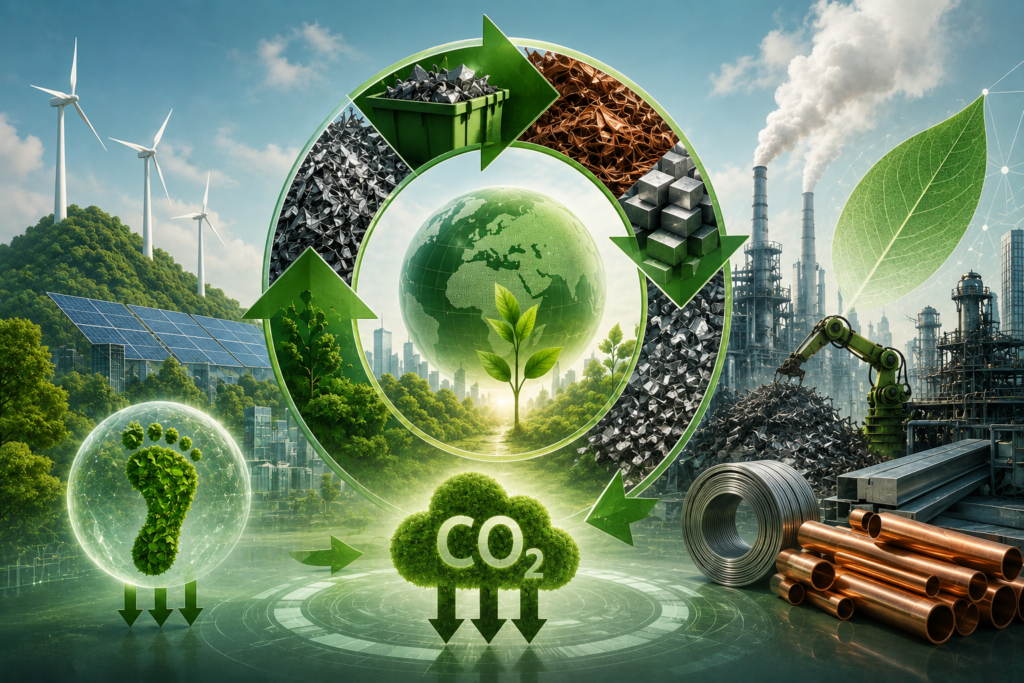
VMRF STRATEGIC INSIGHT
The Future Is No Longer a Competition on Price, but a Competition on Carbon
For many years, Vietnam’s metal recycling industry has been accustomed to competing on three key factors: price, quality, and delivery speed. However, the world is changing, and a new standard is gradually becoming a prerequisite for participating in global supply chains: carbon.
This is no longer simply a matter of environmental responsibility or ESG. Carbon is becoming a commercial requirement and is increasingly a direct reflection of a company’s competitiveness.
Green steel, green aluminium, and low-carbon material projects are being developed and invested in across many countries. Against this backdrop, major manufacturers are no longer concerned solely with whether raw materials meet technical standards. They also want to know how much CO₂ those materials emit, whether their origins can be traced, whether they are produced from recycled sources, and whether companies can provide supporting data and independent verification for such information.
This means that, in the near future, a shipment of metal may not only be accompanied by a quality certificate but also by its own “carbon profile.”
A Major Opportunity for the Recycling Industry
In the past, the recycling industry was often regarded primarily as a waste treatment sector. In a circular economy, however, recycling is increasingly becoming a strategic supplier of raw materials for low-emission industries.
A tonne of steel scrap, aluminium scrap, or copper scrap is no longer simply a production input. It is also a source of raw material that helps reduce emissions, conserve natural resources, and support manufacturers in meeting the increasingly stringent requirements of international markets.
In this new context, the value of raw materials will no longer be determined solely by their weight or chemical composition. It will also depend on the ability to demonstrate that those materials contribute to reducing emissions throughout the entire supply chain.
Transformation Is Not Just About Investing in Equipment
When discussing “green steel” or “green metals,” many people immediately think of investments in new technologies and equipment. In reality, transformation begins with a change in mindset.
Businesses need to start asking new questions. Can the raw materials we trade already demonstrate their origin and associated emissions? Over the next five to ten years, what additional data will customers require beyond quality and price?
At the same time, companies must assess the readiness of their entire supply chains. Are their current systems capable of meeting requirements related to traceability, carbon, and the circular economy? More importantly, will the investments made today help businesses maintain their position in global supply chains over the next decade?
These are not merely questions of technology. They are strategic questions concerning the future of businesses.
A New Opportunity for Vietnamese Businesses
Vietnam is facing a unique opportunity. The country has the potential not only to become a manufacturing hub but also to position itself as a regional centre for the supply of low-carbon raw materials.
To realise this opportunity, businesses cannot focus solely on investing in factories or equipment. The transition also requires the development of material sorting systems and improvements in raw material quality, stronger traceability and data management capabilities, alignment with international standards, enhanced supply chain management, and greater capacity to collaborate with global partners.
These factors will shape the sustainable competitive advantages of businesses over the coming decade.
The Role of VMRF
The Vietnam Metal Recycling Forum believes that Vietnam’s metal recycling industry is entering a new stage of development.
From being suppliers of scrap materials, we now have the opportunity to become important links in the global low-carbon raw material supply chain.
To achieve this, the business community must proactively keep pace with emerging trends, make strategic investments, and work together to establish new standards for the industry.
The future will not belong solely to the companies offering the best prices. It will belong to businesses that build trust, ensure data transparency, and create sustainable value throughout the entire supply chain.
VMRF will continue to accompany the business community on this transformation journey by connecting international knowledge, sharing emerging trends, and contributing to the development of a modern, globally integrated, and sustainable metal recycling industry in Vietnam.
Related Posts